Tiny AI Models: How Small Is the New Big Thing in Artificial Intelligence?
Artificial intelligence has long been associated with massive neural networks, enormous datasets, and energy-hungry data centers. From large language models to billion-parameter vision systems, “bigger” has often meant “better.” But a quiet revolution is underway—one that challenges this assumption at its core. Tiny AI models are emerging as a powerful alternative, proving that intelligence doesn’t always need scale to be impactful.
Tiny AI models are compact, efficient machine learning systems designed to run on devices with limited compute, memory, and power. They are redefining what’s possible at the edge—on smartphones, wearables, IoT sensors, vehicles, and even tiny microcontrollers. In a world increasingly concerned with latency, privacy, energy consumption, and cost, these small models may be the most important evolution in AI yet.
This article explores what tiny AI models are, how they work, why they matter, where they are used, and how they are shaping the future of artificial intelligence.
What Are Tiny AI Models?
Tiny AI models are lightweight machine learning models optimized for minimal resource usage. Unlike traditional AI systems that rely on cloud servers or high-performance GPUs, tiny models are designed to run locally on low-power hardware.
Typically, these models:
-
Have thousands to a few million parameters (instead of billions)
-
Require kilobytes to a few megabytes of memory
-
Run on CPUs, NPUs, or microcontrollers
-
Consume very little power
-
Deliver fast, real-time inference
They are often associated with concepts like TinyML, edge AI, and on-device intelligence, but tiny AI models also play a growing role inside larger systems as specialized, efficient components.
Why Tiny AI Models Matter
The rise of tiny AI models isn’t just a technical curiosity—it’s a response to real-world constraints and needs.
1. Latency and Real-Time Performance
Cloud-based AI introduces unavoidable delays. Tiny models process data locally, enabling instant responses—critical for applications like autonomous driving, voice assistants, medical monitoring, and industrial automation.
2. Privacy by Design
On-device AI means sensitive data never leaves the device. This is especially important in healthcare, finance, smart homes, and personal devices, where privacy regulations and user trust are paramount.
3. Energy Efficiency
Large models require significant energy to run and cool. Tiny AI models are designed to operate on milliwatts, making them ideal for battery-powered and always-on systems.
4. Cost Reduction
Running inference locally reduces cloud compute costs, bandwidth usage, and infrastructure dependencies—making AI accessible to startups, emerging markets, and large-scale deployments alike.
5. Offline Capability
Tiny models continue to function without internet access, enabling AI-powered features in remote or disconnected environments.

The Technology Behind Tiny AI Models
Creating tiny AI models isn’t just about shrinking neural networks—it’s about rethinking how intelligence is represented and executed.
Model Compression Techniques
Quantization
Quantization reduces numerical precision (for example, from 32-bit floating point to 8-bit integers), dramatically lowering memory usage and improving inference speed with minimal accuracy loss.
Pruning
Pruning removes redundant or less important parameters from a model, resulting in a smaller, faster network.
Knowledge Distillation
A large “teacher” model trains a smaller “student” model, transferring knowledge in a compact form without replicating full complexity.
Weight Sharing and Low-Rank Factorization
These techniques reuse parameters or decompose matrices to reduce storage and computation.
Efficient Architectures
Certain neural architectures are designed specifically for efficiency:
-
Mobile-optimized CNNs
-
Lightweight transformers
-
Depthwise separable convolutions
-
Event-driven and spiking neural networks
Together, these techniques allow tiny AI models to deliver impressive performance despite their small footprint.
Tiny AI vs Large AI Models
| Aspect | Tiny AI Models | Large AI Models |
|---|---|---|
| Model Size | KB–MB | GB–TB |
| Compute | CPU / Microcontroller | GPU / TPU |
| Power Usage | Very low | Very high |
| Latency | Real-time | Network dependent |
| Privacy | On-device | Cloud-based |
| Use Case | Edge & embedded | General-purpose reasoning |
This comparison makes one thing clear: tiny AI models are not replacements for large models—they are complements, each excelling in different environments.

Real-World Applications of Tiny AI Models
Consumer Devices
Smartphones, earbuds, cameras, and wearables rely on tiny AI models for:
-
Wake-word detection
-
Face unlock
-
Noise cancellation
-
Activity recognition
-
Camera enhancements
Companies like Apple and Google heavily invest in on-device AI to improve performance while preserving user privacy.
Healthcare
Tiny AI models enable continuous monitoring in medical wearables:
-
Heart rate anomaly detection
-
Fall detection for elderly users
-
Sleep analysis
-
Early warning systems for chronic conditions
Because data is processed locally, patient information remains secure.
Smart Homes and IoT
From smart thermostats to security sensors, tiny AI models help devices:
-
Detect motion or sound patterns
-
Optimize energy usage
-
Adapt to user behavior
-
Function without constant cloud connectivity
Industrial and Manufacturing
Edge AI is transforming factories:
-
Predictive maintenance
-
Quality inspection
-
Equipment anomaly detection
-
Worker safety monitoring
Tiny models allow AI to run directly on sensors and controllers deployed across industrial environments.
Automotive and Mobility
Modern vehicles use hundreds of embedded AI systems:
-
Driver monitoring
-
Object detection
-
Lane departure warnings
-
Sensor fusion
Low-latency, energy-efficient models are essential for safety-critical tasks.
Tiny AI Models and the Rise of Edge AI
Tiny AI models are the foundation of edge AI, a paradigm where intelligence moves closer to where data is generated. Instead of sending raw data to the cloud, devices analyze it locally and act immediately.
This shift reduces:
-
Network congestion
-
Operational costs
-
Security risks
-
Environmental impact
As billions of connected devices come online, edge AI powered by tiny models will become the default architecture—not the exception.
Challenges of Tiny AI Models
Despite their advantages, tiny AI models face real limitations.
Accuracy Trade-Offs
Smaller models may struggle with complex reasoning or highly diverse inputs compared to large models.
Limited Adaptability
On-device models are harder to update and retrain continuously without cloud support.
Hardware Constraints
Memory, compute, and power limitations require careful co-design of hardware and software.
Development Complexity
Building efficient models requires specialized knowledge in optimization, embedded systems, and hardware-aware ML.
These challenges are driving innovation across tools, frameworks, and hardware accelerators.
The Ecosystem Supporting Tiny AI
A rapidly growing ecosystem supports the tiny AI movement:
-
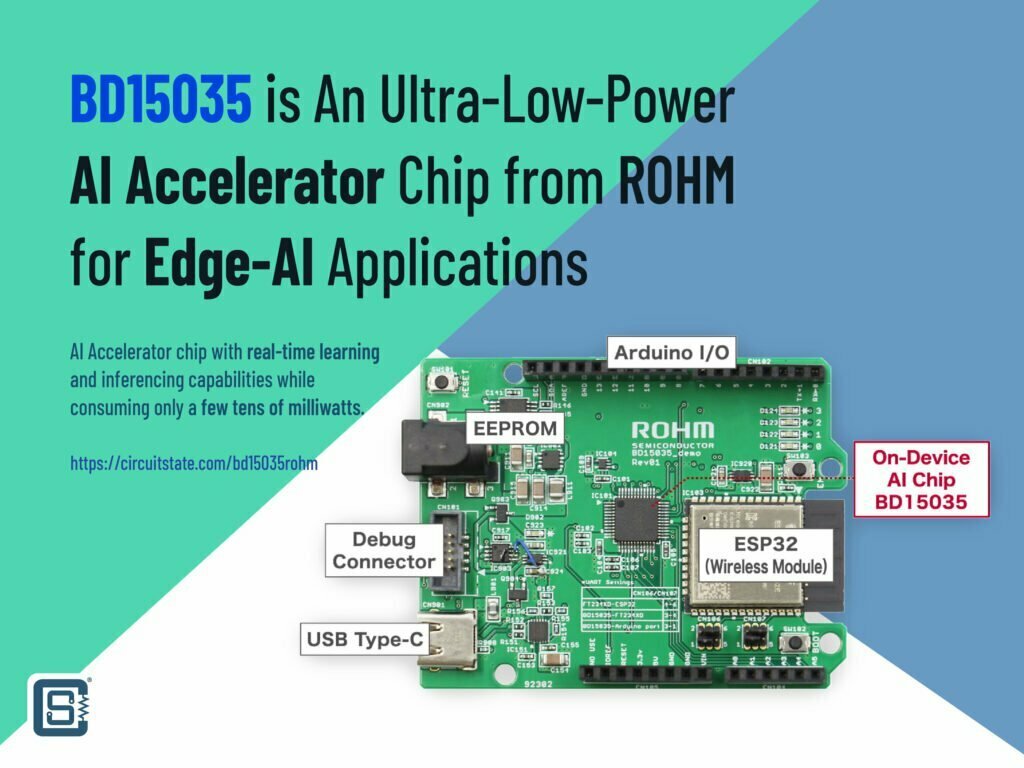
Specialized edge AI chips
-
Lightweight ML frameworks
-
AutoML tools for model compression
-
Hardware-software co-design platforms
Organizations like ARM and NVIDIA are investing heavily in edge-focused AI solutions, while open-source communities are making tiny AI more accessible than ever.
Tiny AI Models and Sustainability
One often-overlooked benefit of tiny AI models is their environmental impact. Large AI models consume massive amounts of energy during training and inference. In contrast, tiny models:
-
Use less electricity
-
Reduce data center reliance
-
Extend battery life
-
Enable low-carbon AI deployments
As sustainability becomes a core concern in tech, tiny AI offers a greener path forward.
The Future of Tiny AI Models
The future of AI is not just bigger—it’s smarter, smaller, and more distributed.
We can expect:
-
Hybrid systems combining large cloud models with tiny edge models
-
Self-updating on-device AI through federated learning
-
More capable tiny transformers
-
AI embedded into everyday objects—from clothing to infrastructure
Rather than replacing large models, tiny AI models will work alongside them, forming layered intelligence systems that balance power, efficiency, and responsibility.
Conclusion: Why Tiny AI Is a Big Deal
Tiny AI models represent a fundamental shift in how we think about artificial intelligence. They prove that useful, impactful AI doesn’t always require massive scale or centralized infrastructure. By bringing intelligence directly to devices, tiny AI models unlock faster responses, better privacy, lower costs, and more sustainable systems.
As AI continues to spread into every corner of modern life, tiny models will quietly power much of that intelligence—often unseen, but deeply transformative. In many ways, the future of AI isn’t just large and impressive—it’s small, efficient, and everywhere.
For quick updates, follow our whatsapp –https://whatsapp.com/channel/0029VbAabEC11ulGy0ZwRi3j
https://bitsofall.com/early-disease-diagnosis-app/
https://bitsofall.com/amazon-warehouse-robots-ai-learning-diverse-products/
Tesla Loses Market Lead: How the EV Pioneer Is Facing Its Toughest Competition Yet