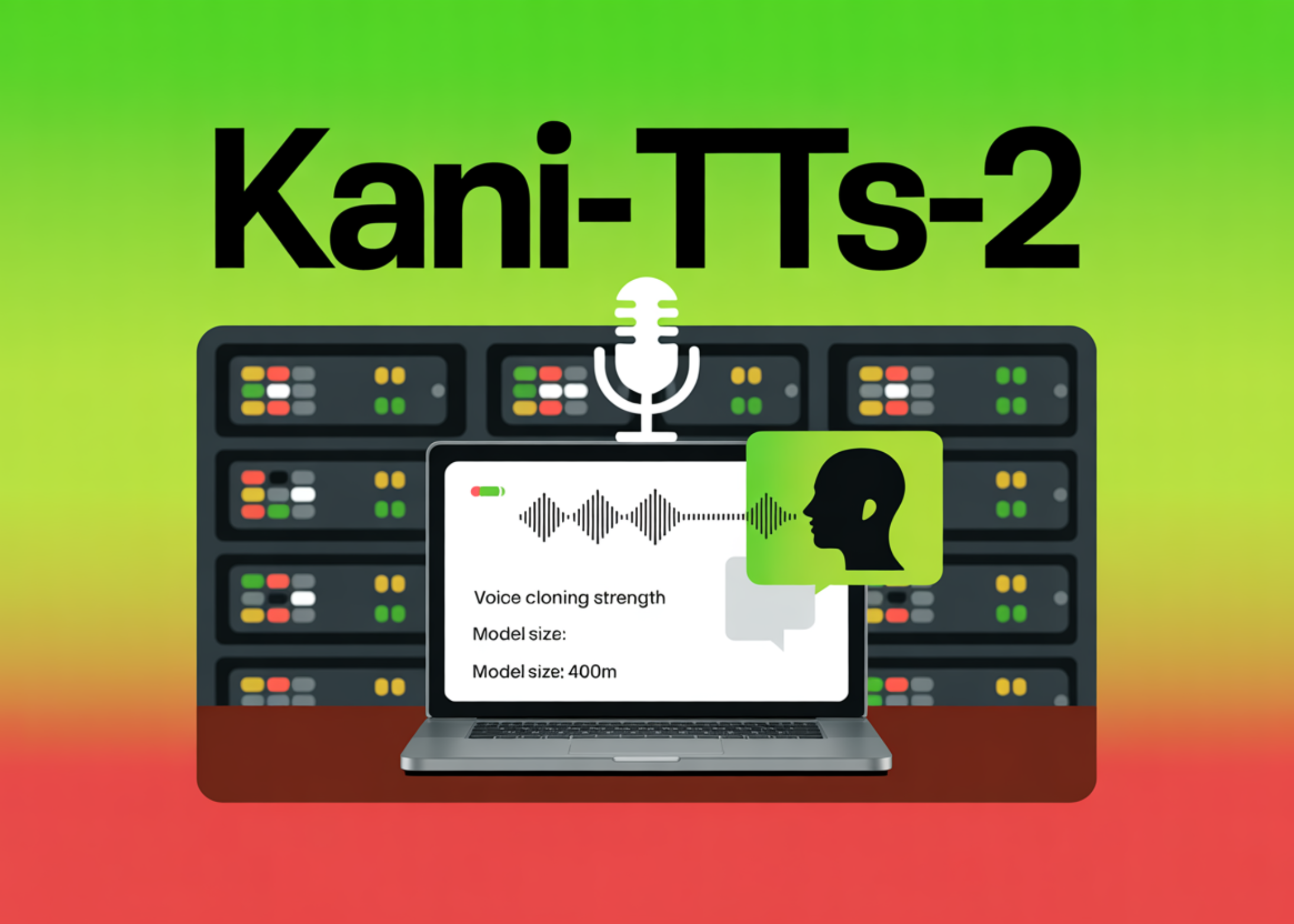
Meet ‘Kani-TTS-2’: The Next-Generation AI Voice Model Transforming Text-to-Speech Technology
Artificial intelligence continues to reshape how humans interact with machines, and one of the fastest-evolving areas is text-to-speech (TTS). From virtual assistants and audiobook narration to AI video voiceovers and accessibility tools, synthetic speech has become a core layer of modern digital experiences. Among the newest innovations capturing attention in the AI ecosystem is Meet ‘Kani-TTS-2’, a next-generation speech synthesis model designed to deliver more natural, expressive, and scalable voice generation than ever before.
Unlike older robotic TTS systems that merely converted text into sound, modern AI speech models attempt to replicate the subtle characteristics of human conversation — emotion, tone, rhythm, pauses, emphasis, and contextual pronunciation. Kani-TTS-2 represents a major step toward that goal, combining advanced neural architectures, multilingual training, and real-time generation capabilities.
In this article, we’ll explore what Kani-TTS-2 is, how it works, why it matters, and how it could influence industries ranging from education and media to customer service and accessibility technology.
What Is Kani-TTS-2?
At its core, Kani-TTS-2 is an AI-powered neural text-to-speech model engineered to convert written language into lifelike human speech. It builds upon earlier TTS systems by focusing on three primary improvements:
-
Ultra-natural voice realism
-
High-speed real-time synthesis
-
Improved emotional expression control
Traditional speech engines often relied on concatenative synthesis (stitching recorded sounds together) or rule-based phoneme systems. These older approaches struggled with fluidity and emotional depth.
Kani-TTS-2 instead uses deep neural learning methods trained on massive multilingual datasets. This allows the system to understand:
-
Contextual pronunciation
-
Sentence structure and rhythm
-
Emotional cues in language
-
Speaker tone modeling
The result is speech output that sounds significantly closer to natural human narration.
Why the Release of Kani-TTS-2 Matters
The launch of Meet ‘Kani-TTS-2’ signals a broader shift in AI speech technology from “functional voice output” toward fully expressive digital communication.
Earlier TTS systems were mainly used for:
-
GPS navigation voices
-
Screen readers
-
Basic chatbot audio
Today, however, businesses require AI voices capable of handling:
-
Professional podcast narration
-
AI influencers and digital presenters
-
Multilingual global customer support
-
Personalized learning assistants
-
AI-generated video dubbing
Kani-TTS-2 is designed specifically for these modern use cases.
Its architecture prioritizes both scalability and human-level vocal clarity, making it suitable for enterprise-scale deployment.
Key Features of Kani-TTS-2
1. Human-Level Natural Speech
One of the most notable improvements in Kani-TTS-2 is its ability to generate highly realistic vocal patterns.
The system mimics natural speech characteristics such as:
-
Micro-pauses between clauses
-
Natural breathing patterns
-
Emphasis on important words
-
Conversational pacing
This allows generated voices to sound far less robotic than traditional speech engines.
2. Emotional Tone Control
Modern AI applications increasingly require voice emotion customization.
Kani-TTS-2 introduces advanced tone conditioning that enables developers to adjust:
-
Friendly conversational tone
-
Formal professional narration
-
Energetic promotional voice
-
Calm instructional delivery
This emotional modeling capability makes the system especially useful for storytelling, training modules, and AI video production.
3. Multilingual & Cross-Accent Support
Global applications demand multilingual flexibility.
Kani-TTS-2 supports multiple languages and accent styles while maintaining natural pronunciation. Unlike earlier systems that sounded unnatural outside their primary training language, this model handles cross-lingual phonetic mapping more intelligently.
This feature makes it highly valuable for:
-
International companies
-
Global e-learning platforms
-
Multilingual customer service bots
-
Video localization pipelines
4. Real-Time Voice Generation
Latency is a critical factor in interactive AI systems.
Kani-TTS-2 is optimized for low-latency inference, enabling near real-time voice responses.
This makes it suitable for:
-
AI call agents
-
live translation tools
-
conversational assistants
-
voice-enabled applications
Real-time performance ensures smoother user experiences in customer-facing systems.
5. Voice Cloning Capabilities
Another advanced feature is voice replication.
Kani-TTS-2 can be trained on limited voice samples to reproduce similar vocal characteristics. This allows organizations to:
-
Create branded voice identities
-
Maintain consistent narration across content
-
Produce scalable voiceovers
However, ethical usage policies remain important to prevent misuse of synthetic voice cloning.
How Kani-TTS-2 Works (Technical Overview)
The underlying architecture of Kani-TTS-2 relies on modern neural speech synthesis techniques that typically include:
Neural Acoustic Modeling
The model converts text into phonetic and acoustic representations, learning how words should sound in natural speech.
Transformer-Based Context Processing
Advanced transformer layers analyze sentence meaning, punctuation, and linguistic structure to predict proper vocal delivery.
Neural Vocoder Output
A neural vocoder transforms acoustic data into high-quality waveform audio, ensuring smooth and natural sound generation.
These combined systems allow the model to move beyond simple phoneme reading toward context-aware speech production.
Real-World Applications of Kani-TTS-2
AI Video Voiceovers
Content creators increasingly rely on AI narration tools.
Kani-TTS-2 can produce studio-quality voiceovers for:
-
YouTube automation channels
-
corporate training videos
-
marketing explainers
-
educational lessons
This reduces production costs while maintaining professional sound quality.
Customer Support Automation
Call centers are rapidly integrating conversational AI.
Kani-TTS-2 enables voice agents capable of:
-
answering customer questions
-
guiding users through services
-
delivering human-like spoken responses
Because of its emotional tone control, responses feel less mechanical and more engaging.
Accessibility Technology
Text-to-speech plays a critical role in accessibility.
Kani-TTS-2 can help users with:
-
visual impairments
-
reading difficulties
-
neurological conditions
Natural voice delivery improves comprehension and listening comfort compared to older monotone screen readers.
Audiobook & Podcast Production
Publishers and independent creators can use the system to generate long-form narration.
Its pacing intelligence ensures:
-
consistent voice quality
-
natural storytelling rhythm
-
listener-friendly cadence
This opens new opportunities for scalable audiobook publishing.
Kani-TTS-2 vs Traditional TTS Systems
| Feature | Traditional TTS | Kani-TTS-2 |
|---|---|---|
| Voice realism | Robotic | Human-like |
| Emotional control | Minimal | Advanced tone tuning |
| Real-time capability | Limited | Optimized low latency |
| Multilingual support | Basic | Advanced cross-language |
| Voice cloning | Rare | Supported |
This comparison shows how next-gen neural speech models represent a fundamental leap forward.
Ethical Considerations and Responsible Use
As synthetic voice technology improves, ethical concerns become increasingly important.
Potential risks include:
-
impersonation scams
-
fake audio generation
-
misinformation campaigns
Developers deploying Kani-TTS-2 must implement safeguards such as:
-
voice usage consent verification
-
watermarking synthetic audio
-
identity protection protocols
Responsible AI deployment will be essential for maintaining public trust in advanced speech technology.
The Future of AI Speech After Kani-TTS-2
The release of Meet ‘Kani-TTS-2’ hints at where speech AI is heading next.
Future improvements may include:
Real-Time Conversational Memory
AI voices that remember past interactions and adjust tone dynamically.
Hyper-Personalized Voice Assistants
Systems that adapt speaking style based on individual user preferences.
Emotion-Aware Interactive Narrators
AI voices capable of detecting listener sentiment and modifying delivery accordingly.
Fully Autonomous AI Broadcasters
Digital presenters capable of hosting shows, reading news, and conducting interviews.
Kani-TTS-2 represents an important transitional stage toward these advanced capabilities.
Why Businesses Should Pay Attention
Organizations investing in AI automation should closely monitor emerging speech models.
High-quality synthetic voice systems like Kani-TTS-2 offer:
-
reduced production costs
-
scalable multilingual communication
-
24/7 automated voice support
-
faster media content creation
Companies adopting advanced TTS early may gain a competitive edge in digital customer engagement.
Final Thoughts
The evolution of speech AI is accelerating rapidly, and Meet ‘Kani-TTS-2’ stands out as one of the most promising developments in modern text-to-speech technology. By combining neural speech synthesis, emotional tone modeling, multilingual flexibility, and real-time performance, the system moves AI voice generation closer than ever to genuine human communication.
As businesses, creators, educators, and developers continue exploring AI-powered audio solutions, tools like Kani-TTS-2 will likely play a major role in shaping the next generation of digital interaction.
In the coming years, synthetic voices may no longer feel artificial at all — instead becoming a seamless, trusted part of everyday communication.
And if current trends continue, the introduction of Kani-TTS-2 may be remembered as one of the key milestones in that transformation.
For quick updates, follow our whatsapp –https://whatsapp.com/channel/0029VbAabEC11ulGy0ZwRi3j
https://bitsofall.com/google-ai-introduces-paperbanana/
https://bitsofall.com/alibaba-open-sources-zvec/
OpenAI’s GPT-5.3-Codex & Frontier — Shaping the Next Era of AI Agents
McKinsey “Lilli” Assessments: The Complete Guide to Understanding the McKinsey Hiring Test