McKinsey “Lilli” Assessments: The Complete Guide to Understanding the McKinsey Hiring Test
Introduction
Landing a job at McKinsey & Company is a dream for thousands of ambitious professionals around the world. As one of the most prestigious consulting firms, McKinsey is known for its rigorous hiring process designed to identify exceptional analytical thinkers, problem-solvers, and business leaders. Among the various evaluation stages, the McKinsey “Lilli” Assessments have become one of the most talked-about screening tools used to evaluate candidates in a modern, data-driven way.
Unlike traditional aptitude exams or case interviews, the McKinsey “Lilli” Assessments focus on behavioral intelligence, cognitive ability, decision-making patterns, and real-world consulting skills. These assessments are designed to simulate the kind of structured thinking and complex judgment calls consultants must make daily.
In this complete guide, we will explore everything you need to know about the McKinsey “Lilli” Assessments — what they are, how they work, what skills they measure, how to prepare, and strategies to maximize your chances of success.
What Are McKinsey “Lilli” Assessments?
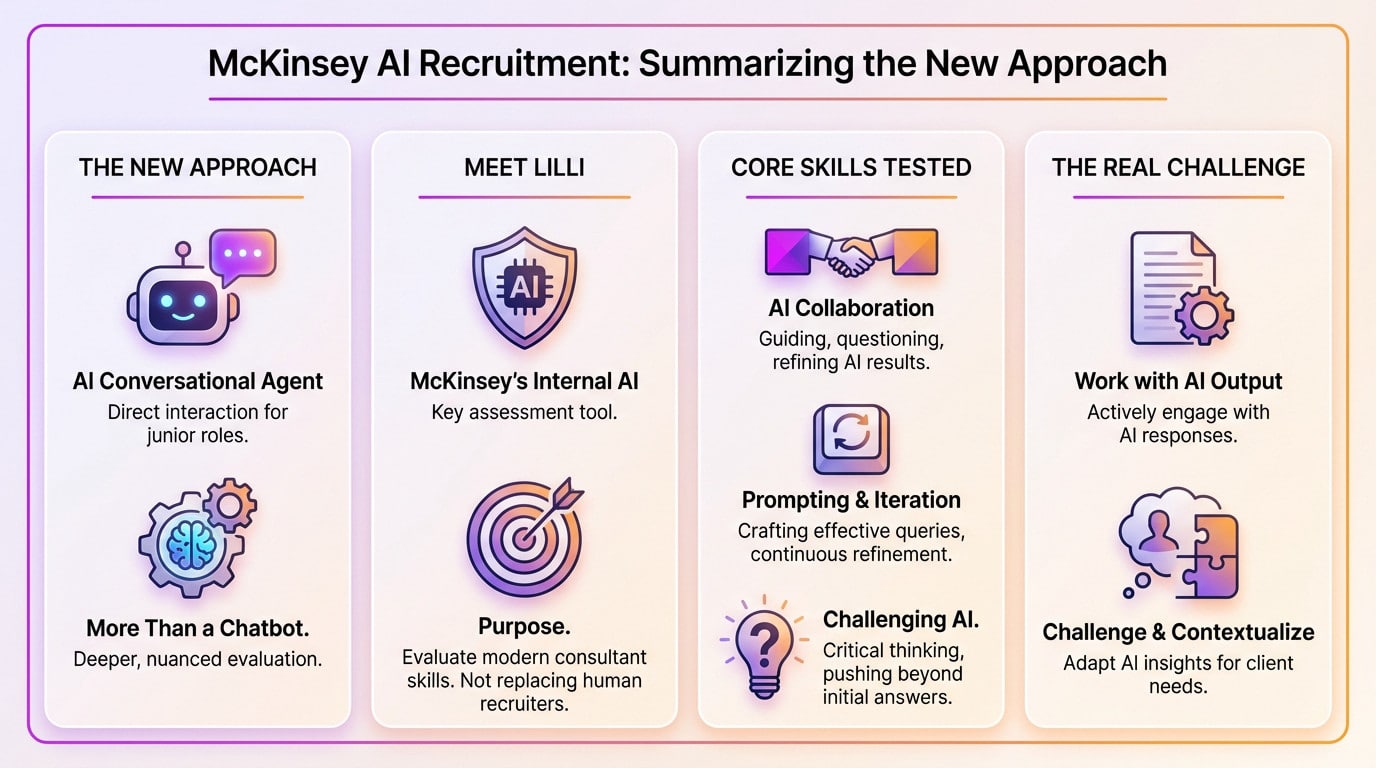
The McKinsey “Lilli” Assessments are digital evaluation tools used during the recruitment process to measure candidates beyond traditional resumes and interviews. They are part of McKinsey’s broader shift toward AI-assisted hiring and structured talent analytics.
These assessments typically evaluate:
-
Logical reasoning
-
Structured problem-solving
-
Quantitative interpretation
-
Behavioral tendencies
-
Decision-making under uncertainty
-
Leadership mindset
-
Adaptability and communication style
Rather than asking only theoretical questions, the McKinsey “Lilli” Assessments often present candidates with realistic business scenarios that mirror consulting work.
This approach helps the firm understand how applicants actually think, not just what they claim on paper.
Why McKinsey Uses the “Lilli” Assessments
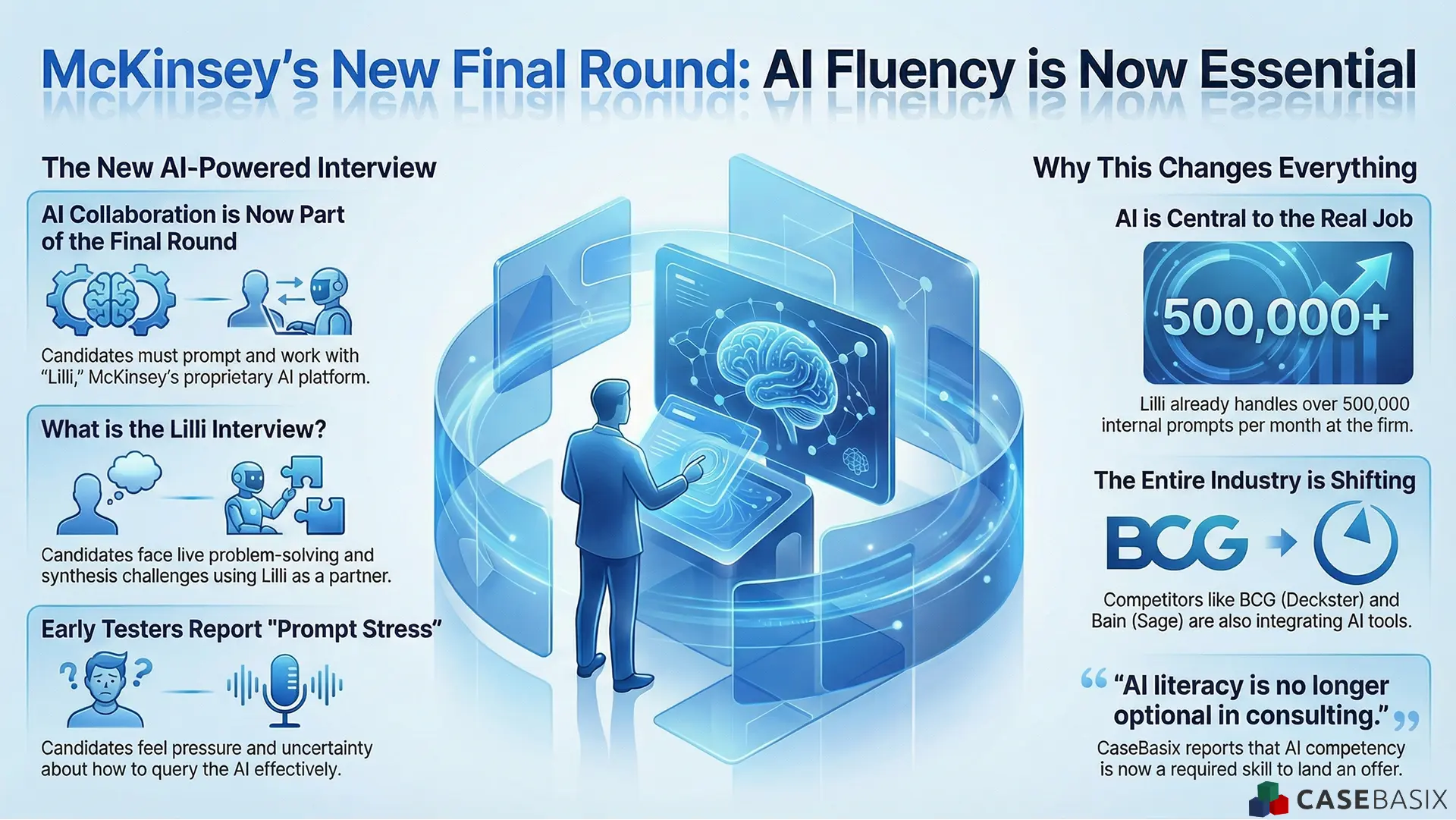
Top consulting firms receive hundreds of thousands of applications each year. Traditional screening methods alone cannot fully identify candidates who will excel in consulting environments.
The McKinsey “Lilli” Assessments were introduced to solve several hiring challenges:
1. Objective Candidate Evaluation
Human interviews can sometimes introduce unconscious bias. Digital assessments ensure standardized scoring across candidates worldwide.
2. Real-World Skill Measurement
Consulting requires structured thinking, fast learning, and calm decision-making. The assessments simulate real consulting challenges to evaluate these abilities directly.
3. Predictive Hiring Accuracy
By analyzing large datasets of past hires and performance outcomes, McKinsey continuously refines its assessment models to predict long-term success.
4. Efficient Global Screening
With candidates applying from dozens of countries, automated assessments help streamline the early recruitment stages.
How the McKinsey “Lilli” Assessments Work
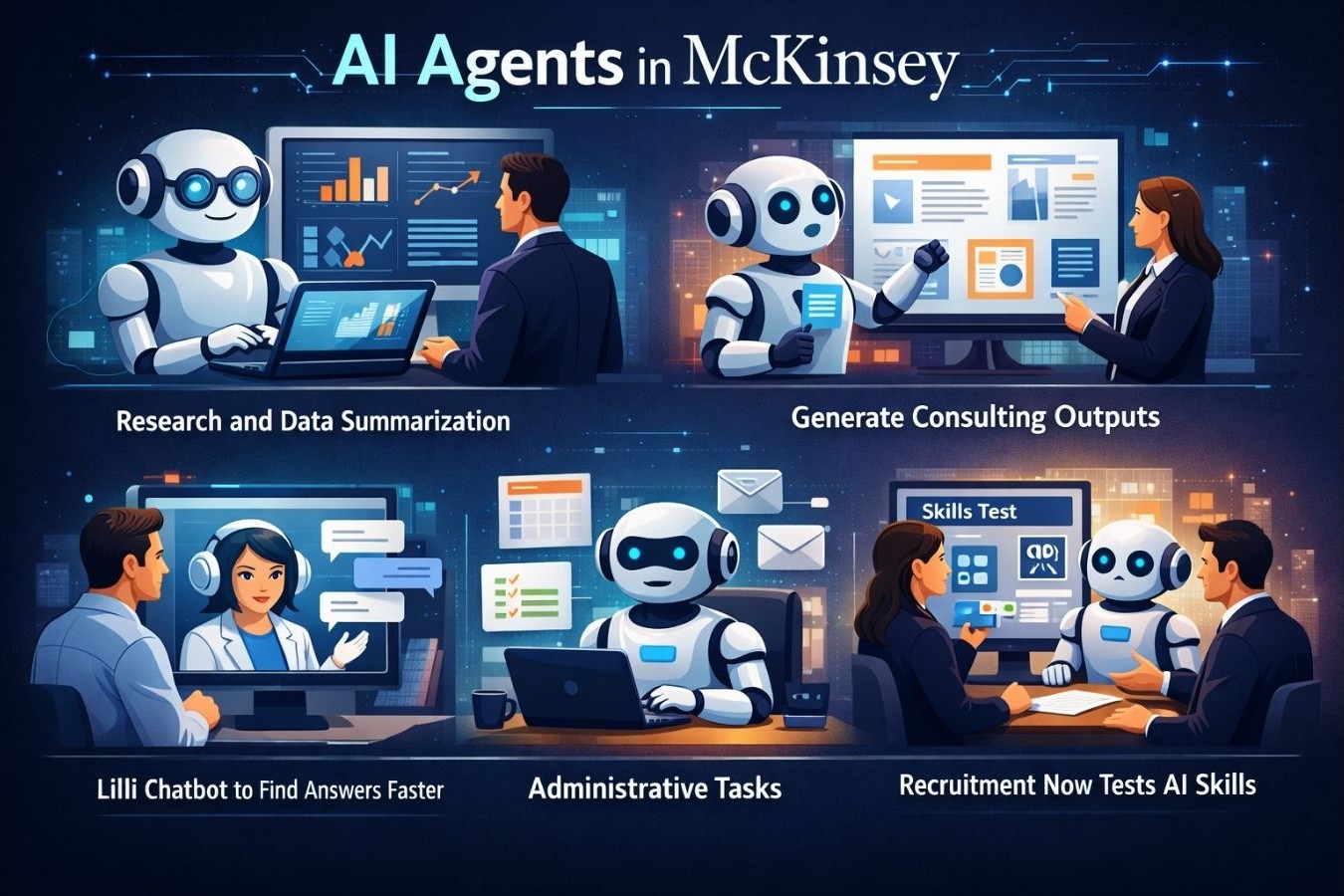
While exact formats may evolve over time, most McKinsey “Lilli” Assessments follow a structured digital workflow.
Step 1: Online Invitation
After submitting an application and passing initial resume screening, candidates receive an invitation email.
This email includes:
-
Access link
-
Deadline
-
Instructions
-
Technical requirements
Candidates usually have a fixed time window to complete the test.
Step 2: Interactive Scenario-Based Questions
The core of the McKinsey “Lilli” Assessments involves interactive scenarios.
You may be asked to:
-
Analyze market expansion options
-
Interpret business performance charts
-
Recommend strategy adjustments
-
Evaluate risk vs reward decisions
-
Prioritize client objectives
These scenarios often include:
-
Graphs
-
Tables
-
Written case descriptions
-
Financial summaries
The goal is to replicate the real consulting workflow.
Step 3: Behavioral Evaluation
Another section examines how candidates approach teamwork, leadership, and communication.
Instead of obvious personality questions, candidates might be shown:
-
Workplace dilemmas
-
Client conflict situations
-
Team management problems
You must select the most appropriate response from several choices.
This helps McKinsey assess cultural alignment and professional judgment.
Step 4: Automated Scoring System
Once completed, responses are analyzed using structured scoring frameworks.
These systems evaluate:
-
Accuracy
-
Logical structure
-
Speed vs precision balance
-
Consistency of decision-making
-
Analytical depth
Top performers are then invited to the next stage, typically case interviews.
Key Skills Measured in McKinsey “Lilli” Assessments
Understanding what the assessment measures is the first step toward preparation.
Analytical Thinking
Consultants constantly break complex problems into structured components. The assessment checks whether you can identify the core drivers behind business challenges.
Quantitative Reasoning
Candidates must interpret numerical data accurately.
Expect tasks like:
-
Profit margin comparisons
-
Revenue projections
-
Market share analysis
-
Cost structure evaluation
You don’t need advanced math — but strong comfort with numbers is essential.
Structured Communication
Consultants must present ideas clearly.
The McKinsey “Lilli” Assessments measure whether your recommendations follow logical steps rather than random guesses.
Decision-Making Under Pressure
Consultants often work with incomplete information. Some questions intentionally include ambiguity to test judgment rather than perfect calculation.
Business Intuition
McKinsey values candidates who demonstrate sound commercial awareness and practical reasoning.
Difference Between McKinsey “Lilli” Assessments and Traditional Aptitude Tests
Many candidates assume these assessments resemble standard IQ or GMAT-style exams. In reality, they differ significantly.
Traditional tests focus on:
-
Math problems
-
Logic puzzles
-
Vocabulary
-
Memory
The McKinsey “Lilli” Assessments instead emphasize:
-
Applied business reasoning
-
Scenario judgment
-
Consulting-style thinking
-
Realistic decision trade-offs
This makes preparation strategies different from normal exam study methods.
Common Question Types in McKinsey “Lilli” Assessments
While formats change periodically, several patterns frequently appear.
Data Interpretation Questions
Candidates analyze charts, tables, or business reports and identify key conclusions.
Strategic Recommendation Questions
You may need to choose the best business strategy based on available evidence.
Priority Ranking Questions
Candidates must determine which action should be taken first.
Risk Evaluation Questions
These questions assess whether you understand trade-offs between cost, benefit, and uncertainty.
Behavioral Judgment Questions
Situational responses help evaluate leadership style and professional maturity.
How to Prepare for McKinsey “Lilli” Assessments
Preparation is absolutely possible — and highly recommended.
1. Practice Case Interview Thinking
Even though the format is digital, the thinking approach is similar to consulting case interviews.
Focus on:
-
Breaking problems into components
-
Structuring answers logically
-
Identifying key drivers
2. Strengthen Data Interpretation Skills
Review:
-
Business charts
-
Profit and loss tables
-
Market share graphs
-
Growth projections
Practice extracting insights quickly.
3. Improve Mental Math Speed
You don’t need perfect accuracy, but you should comfortably estimate:
-
Percentages
-
Ratios
-
Revenue growth
-
Cost differences
4. Study Business Fundamentals
Basic understanding of:
-
Supply and demand
-
Pricing strategy
-
Competitive advantage
-
Operational efficiency
can significantly improve performance.
5. Simulate Timed Testing Conditions
Many candidates fail simply because they run out of time.
Practice solving business questions within strict time limits.
Mistakes Candidates Make in McKinsey “Lilli” Assessments
Avoid these common errors:
Overcomplicating Simple Problems
Consulting values clarity, not unnecessary complexity.
Ignoring the Business Objective
Always ask:
What is the client trying to achieve?
Your answer should directly support that goal.
Spending Too Long on One Question
Time management matters as much as accuracy.
Guessing Without Logic
Even if unsure, choose the option with the most structured reasoning.
What Happens After Passing the McKinsey “Lilli” Assessments?
Successful candidates typically move to:
-
Recruiter screening call
-
First-round case interviews
-
Final partner interviews
The assessment acts as an early filter but does not replace later stages.
Future of AI-Driven Hiring at McKinsey
The introduction of the McKinsey “Lilli” Assessments reflects a broader trend in corporate hiring.
Major organizations increasingly use:
-
AI-assisted screening
-
behavioral analytics
-
predictive hiring models
-
digital simulations
These methods aim to identify talent more accurately than resume-only evaluation.
As consulting work becomes more data-intensive, recruitment methods are evolving to match.
Final Thoughts
The McKinsey “Lilli” Assessments represent a modern approach to evaluating consulting candidates in a realistic, objective, and data-driven way. Rather than focusing purely on academic knowledge, these assessments measure how you think, analyze information, and make business decisions in complex situations.
For candidates aspiring to join McKinsey, understanding the purpose, structure, and expectations of these assessments can significantly improve preparation strategy and confidence.
Success ultimately comes down to structured thinking, clear reasoning, strong business intuition, and calm decision-making under time pressure.
With proper preparation and the right mindset, the McKinsey “Lilli” Assessments can become not a barrier, but an opportunity to demonstrate your consulting potential.
For quick updates, follow our whatsapp –https://whatsapp.com/channel/0029VbAabEC11ulGy0ZwRi3j
https://bitsofall.com/google-ai-introduces-paperbanana/
https://bitsofall.com/alibaba-open-sources-zvec/
OpenAI’s GPT-5.3-Codex & Frontier — Shaping the Next Era of AI Agents
Mozilla One-Click Opt-Out: A New Era of Digital Privacy Control