Google AI Introduces the WebMCP: A New Standard for the Agentic Internet
Introduction
Artificial intelligence is rapidly moving from answering questions to performing real-world tasks. Instead of simply chatting, modern AI agents can book tickets, fill forms, order products, manage workflows, and automate online processes. However, one major barrier still exists: websites were designed for humans, not AI.
To solve this problem, Google AI Introduces the WebMCP, a new protocol designed to make websites directly understandable and actionable for AI agents. This innovation could fundamentally reshape how AI interacts with the internet, potentially creating what experts call an “agent-ready web.”
With WebMCP, Google aims to replace fragile screen-scraping methods with structured, reliable communication between AI systems and websites. This article explains what WebMCP is, why it matters, how it works, and how it may change the future of browsing, automation, and digital business.
What Is WebMCP?
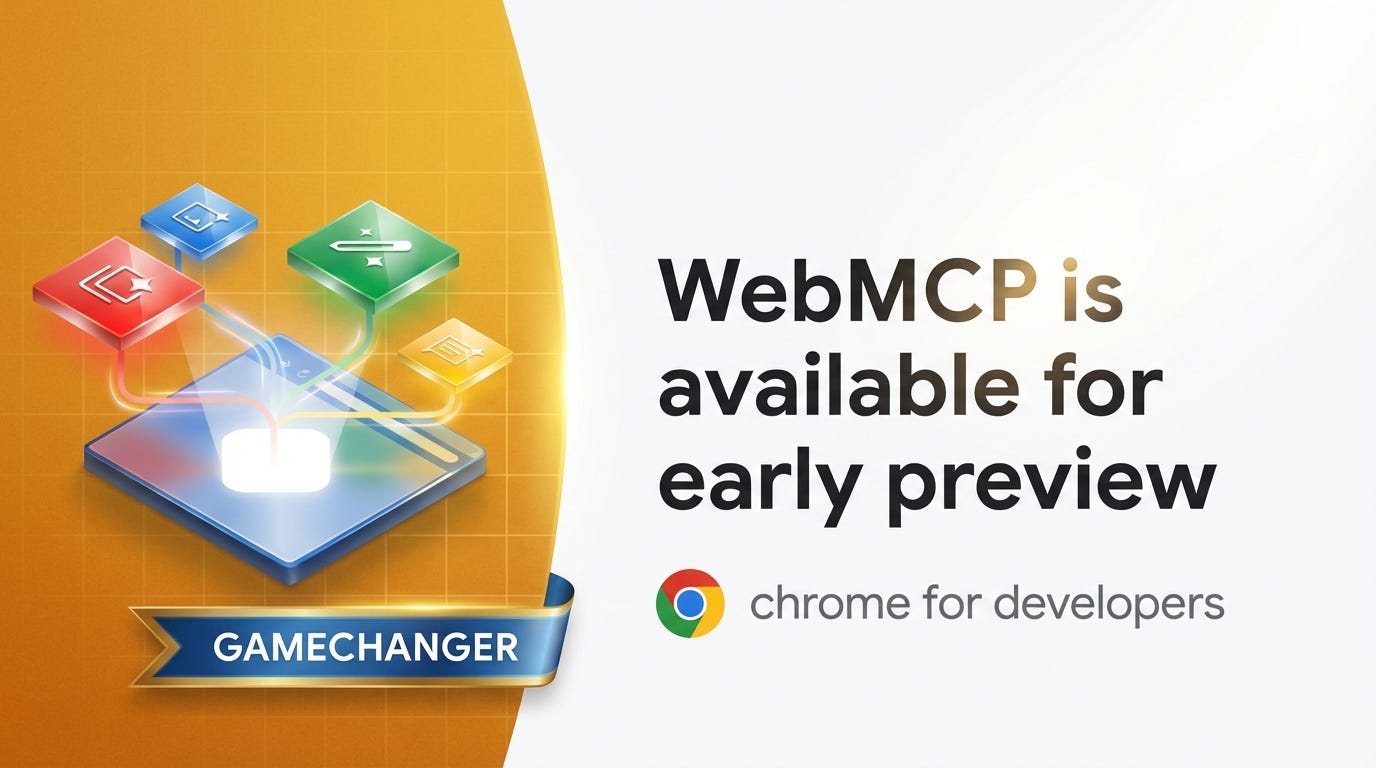
When Google AI Introduces the WebMCP, it is launching the Web Model Context Protocol, a framework that allows websites to expose structured tools that AI agents can call directly.
Currently, most AI browsing tools operate like humans:
-
They read the page visually
-
Identify buttons or forms
-
Guess where to click
-
Repeat until the task finishes
This method is slow, expensive, and error-prone.
WebMCP changes this by letting websites publish a structured list of capabilities — essentially telling AI:
“Here’s what you can do on this site and how to do it.”
Instead of guessing, the AI can call predefined functions directly.
Why Google Built WebMCP
The modern internet wasn’t built for AI automation.
Today’s AI web agents rely on:
-
Screenshot analysis
-
DOM parsing
-
Pixel detection
-
UI simulation
Even a small UI change can break the automation.
Google recognized this inefficiency and introduced WebMCP to enable:
-
Faster interactions
-
Higher reliability
-
Lower compute costs
-
Structured communication
The protocol provides a standard way for exposing structured tools so AI agents can perform actions with speed and precision.
How WebMCP Works
When Google AI Introduces the WebMCP, it also introduces new browser-level APIs that allow structured interaction.
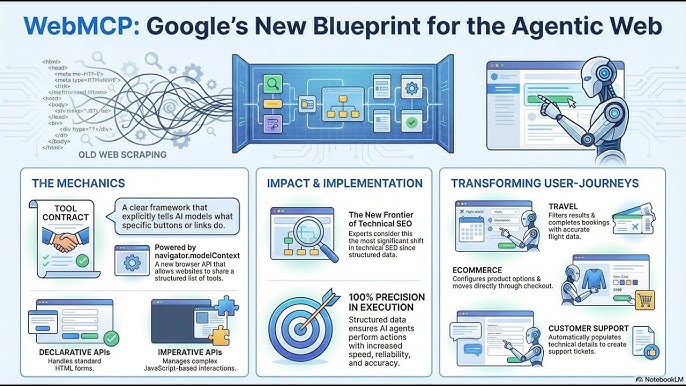
1. Declarative API (HTML-Based)
This approach is simple.
Developers can add attributes inside HTML forms to describe tools.
Example:
-
A “Book Flight” form becomes a structured function
-
The AI reads the schema automatically
-
Inputs are clearly defined
Chrome converts these forms into callable tools for AI agents.
2. Imperative API (JavaScript-Based)
For complex applications:
-
Multi-step workflows supported
-
Dynamic tasks handled
-
Backend communication structured
This allows advanced applications like:
-
enterprise dashboards
-
SaaS tools
-
booking systems
-
customer portals
Both APIs together make websites “agent-ready.”
The New Browser API
WebMCP introduces a new browser interface:
This API allows a website to publish:
-
available tools
-
parameters
-
callable actions
The AI can then execute structured commands like:
Instead of searching for buttons, it directly performs the function.
Example: Booking a Flight Without Guesswork
Old AI Method
-
Open travel site
-
Screenshot page
-
Detect search form
-
Fill fields visually
-
Click submit
-
Repeat
If the layout changes → automation fails.
WebMCP Method
-
Website exposes function:
-
AI calls the function directly
-
Results returned instantly
No clicking. No visual detection. No guessing.
Real-World Use Cases
When Google AI Introduces the WebMCP, the goal is practical automation.
1. E-commerce Automation
AI agents can:
-
search products
-
apply filters
-
configure options
-
complete checkout
Structured product workflows become easier.
2. Customer Support Automation
Agents can:
-
create detailed tickets
-
include logs automatically
-
attach diagnostic data
This improves service accuracy.
3. Travel and Booking Systems
AI can:
-
compare flights
-
reserve hotels
-
manage itineraries
All without visual browsing errors.
4. Enterprise Software Automation
Business AI assistants could:
-
update CRM records
-
submit expense forms
-
manage HR requests
This makes corporate workflows dramatically faster.
Why WebMCP Matters for the Future of AI
The launch of WebMCP signals a major shift.
AI is moving from:
Chatbots → Autonomous digital workers
For this transformation, AI needs:
-
structured tools
-
reliable interfaces
-
direct execution ability
WebMCP provides exactly that.
Experts describe this as building infrastructure for the “agentic web.”
Relationship With the Model Context Protocol (MCP)
Before WebMCP, there was already a broader Model Context Protocol (MCP) standard.
MCP was designed to connect AI systems with tools, data sources, and applications using a universal interface.
WebMCP extends this idea to the open internet.
Instead of backend integrations:
-
WebMCP works directly inside websites
-
No separate MCP server required
-
Client-side integration possible
This makes adoption easier for developers.
Why Current AI Web Automation Is Broken
Without WebMCP:
AI agents treat the web like an image.
They must:
-
analyze pixels
-
simulate mouse clicks
-
interpret layouts
This consumes massive computing power and often fails when pages change slightly.
WebMCP replaces this with structured data.
Benefits of WebMCP
1. Faster Automation
Direct function calls eliminate UI navigation.
2. Lower AI Costs
Less visual processing means:
-
fewer tokens
-
lower compute usage
-
faster responses
3. Better Reliability
No dependency on:
-
CSS selectors
-
layout position
-
screen detection
4. Developer Control
Websites decide:
-
what actions AI can perform
-
how requests are structured
-
which workflows are allowed
Early Preview Status
Currently, WebMCP is released as an early preview.
Developers can test it in experimental Chrome builds.
This means:
-
API may evolve
-
tooling still growing
-
ecosystem adoption beginning
Google is encouraging early experimentation before full rollout.
Industry Context: The Race for Agent Standards
Google is not alone.
Other companies are building similar systems:
-
Anthropic’s MCP standard
-
Amazon automation frameworks
-
enterprise agent platforms
WebMCP is designed to complement these efforts rather than replace them.
Potential Challenges
Even though Google AI Introduces the WebMCP, adoption won’t be instant.
1. Website Adoption Required
Sites must implement structured tools.
2. Security Concerns
Direct callable actions raise questions:
-
authentication
-
fraud prevention
-
abuse control
3. Auditability Issues
Direct API-style actions may reduce visual traceability, making monitoring harder.
4. Standardization Timeline
The protocol is still evolving toward broader web standards.
Impact on SEO and Digital Marketing
WebMCP could reshape search and SEO dramatically.
Traditional SEO Focus
-
ranking pages
-
optimizing keywords
-
improving UX
Agentic SEO Future
Businesses may need to optimize:
-
structured tool metadata
-
callable workflows
-
AI-friendly site capabilities
Instead of ranking pages, companies may need to ensure their site becomes the best callable service for AI agents.
This could be the next evolution of search.
What This Means for Developers
Developers should start preparing for an AI-first web.
Key preparation steps:
-
design structured APIs
-
simplify workflows
-
modularize web actions
-
build automation-friendly systems
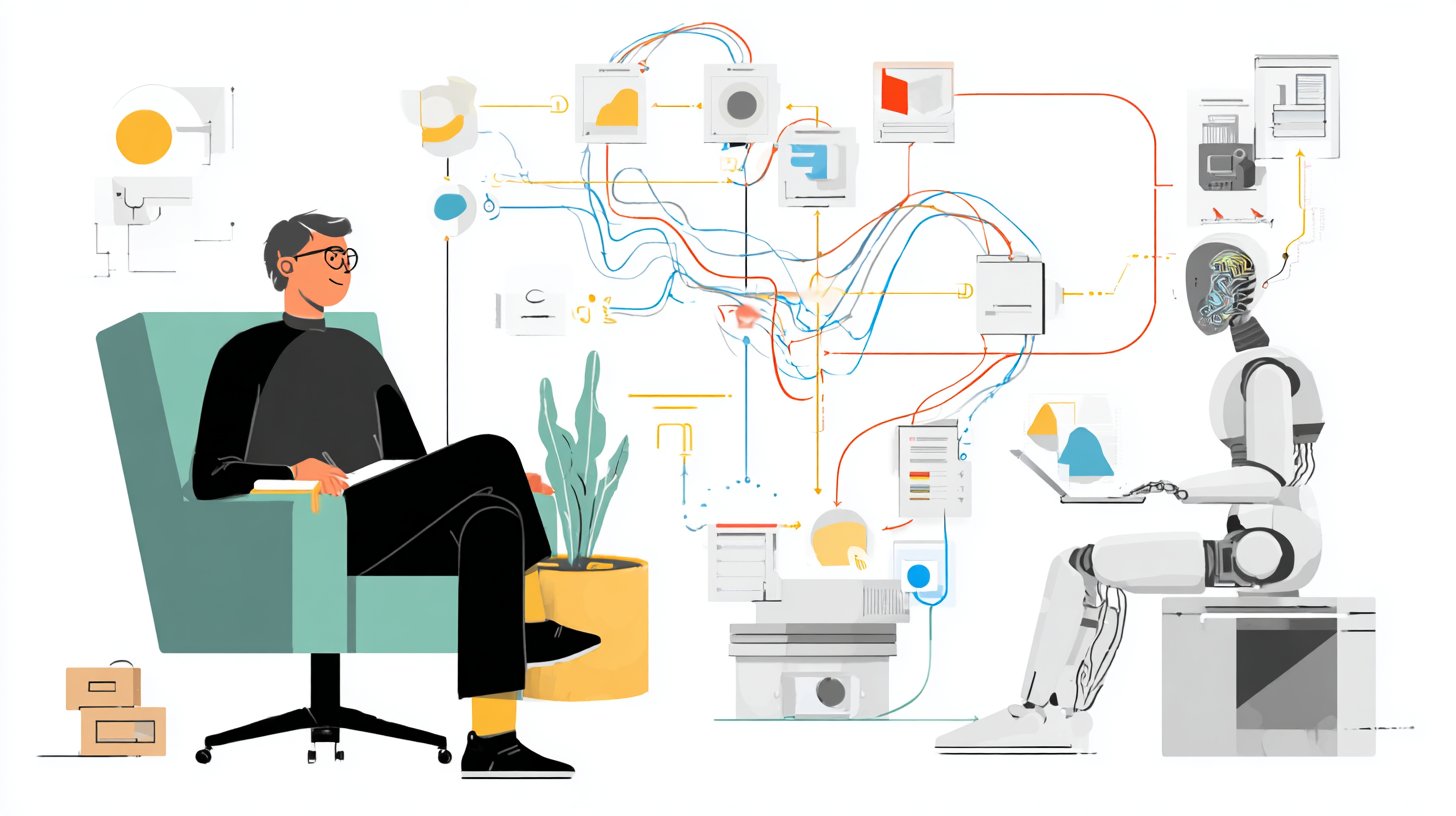
In the future, websites might need:
“Human UI + AI Interface”
Both equally important.
Long-Term Vision: The Internet for AI Workers
If WebMCP succeeds, the internet may evolve into:
-
agent-accessible platforms
-
structured task marketplaces
-
AI-driven service networks
Instead of users browsing manually:
AI assistants could handle everything.
Shopping
Booking
Research
Administration
Subscriptions
Technical troubleshooting
All automatically.
Final Thoughts
The announcement that Google AI Introduces the WebMCP marks one of the most important steps toward an AI-native internet.
By allowing websites to expose structured tools directly to AI agents, Google is solving one of the biggest problems in automation: unreliable web interaction.
While still in early preview, WebMCP could eventually transform:
-
web browsing
-
SaaS platforms
-
online commerce
-
enterprise automation
-
digital assistants
In many ways, this protocol may become the foundation for the next generation of the internet — one built not just for humans, but for intelligent digital agents working on our behalf.
For quick updates, follow our whatsapp –https://whatsapp.com/channel/0029VbAabEC11ulGy0ZwRi3j
https://bitsofall.com/openai-gpt-5-3-codex-and-frontier-guide/
https://bitsofall.com/alibaba-open-sources-zvec/
McKinsey “Lilli” Assessments: The Complete Guide to Understanding the McKinsey Hiring Test
Meet ‘Kani-TTS-2’: The Next-Generation AI Voice Model Transforming Text-to-Speech Technology