C3 Generative AI: Enterprise-Grade Generative Intelligence for Real-World Operations
Generative AI has rapidly evolved from a research novelty into a powerful business capability. While consumer-facing tools focus on chatbots and content creation, enterprises face a very different challenge: how to deploy generative AI securely, reliably, and at scale across mission-critical operations. This is where C3 Generative AI stands apart.
Built on the proven C3 AI Platform, C3 Generative AI brings large language models (LLMs) and generative techniques into regulated, data-intensive enterprise environments—without compromising governance, security, or performance.
This article provides a 1500-word, informative deep dive into C3 Generative AI, covering its architecture, capabilities, enterprise use cases, benefits, and how it differs from consumer-grade generative AI tools.

What Is C3 Generative AI?
C3 Generative AI is an enterprise-ready generative AI solution designed to help organizations apply large language models and generative techniques directly to their proprietary data, operational workflows, and decision-making processes.
Unlike standalone LLM tools, C3 Generative AI is:
-
Context-aware (grounded in enterprise data)
-
Governed and explainable
-
Integrated into operational systems
-
Optimized for production workloads
It enables enterprises to safely use generative AI for tasks such as knowledge retrieval, predictive reasoning, workflow automation, and decision support—at industrial scale.
Why Enterprises Need Generative AI Differently
Most generative AI tools are designed for individuals or small teams. Enterprises, however, face unique constraints:
-
Sensitive and regulated data
-
Complex, multi-system IT environments
-
Need for explainability and auditability
-
Long-running production workflows
-
Performance and cost predictability
C3 Generative AI addresses these challenges by embedding generative AI into a full enterprise AI lifecycle, rather than treating it as a standalone chatbot.
Core Architecture of C3 Generative AI
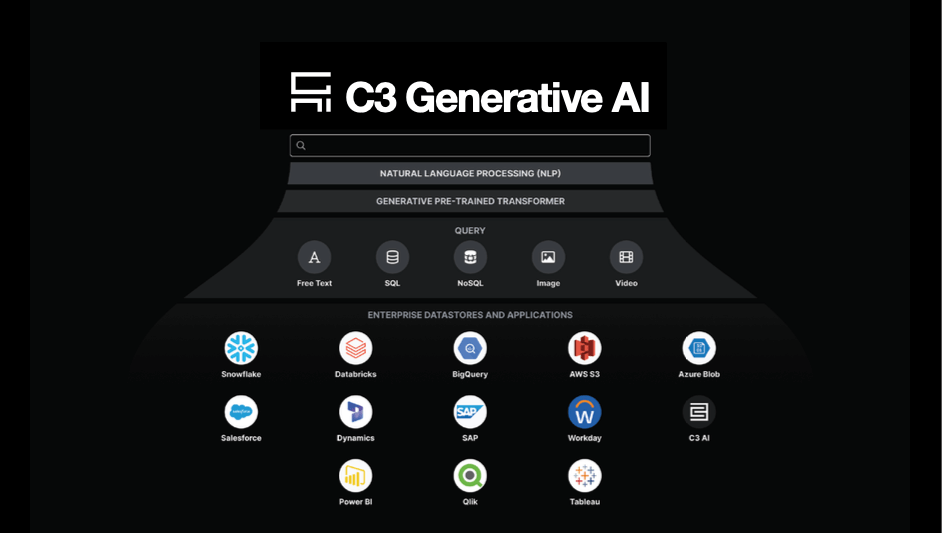
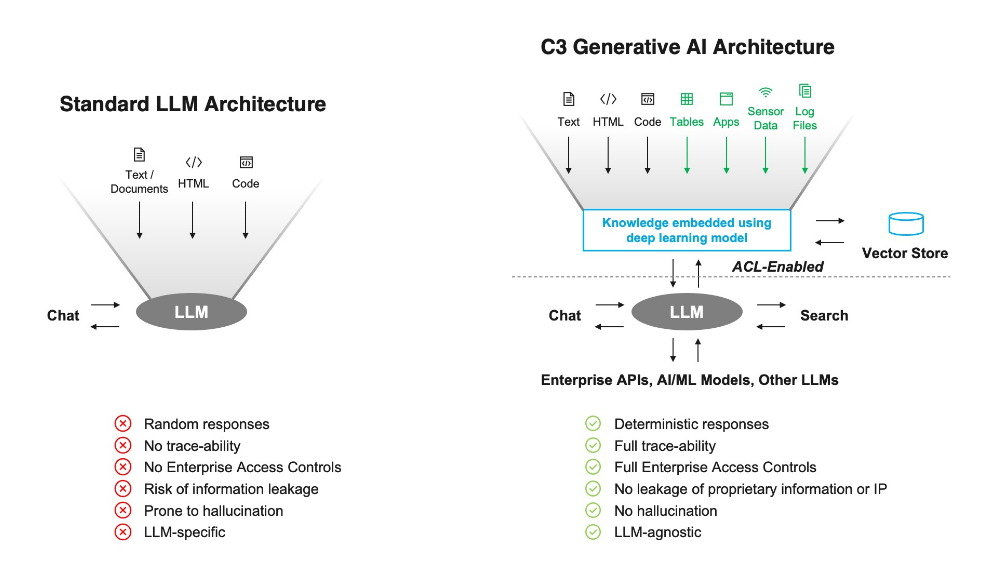
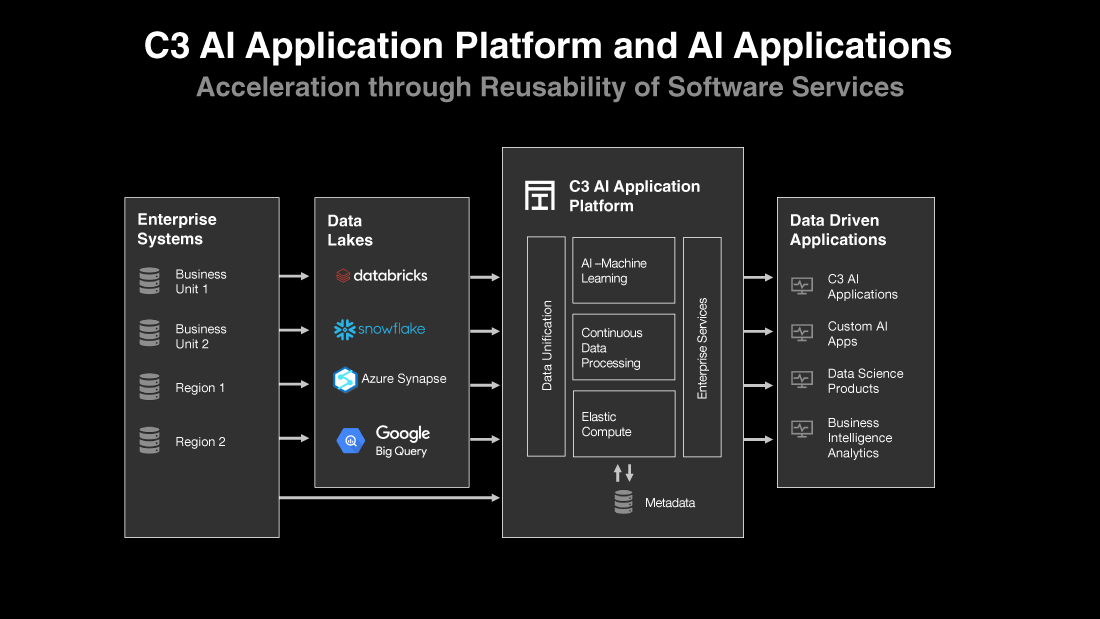
C3 Generative AI is not a single model—it is an orchestrated system that combines generative models with enterprise data and analytics.
1. Enterprise Data Grounding
At the foundation is C3 AI’s unified data model, which:
-
Integrates structured and unstructured enterprise data
-
Maintains data lineage and governance
-
Enables real-time and historical context
This grounding ensures that generative outputs are fact-based, traceable, and enterprise-relevant, significantly reducing hallucinations.
2. Large Language Model Orchestration
C3 Generative AI supports:
-
Multiple LLMs (open-source and proprietary)
-
Model routing based on task type
-
Cost and latency optimization
-
Secure, private model deployment
Enterprises can choose the right model for each use case rather than being locked into a single vendor.
3. Retrieval-Augmented Generation (RAG)
A key capability is RAG, where:
-
Generative responses are augmented with enterprise documents, databases, and telemetry
-
Outputs are dynamically linked to source data
-
Users can trace responses back to original records
This is critical for compliance-heavy industries like finance, healthcare, and defense.
4. Guardrails, Governance, and Explainability
C3 Generative AI includes built-in:
-
Access controls and role-based permissions
-
Prompt and response logging
-
Policy enforcement
-
Bias detection and explainability tools
This allows enterprises to deploy generative AI with confidence and accountability.
Key Capabilities of C3 Generative AI
1. Enterprise Knowledge Assistants
C3 Generative AI can power intelligent assistants that:
-
Answer questions using internal documentation
-
Summarize operational data
-
Provide contextual insights across systems
Unlike generic chatbots, these assistants understand enterprise-specific terminology and workflows.
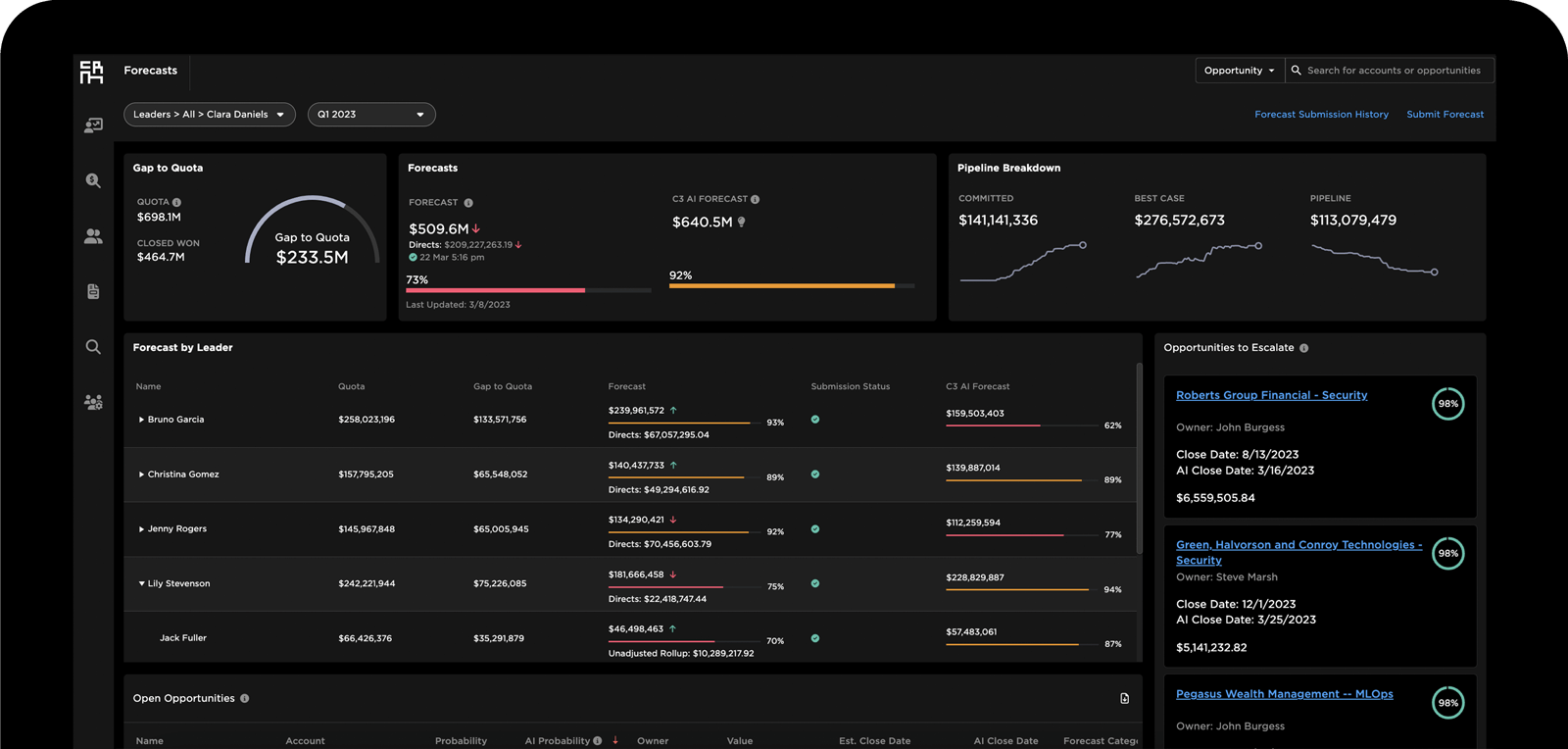
2. AI-Powered Decision Support
Generative AI is combined with predictive models to:
-
Explain forecasts and anomalies
-
Generate scenario analyses
-
Recommend actions based on real-time conditions
This bridges the gap between advanced analytics and human decision-makers.
3. Workflow Automation and Augmentation
C3 Generative AI can:
-
Generate reports and incident summaries
-
Automate root-cause analysis explanations
-
Assist operators in troubleshooting complex systems
Rather than replacing humans, it augments expert workflows.
4. Natural Language Interfaces for Complex Systems
Operators can interact with:
-
Asset management systems
-
Supply chains
-
Financial models
-
Defense logistics platforms
using natural language, without needing technical query languages or dashboards.
Industry Use Cases of C3 Generative AI
Manufacturing
-
Natural language access to asset performance data
-
Automated maintenance explanations
-
Root-cause analysis narratives
This improves operational efficiency and reduces downtime.
Energy and Utilities
-
Grid event analysis summaries
-
Regulatory reporting assistance
-
Emissions and sustainability insights
C3 Generative AI helps operators manage increasingly complex energy systems.
Oil and Gas
-
Production optimization explanations
-
Safety incident reporting
-
Equipment health diagnostics
Generative AI enhances both safety and productivity.
Financial Services
-
Explainable risk assessments
-
Fraud investigation summaries
-
Regulatory-compliant reporting
The explainability layer is especially critical in regulated financial environments.
Defense and Government
-
Mission readiness insights
-
Logistics planning explanations
-
Intelligence analysis support
C3 Generative AI is well-suited for high-security, mission-critical contexts.
C3 Generative AI vs Consumer Generative AI
| Consumer GenAI Tools | C3 Generative AI |
|---|---|
| Public, generic data | Enterprise proprietary data |
| Limited governance | Full enterprise governance |
| Chat-focused | Workflow-embedded |
| High hallucination risk | Data-grounded responses |
| Individual use | Organization-wide deployment |
This distinction highlights why enterprises cannot rely solely on consumer-grade generative AI.
Business Benefits of C3 Generative AI
Faster Decision-Making
Executives and operators gain instant, explainable insights from complex data.
Improved Productivity
Knowledge workers spend less time searching and interpreting data.
Reduced Risk
Data grounding and governance minimize hallucinations and compliance risks.
Scalable Innovation
Generative AI can be safely deployed across departments and use cases.
Challenges and Considerations
Despite its strengths, enterprises adopting C3 Generative AI should consider:
-
Change Management: Teams must adapt workflows to AI-augmented processes.
-
Data Readiness: Generative AI is only as good as the data foundation beneath it.
-
Cost Management: LLM usage must be optimized for large-scale deployment.
C3 AI addresses many of these challenges through model orchestration and lifecycle management.
The Future of C3 Generative AI
As enterprises move toward agentic AI systems, C3 Generative AI is positioned to:
-
Power autonomous decision-support agents
-
Integrate generative reasoning with predictive optimization
-
Enable trustworthy, large-scale AI agents in regulated industries
Rather than chasing hype, C3 AI focuses on durable, operational generative intelligence.
Final Thoughts
C3 Generative AI represents a mature, enterprise-first approach to generative AI. By combining large language models with governed data, predictive analytics, and operational workflows, it enables organizations to unlock real value from generative AI—without sacrificing trust or control.
For enterprises looking to move beyond experimentation and deploy generative AI at scale, C3 Generative AI offers a powerful, production-ready foundation for the next phase of AI-driven transformation.
C3 AI Explained: How the Enterprise AI Platform Powers Large-Scale Business Intelligence
Google DeepMind Introduces SIMA 2 — A Gemini-Powered Generalist Agent for Complex 3D Virtual Worlds
MBZUAI Researchers Introduce PAN — A General World Model for Interactable, Long-Horizon Simulation