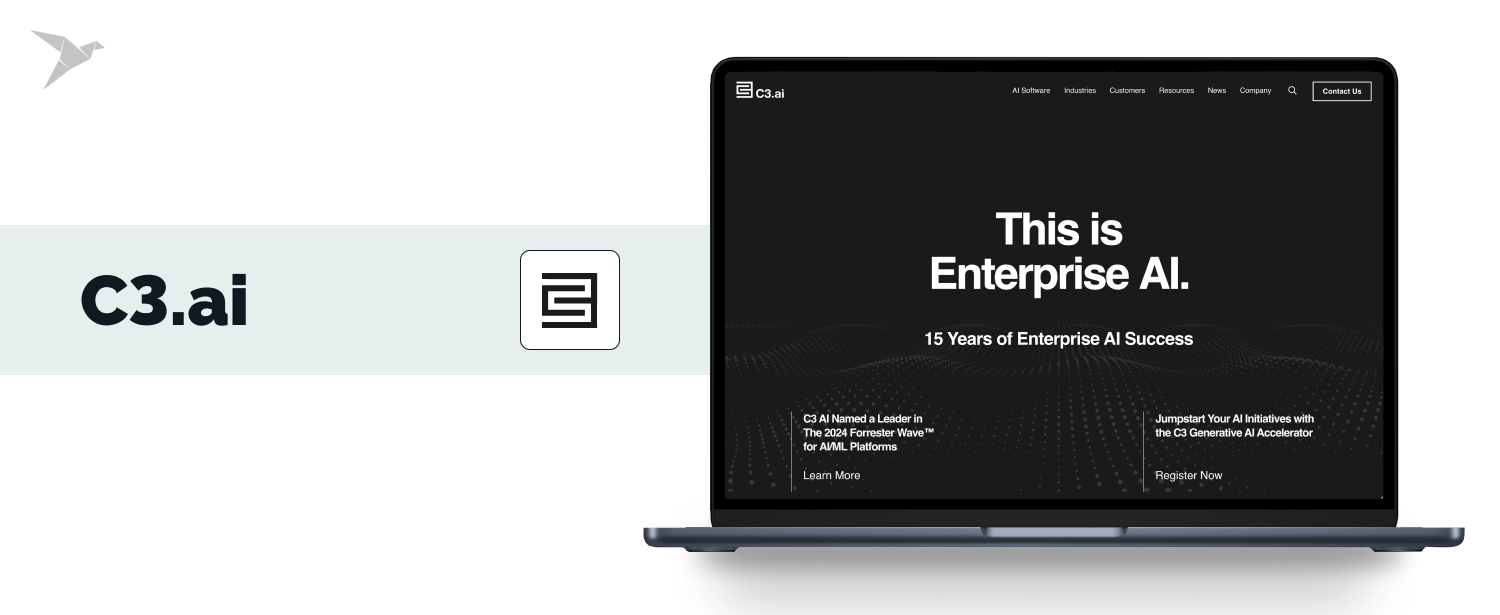
 C3 Generative AI Accelerator: What It Is and Why Enterprises Use It
Enterprise generative AI has a very specific problem: businesses don’t suffer from a lack of models—they suffer from fragmented knowledge, strict access controls, and high stakes where a “confidently wrong” answer can create real damage. C3.ai positions the C3 Generative AI Accelerator as a practical fast track to deploy enterprise-grade, high-accuracy generative AI applications that can work across complex data estates—documents, tables, and operational data—without turning your rollout into a never-ending science project. C3 AI+2C3 AI+2
In this guide, you’ll learn what the Accelerator is, how it works under the hood, what use cases it targets, and how to evaluate whether it fits your organization.
What is the C3 Generative AI Accelerator?
The C3 Generative AI Accelerator is essentially a structured path (and packaged approach) to rapidly implement C3 Generative AI for specific business outcomes—especially use cases like contact centers, financial analysis, government/constituent services, and industrial operations. C3 AI+1
Think of it as an “implementation accelerator” for deploying GenAI in production with enterprise requirements: security, auditability, and repeatable performance. It is tied closely to the broader C3 Generative AI product suite, which is designed to unify enterprise knowledge and deliver answers through a natural language search/chat interface—plus the ability to orchestrate actions/workflows using agents. C3 AI+1
Why enterprises need an “accelerator” for GenAI
Most GenAI pilots fail (or stall) for predictable reasons:
-
Siloed data: critical knowledge is scattered across ERP/CRM systems, data warehouses, SharePoint drives, PDFs, ticketing tools, and tribal memory.
-
Trust gap: leaders need answers that are traceable to sources, not hallucinations.
-
Security constraints: access controls must be enforced consistently, even in chat-based UX.
-
Integration + operations: production readiness involves governance, monitoring, and change management—not just a demo.
C3 Generative AI is built around these realities—highlighting deterministic responses, traceability to ground truth, and enterprise access control inheritance during ingestion. C3 AI+1
The core idea: RAG + deterministic, traceable answers
C3 emphasizes a retrieval-augmented generative architecture (RAG) that separates the enterprise knowledge base from the LLM—aiming for more consistent answers and reduced risk of data/IP leakage. C3 AI+1
What that means in practice
-
Users ask a question in natural language.
-
The system retrieves the most relevant internal sources (documents, tables, records).
-
The model generates an answer grounded in retrieved evidence.
-
Outputs can include source references so users can verify what the response is based on. C3 AI+1
This “ground-first” approach matters most when the question is operational (policy, compliance, finance, troubleshooting), not creative writing.
Enterprise-grade capabilities that matter (beyond “chat”)
C3 Generative AI positions itself as more than a chatbot. The platform highlights:
1) Agentic workflows (not just Q&A)
C3 Generative AI supports using pre-built agents and also building your own agents to retrieve data, analyze it, surface insights, and initiate workflows. C3 AI+1
2) Omni-modal enterprise data
The product is designed to work across enterprise data types—documents, tabular/ERP data, and even operational/sensor-style data—so answers aren’t limited to PDFs and wiki pages. C3 AI+1
3) LLM-agnostic architecture
C3 states an open, LLM-agnostic approach: enterprises can leverage different models, including domain/use-case-specific models, and can embed or fine-tune other proprietary or open models. C3 AI
4) Access controls and leakage reduction
C3 highlights inheriting enterprise access controls during ingestion and separating the model from enterprise data to reduce LLM-caused leakage risk. C3 AI+1
What you get from the C3 Generative AI Accelerator (practical outcomes)
The Accelerator is most compelling when you want a high-impact use case implemented quickly and safely. C3 showcases Accelerator positioning around use cases like:
-
Contact Centers: answer caller questions with context from profile and case history. C3 AI+1
-
Financial Analysis: analyze complex documents, financial statements, and structured market data faster. C3 AI+1
-
Government/Constituent Services: improve response quality and reduce wait times with rapid, reliable answers. C3 AI+1
-
Industrial Operations: accelerate troubleshooting, monitor asset health, and onboard employees faster. C3 AI+1
C3 also publishes customer success-style outcomes such as large reductions in time spent retrieving information and high extraction accuracy for structured tabular data (on its product page). C3 AI

Typical implementation flow (how enterprises roll this out)
While every enterprise is different, a pragmatic Accelerator-style rollout usually looks like:
Step 1: Pick the “right” first use case
Best first targets have:
-
high volume of repeated questions (support, internal ops, policy)
-
measurable time savings
-
clear ground-truth sources
-
manageable permissioning (so access control is enforceable)
Step 2: Unify and index your knowledge sources
C3 Generative AI is positioned as a “unified knowledge source” across enterprise systems and datastores—connecting the places your critical knowledge already lives. C3 AI
Step 3: Configure retrieval, grounding, and citations
This is where RAG quality is won or lost:
-
chunking strategy
-
metadata + filtering
-
ranking models
-
citation formatting and UX
C3’s emphasis on traceability to the exact source is designed to increase trust and adoption. C3 AI+1
Step 4: Add agent actions (where it makes sense)
For example:
-
create/update a case
-
kick off an approval workflow
-
generate a structured summary for a CRM note
C3 explicitly highlights agents that can surface insights and initiate workflows. C3 AI+1
Step 5: Validate with humans-in-the-loop
C3 also highlights human supervision and source validation as part of its “high accuracy” positioning. C3 AI+1
Cost and commercialization (what C3 has publicly said)
C3 has publicly described a commercialization model where it supports customers in bringing a generative AI application into production within 12 weeks (with a stated cost), followed by consumption-style pricing per vCPU/vGPU hour (with volume discounts), and availability via major cloud marketplaces. C3 AI
(As always, real enterprise pricing depends on scope, data complexity, and deployment requirements—but this gives you a directional idea.)
How C3 Generative AI compares to “DIY RAG” on open-source stacks
Many teams ask: “Why not just build RAG ourselves with vector DB + framework + LLM API?”
DIY can work—but the hidden costs are usually:
-
building a secure ingestion pipeline that respects permissions
-
designing traceability and governance
-
maintaining retrieval quality across diverse data types
-
making it production-ready (monitoring, scaling, testing, auditing)
C3’s value proposition is that these enterprise requirements are first-class: deterministic/traceable answers, enterprise access controls, omni-modal enterprise data support, and LLM-agnostic orchestration—wrapped in a product and delivered through pre-built applications/accelerators. C3 AI+2C3 AI+2

Who should use the C3 Generative AI Accelerator?
The Accelerator tends to fit best if you are:
-
A large or mid-market enterprise with multiple siloed systems
-
Under compliance/security pressure (regulated industries, government)
-
Deploying GenAI where accuracy and source traceability are non-negotiable
-
Trying to move from pilots to repeatable production deployments
-
Looking for a packaged approach to common enterprise GenAI use cases (service, finance, ops) C3 AI+2C3 AI+2
If your needs are purely creative or marketing copy generation, you might not need an enterprise accelerator—lighter-weight tools can be enough.
Best practices to get maximum ROI from the Accelerator
-
Start narrow, then expand: one department, one workflow, one KPI.
-
Design for adoption: show citations and “why this answer” to build trust. C3 AI+1
-
Treat retrieval as a product: measure “answer acceptance rate,” “citation usefulness,” and “time-to-resolution.”
-
Lock down permissions early: access control is not a phase-2 feature. C3 AI+1
-
Add actions only after Q&A is stable: agentic workflows multiply value, but only when your grounding is reliable. C3 AI+1
FAQ: C3 Generative AI Accelerator
Is the Accelerator only for one industry?
No. C3 highlights multiple pre-built applications across industries and business processes, including government programs, industrial operations, contact centers, and financial analysis. C3 AI+2C3 AI+2
Does it require one specific LLM (like only OpenAI or only Anthropic)?
C3 states an LLM-agnostic architecture and support for hybrid model pipelines, including smaller fine-tuned models. C3 AI
How does it reduce hallucinations?
By separating enterprise data from the LLM and using retrieval-augmented generation with traceability back to sources—aiming for deterministic, verifiable responses. C3 AI+1
Can it work with both structured and unstructured data?
Yes—C3 highlights unifying structured (e.g., ERP/tabular) and unstructured data (documents/text), plus broader omni-modal support. C3 AI+1
Conclusion
The C3 Generative AI Accelerator is best understood as a fast path to deploy
production-ready enterprise GenAI—especially for use cases where
accuracy, auditability, and access control are critical.
By combining an enterprise data foundation with RAG-based grounding,
traceability to source, and agentic workflows, it aims to help organizations
move beyond “chatbot pilots” into repeatable, value-producing deployments
across support, finance, government services, and industrial operations.
Focal Loss vs Binary Cross-Entropy: A Complete, In-Depth Comparison for 2025
NVIDIA AI Introduces TiDAR — “Think in Diffusion, Talk in Autoregression”
Meta AI Releases Omnilingual ASR — A Breakthrough for Speech Technology