Amazon Warehouse Robots Using AI-Driven Learning to Handle Diverse Products
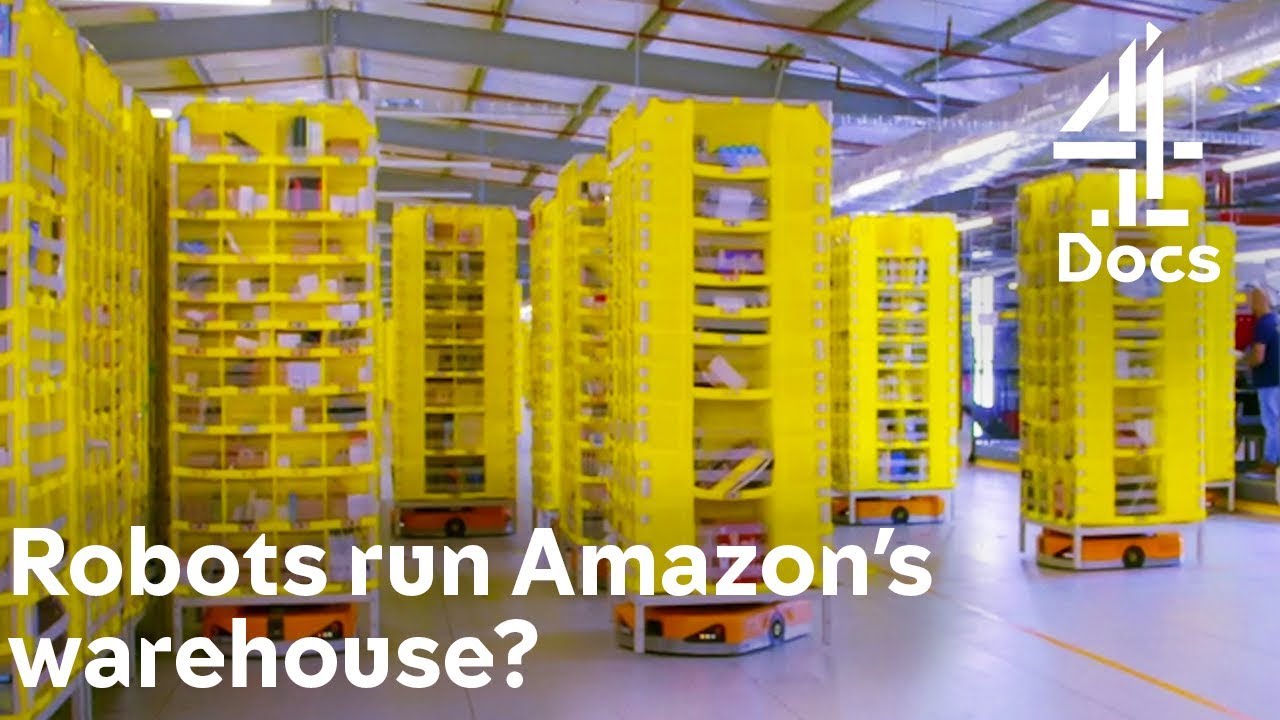
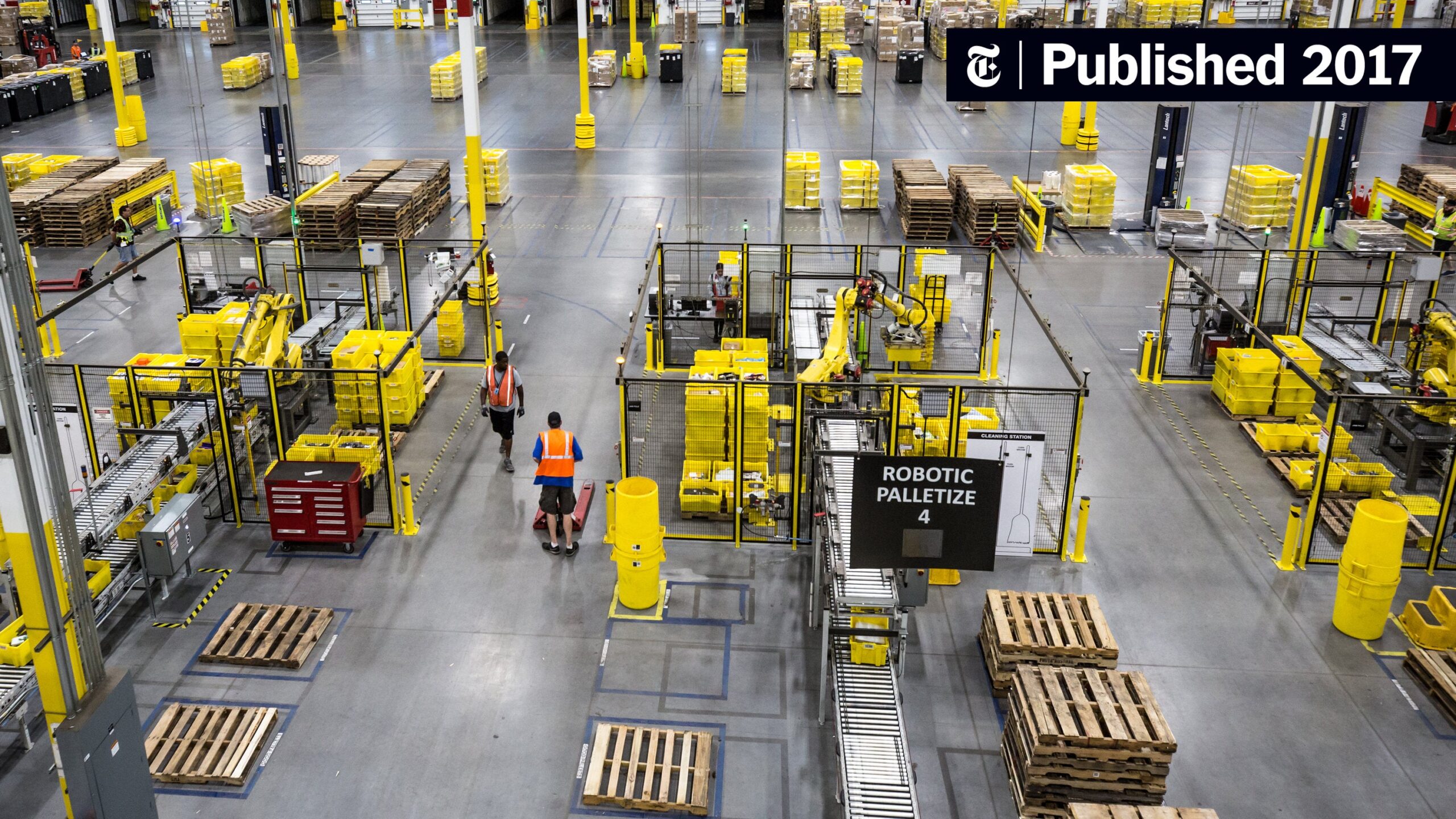
Walk into a modern Amazon fulfillment center and you’ll see a choreography that looks almost alive: mobile robots gliding under shelving pods, robotic arms reaching into bins, vision systems scanning labels, and humans stepping in at the “last mile” of judgment and exception handling. What makes today’s warehouse automation different from the industrial robots of the past isn’t just speed or strength—it’s adaptability. Amazon is increasingly pushing robots beyond repetitive, identical tasks and into the messier reality of e-commerce: millions of products, constant assortment changes, unpredictable packaging, fragile items, deformable materials, and bins packed tight.
This is where AI-driven learning—especially computer vision, tactile sensing, and foundation-model-like approaches—becomes the key. Instead of programming a robot for one rigid motion in one fixed setup, the goal is to build robots that can learn how to handle variety: different shapes, sizes, textures, and placements, and then improve as they encounter new situations. Amazon has publicly highlighted multiple systems that show how this shift is happening, from item-handling arms like Sparrow to touch-enabled robots like Vulcan, plus fleet-scale AI used to coordinate motion across huge facilities. About Amazon+2About Amazon+2
Why “diverse products” is the hardest problem in warehouse robotics
Traditional automation thrives on uniformity: same object, same orientation, same pick point, same cycle time. E-commerce is the opposite.
A single Amazon facility may process:
-
rigid boxes, soft polybags, crinkly pouches
-
glossy plastic, matte cardboard, reflective metal
-
tiny cosmetics and bulky home goods
-
fragile items that can’t be squeezed, and heavy items that need firm grip
-
products stacked neatly and products jammed into fabric bins at awkward angles
Even small variations can break a classical robotic pipeline. A barcode might be partially occluded. A bag may fold, changing the robot’s grasp target. A suction cup might lose seal on textured packaging. A gripper might crush a soft item if force isn’t controlled.
To handle this diversity, robots need three things at once:
-
Perception (What am I looking at?)
-
Planning (How should I move?)
-
Control (How much force is safe, and what do I do if reality differs from my plan?)
AI-driven learning is the glue that helps link those steps under real-world uncertainty.
The evolution: from “robot arms” to “robots that learn”
Amazon has steadily increased its robotics footprint for years, and in 2025 it publicly marked a major milestone: deploying its 1 millionth robot and introducing a new AI foundation model designed to improve fleet efficiency. About Amazon
That announcement matters because it signals a shift in strategy:
-
Not just adding more machines
-
But improving the “brains” that let those machines coordinate, adapt, and learn across environments
A warehouse robot that learns is fundamentally different from a warehouse robot that repeats. Learning-enabled systems can generalize across product variety, reduce the “long tail” of exceptions, and keep getting better as conditions change (new product types, new packaging trends, new bin configurations).
Key Amazon systems pushing AI-driven handling of product variety
1) Sparrow: picking and moving “millions of diverse products”
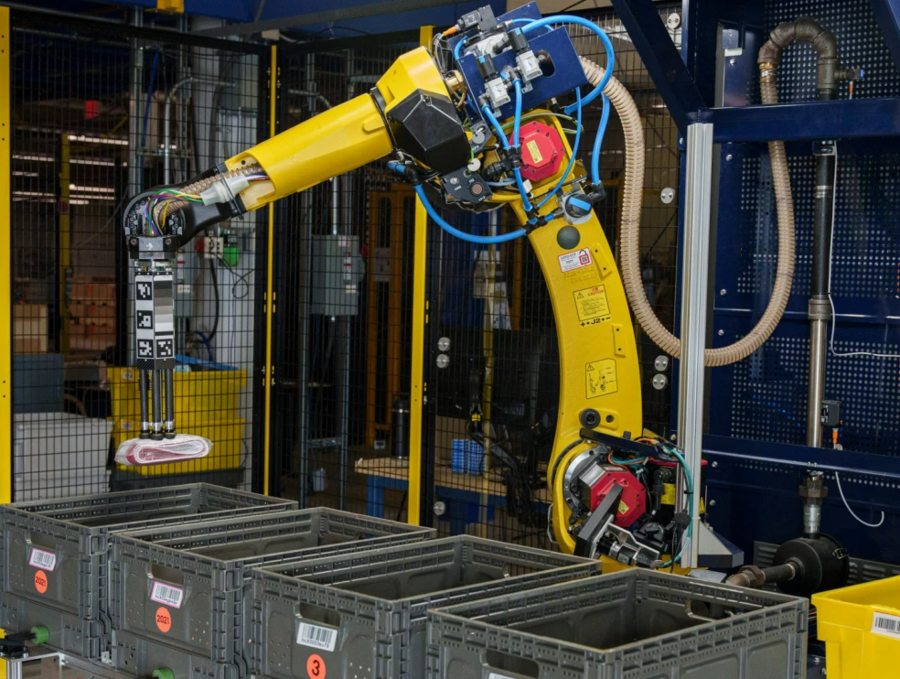
Amazon introduced Sparrow as an intelligent robotic system built to move individual products in the fulfillment process, emphasizing the ability to work across massive item diversity rather than a narrow SKU set. About Amazon
Sparrow represents the “vision + grasping” challenge:
-
Identify the right item among many
-
Determine how to pick it (suction, pinch, side grasp)
-
Execute reliably at speed
In classic robotics, each new object class might demand new tuning. With AI-driven perception and learning-based grasp policies, the system aims to scale across variety faster—because it can learn from data rather than rely only on hard-coded rules.
What this enables in practice
-
Faster handling of mixed inventory
-
Reduced dependency on perfectly presented items
-
Better performance on previously “robot-hostile” items like soft packaging
Sparrow is part of a broader pattern: moving item-handling away from strictly deterministic scripts toward data-driven adaptability.
2) Vulcan: adding touch and force to handle the real-world messiness
Vision is powerful, but sight alone doesn’t solve everything in dense storage. Sometimes you can’t see the exact contact point. Sometimes objects are wedged. Sometimes packaging looks identical but behaves differently when squeezed.
In 2025, Amazon unveiled Vulcan, described as its first robot with a “sense of touch,” combining tactile/force sensing with AI to pick and stow more of the inventory typically handled by humans. About Amazon+2amazon.science+2
Amazon Science explains Vulcan’s approach in engineering terms: end-of-arm tools equipped with sensors measure force/torque, enabling the robot to make contact with random objects and adjust—backing off before force becomes excessive. amazon.science
Why this is huge for “diverse products”:
-
Texture and compliance: A soft pouch behaves differently than a hard box
-
Packing density: Items in fabric bins often require careful nudging
-
Damage avoidance: Many products can’t tolerate brute-force manipulation
Reports on Vulcan highlight the robot learning from physical interaction data and being designed to work alongside humans, especially reducing strain from top/bottom bin retrieval. The Verge+1
If you’re thinking “this sounds like physical AI,” you’re on the right track: Vulcan is about grounding intelligence in real contact, not just pixels.
3) Sequoia and systems-level automation: moving inventory faster to reduce “search time”
Not all robotics progress is about gripping. A lot of waste in fulfillment is time spent locating and moving inventory so it’s ready for picking and packing.
Amazon introduced Sequoia as a new robotics system aimed at speeding up how inventory is identified and brought to the right place in the process. About Amazon
In a diverse-product world, the faster the system can reorganize, present, and route items, the more resilient the overall operation becomes—because humans and robots spend less time hunting and more time executing.
You can think of Sequoia-like systems as “warehouse circulation”: ensuring the right items flow to the right stations, reducing congestion and making the entire environment more robot-friendly.
4) Fleet-scale AI: coordinating motion across huge robot populations
Once you have hundreds of thousands of robots, the challenge becomes less about a single robot being smart and more about the entire fleet moving efficiently.
Amazon’s 2025 announcement describes a new AI foundation model designed to make its robot fleet “smarter and more efficient.” About Amazon
This is a big deal for product diversity indirectly:
-
Better coordination means less congestion
-
Less congestion means more predictable station timing
-
More predictable timing means fewer rushed picks and fewer errors
-
Fewer errors means smoother handling of edge cases
In other words, “AI-driven learning” isn’t only about grasping objects—it’s also about optimizing the environment and motion economy that surrounds object handling.
How AI-driven learning actually helps robots handle diversity
Let’s break down the practical AI pieces that matter most in warehouses:
Computer vision that generalizes beyond training photos
Warehouse lighting, reflections, scuffed packaging, and partial occlusion are constant issues. Learning-based vision systems can be trained on massive datasets of real warehouse imagery so they become robust to:
-
odd angles
-
varying lighting
-
partially blocked labels
-
look-alike packaging
This generalization is essential when product catalogs change daily.
Grasp planning that’s data-driven, not rule-bound
Instead of “if object is box-shaped, do grasp X,” modern systems learn grasp success patterns:
-
where suction tends to fail (textured, perforated, fabric-like surfaces)
-
where pinches tend to slip (thin plastic)
-
how to recover when initial contact doesn’t match expectations
This is especially relevant in bins packed with mixed items.
Tactile sensing and force control for delicate or cramped situations
Vulcan represents this direction: using force feedback to interact safely in tight spaces and avoid damaging items. amazon.science+1
Touch is what turns robots from “careful but clueless” into “capable in clutter.”
Continuous improvement loops in real operations
A key advantage Amazon has is scale: a vast number of picks, stows, scans, and moves every day. AI systems can learn from:
-
successes (what worked)
-
failures (what slipped, what jammed, what was misidentified)
-
near-misses (high force readings, unstable grasps)
And that learning can be deployed back into updated models and policies—turning operations into an improvement engine.
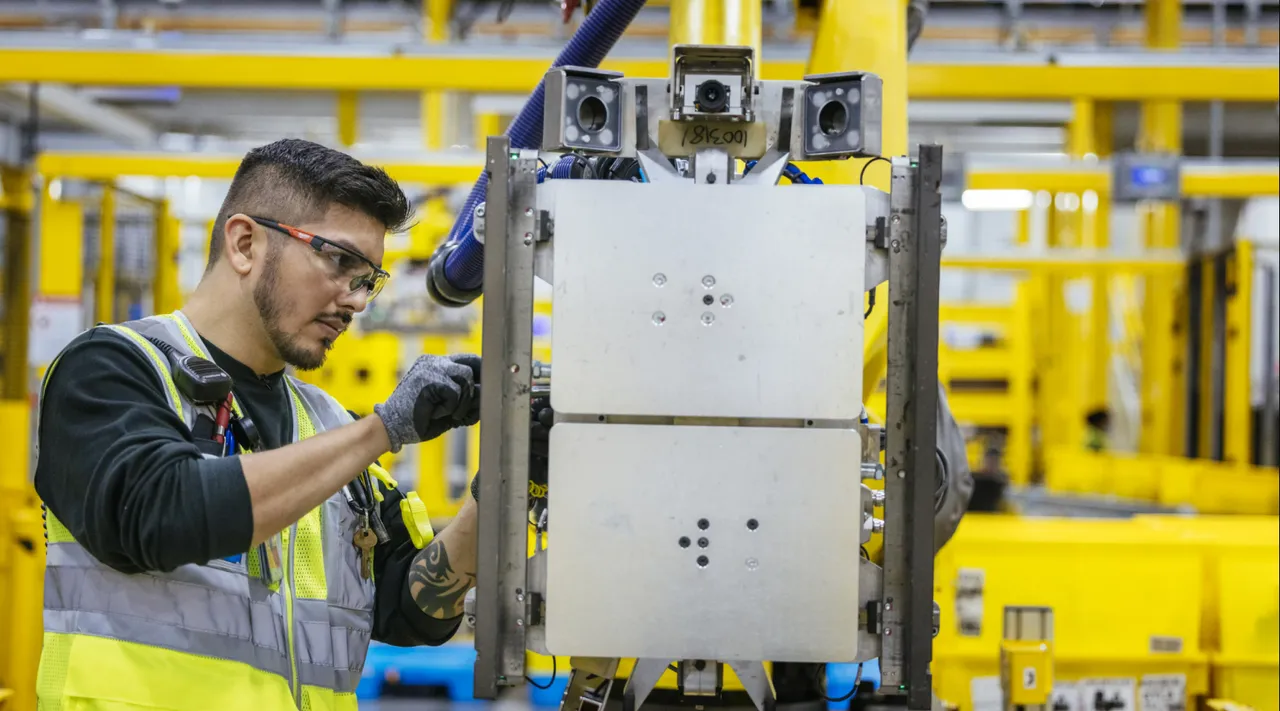
Where humans still beat robots (and why Amazon keeps emphasizing collaboration)
Even with AI-driven learning, robots remain imperfect in edge cases:
-
damaged packaging
-
liquids leaking
-
products stuck together
-
items missing labels
-
ambiguous variations (same brand, different size)
This is why Amazon messaging around systems like Vulcan has emphasized augmentation—reducing strain and improving efficiency—rather than full replacement. Business Insider
In practice, the “winning” approach today is:
-
robots handle high-volume, ergonomically difficult, repetitive segments
-
humans handle exceptions, delicate judgment calls, and complex multi-step tasks
-
both sides feed data back into the system so the next version performs better
Safety, reliability, and the warehouse reality check
AI-driven robots must be safe around people, reliable across long shifts, and predictable enough to integrate into strict operational workflows.
Key safety and reliability requirements include:
-
conservative force limits (especially in shared spaces)
-
robust stop/recovery behaviors
-
clear human-robot interaction zones
-
monitoring for drift (models behaving worse after environmental changes)
The “touch” approach is also a safety story: knowing contact forces helps prevent damage to products and reduces unexpected motion.
What’s next: from specialized robots to more general-purpose “physical AI”
The broader industry trend is moving toward more general-purpose robot intelligence—systems that can adapt across tasks and hardware types. Reuters reported in 2025 on Skild AI, an Amazon-backed robotics startup, unveiling a general-purpose model (“Skild Brain”) intended to work across multiple robot forms and learn continuously from deployed robots. Reuters
Whether it’s Amazon’s in-house systems or investments in foundational robotics intelligence, the direction is clear:
-
more generalization
-
more learning from real-world data
-
more adaptation to unstructured, cluttered environments
For warehouses, that means a gradual expansion of what robots can handle—from “some standardized bins” to “most of the messy middle of e-commerce.”
The bottom line
Amazon warehouse robotics is moving from automation to adaptive automation—where robots don’t just execute a script, but learn to deal with product diversity and operational unpredictability.
-
Sparrow illustrates AI-driven grasping across massive item variety. About Amazon
-
Vulcan adds tactile intelligence—force-aware manipulation that tackles cramped bins and delicate handling. About Amazon+2amazon.science+2
-
Sequoia and other systems streamline how inventory moves through the building, reducing time wasted searching for items. About Amazon
-
A fleet-scale AI model aims to make Amazon’s enormous robot population smarter and more efficient as a whole. About Amazon
Put together, these efforts point toward a warehouse where robots handle more of the long tail of product diversity—while humans increasingly focus on exceptions, oversight, and higher-skill operational roles. The biggest unlock isn’t a single robot arm; it’s the learning loop that turns every pick, stow, and move into training signal for the next improvement.
For quick updates, follow our whatsapp –https://whatsapp.com/channel/0029VbAabEC11ulGy0ZwRi3j
https://bitsofall.com/amazon-50-billion-ai-infrastructure-us-government/
https://bitsofall.com/tesla-optimus-updates-outdoor-autonomy-dexterity/
NVIDIA’s Nemotron 3 “Agentic” Model Series: What It Is and Why It Matters
Next-Generation Research: How Science, AI, and Technology Are Redefining the Future of Discovery