Mozilla One-Click Opt-Out: A New Era of Digital Privacy Control
In today’s hyper-connected digital world, privacy feels increasingly fragile. From targeted ads to invisible tracking scripts, users often don’t realize how much of their data is collected, analyzed, and sold. While regulations like GDPR and CCPA have pushed companies toward transparency, the process of opting out of data tracking still remains confusing and fragmented.
This is where Mozilla One-Click Opt-Out enters the conversation.
Mozilla, the organization behind the Firefox browser, has long positioned itself as a champion of open internet standards and user privacy. With the introduction of Mozilla One-Click Opt-Out, the company aims to simplify privacy controls and empower users to reclaim control over their digital footprint — instantly.
But what exactly is Mozilla One-Click Opt-Out? How does it work? Why does it matter? And could it reshape the future of online privacy?
Let’s explore in depth.
The Growing Problem of Online Tracking
Before understanding Mozilla One-Click Opt-Out, it’s important to examine the problem it addresses.
Most websites rely on advertising networks and data brokers to generate revenue. These systems use:
-
Third-party cookies
-
Browser fingerprinting
-
Cross-site tracking pixels
-
Behavioral analytics scripts
-
Device-level identifiers
Even when browsers block third-party cookies, advanced fingerprinting techniques can still track users through subtle device characteristics like screen resolution, fonts, and GPU signatures.
While privacy laws require websites to provide opt-out options, they often involve:
-
Multiple steps
-
Confusing privacy dashboards
-
Hidden toggles
-
Long forms
-
Separate requests to dozens of data brokers
In short, opting out is possible — but rarely simple.
Mozilla recognized this friction as a systemic issue.
What Is Mozilla One-Click Opt-Out?
Mozilla One-Click Opt-Out is a privacy feature designed to allow users to instantly request that participating websites and data brokers stop tracking and selling their personal information — with a single action.
Instead of navigating complex privacy menus, users can trigger a universal opt-out signal directly from their browser.
The idea is built around an evolving privacy standard known as Global Privacy Control (GPC) — a browser-level signal that tells websites:
“Do not sell or share my personal data.”
Mozilla’s implementation simplifies this further by integrating the opt-out mechanism seamlessly into Firefox settings and privacy tools.
How Mozilla One-Click Opt-Out Works
Mozilla One-Click Opt-Out operates at the browser level rather than requiring site-by-site requests.
Here’s how it functions:
1. Browser Signal Activation
When enabled, Firefox sends a privacy preference signal to websites that support Global Privacy Control.
2. Automatic Data Sale Restriction
Under laws like the California Consumer Privacy Act (CCPA), businesses are legally required to respect valid opt-out signals.
3. No Manual Forms
Users no longer need to submit individual opt-out forms to participating companies.
4. Persistent Preference
The signal continues across browsing sessions, ensuring ongoing protection.
In essence, Mozilla One-Click Opt-Out converts a complicated legal right into a simple technical toggle.
Why Mozilla One-Click Opt-Out Matters
1. Privacy Should Be the Default, Not a Puzzle
Most privacy tools assume technical knowledge. Mozilla flips that expectation by making privacy intuitive.
By reducing friction, Mozilla One-Click Opt-Out increases the likelihood that users will actually exercise their rights.
2. Strengthening Legal Compliance
With regulatory pressure growing globally, companies must honor consumer opt-out requests. Browser-based signals create a standardized method to enforce compliance.
3. Democratizing Digital Rights
Not everyone understands data brokers, tracking cookies, or fingerprinting techniques. Mozilla One-Click Opt-Out abstracts these complexities into a user-friendly experience.
Mozilla’s Privacy-First Legacy
Mozilla has consistently built its brand around privacy innovation:
-
Enhanced Tracking Protection (ETP)
-
Total Cookie Protection
-
Facebook Container
-
DNS over HTTPS (DoH) integration
-
Firefox Relay
Mozilla One-Click Opt-Out extends this mission by moving beyond blocking trackers to legally enforceable user intent signaling.
It shifts the conversation from “blocking ads” to “asserting rights.”
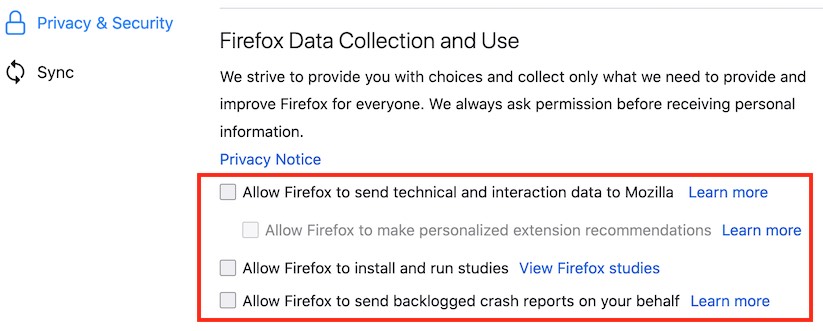
Technical Foundations Behind Mozilla One-Click Opt-Out
Mozilla’s system is based on open web standards and privacy frameworks such as:
-
Global Privacy Control (GPC)
-
Do Not Track (DNT) legacy concepts
-
State-level privacy regulations
-
Browser-based preference signaling
Unlike the older “Do Not Track” header, which many websites ignored due to lack of enforcement, Mozilla One-Click Opt-Out leverages legally recognized signals under state privacy laws.
This makes it far more powerful than previous attempts.
Comparison: Do Not Track vs Mozilla One-Click Opt-Out
| Feature | Do Not Track | Mozilla One-Click Opt-Out |
|---|---|---|
| Legal Enforcement | Weak | Stronger under privacy laws |
| Adoption | Limited | Growing with GPC support |
| Visibility | Often ignored | Increasing compliance |
| Ease of Use | Simple | Even more integrated |
Do Not Track failed largely because it lacked legal backing. Mozilla’s new approach aligns with enforceable rights.
Impact on Advertisers and Data Brokers
Mozilla One-Click Opt-Out represents a major shift in digital advertising economics.
If widely adopted:
-
Data brokers may see reduced data access
-
Behavioral advertising precision may decline
-
Companies may shift toward contextual advertising
-
First-party data strategies may dominate
This could accelerate the move away from surveillance-based advertising toward privacy-respecting models.
The Business Perspective
For businesses, Mozilla One-Click Opt-Out presents both challenges and opportunities.
Challenges:
-
Reduced third-party data access
-
Compliance adjustments
-
Infrastructure updates
Opportunities:
-
Increased consumer trust
-
Transparent data practices
-
Competitive differentiation through privacy
Brands that embrace privacy-first models may gain stronger loyalty in the long term.
User Benefits of Mozilla One-Click Opt-Out
Simplicity
No legal jargon. No endless forms.
Time Savings
One click replaces dozens of manual opt-outs.
Greater Transparency
Users clearly understand what preference is being communicated.
Persistent Protection
The signal remains active without recurring effort.
Limitations and Challenges
Despite its promise, Mozilla One-Click Opt-Out isn’t perfect.
1. Adoption Gap
Not all websites recognize Global Privacy Control yet.
2. Jurisdictional Limits
Legal enforceability varies by region.
3. Technical Loopholes
Fingerprinting and advanced tracking methods may still operate outside traditional data-sale definitions.
4. Awareness
Many users still don’t know such tools exist.
Widespread education and adoption are critical.
Global Implications
While Mozilla One-Click Opt-Out currently aligns strongly with U.S. privacy regulations, its influence could extend globally.
Countries strengthening data protection laws may adopt similar browser-based enforcement models.
This could lead to:
-
Universal privacy preference signals
-
International standardization
-
Cross-border compliance frameworks
Mozilla’s move may set a precedent for other browser makers.
Industry Reaction
Privacy advocates have largely praised Mozilla’s initiative for making rights accessible.
Technology companies are watching closely. If adoption rises, other browsers may integrate similar one-click systems.
Google Chrome, Microsoft Edge, and Apple Safari could face pressure to match or exceed this privacy functionality.
The Future of Browser-Level Privacy Controls
Mozilla One-Click Opt-Out signals a larger shift:
From reactive privacy (blocking trackers)
To proactive privacy (asserting legal rights)
Future developments may include:
-
AI-driven privacy audits
-
Real-time data broker transparency dashboards
-
Automatic deletion requests
-
Unified global opt-out systems
Browsers may become personal privacy control centers rather than simple navigation tools.
How to Enable Mozilla One-Click Opt-Out
While implementation details may vary by Firefox version, users typically:
-
Open Firefox Settings
-
Navigate to Privacy & Security
-
Enable Global Privacy Control
-
Activate One-Click Opt-Out
Once enabled, the browser automatically communicates preferences to participating websites.
No recurring maintenance is required.
Mozilla’s Competitive Position
In a landscape dominated by Big Tech advertising giants, Mozilla differentiates itself through privacy.
While other browsers rely heavily on ad ecosystems, Mozilla’s nonprofit foundation allows it to prioritize user interests.
Mozilla One-Click Opt-Out reinforces that strategic identity.
Is Mozilla One-Click Opt-Out the Future?
The concept of universal opt-out signaling aligns with growing consumer awareness about:
-
Data exploitation
-
AI training datasets
-
Behavioral manipulation
-
Digital surveillance capitalism
As users demand stronger control, simplified tools like Mozilla One-Click Opt-Out could become industry standards rather than optional features.
Final Thoughts
Mozilla One-Click Opt-Out represents more than just another browser setting — it reflects a philosophical shift in internet governance.
It transforms privacy rights from theoretical protections buried in policy documents into practical, accessible controls.
In a world where personal data fuels trillion-dollar industries, the ability to opt out with one click is revolutionary.
The future of digital privacy may not depend solely on legislation or corporate goodwill, but on empowering users with frictionless tools.
Mozilla has taken a meaningful step in that direction.
Whether other tech giants follow remains to be seen — but the signal has been sent.
And this time, it only takes one click.
For quick updates, follow our whatsapp –https://whatsapp.com/channel/0029VbAabEC11ulGy0ZwRi3j
https://bitsofall.com/hackernoon-tech-media-platform/
https://bitsofall.com/google-ai-introduces-paperbanana/
OpenAI’s GPT-5.3-Codex & Frontier — Shaping the Next Era of AI Agents