OpenAI’s GPT-5.3-Codex & Frontier — Shaping the Next Era of AI Agents
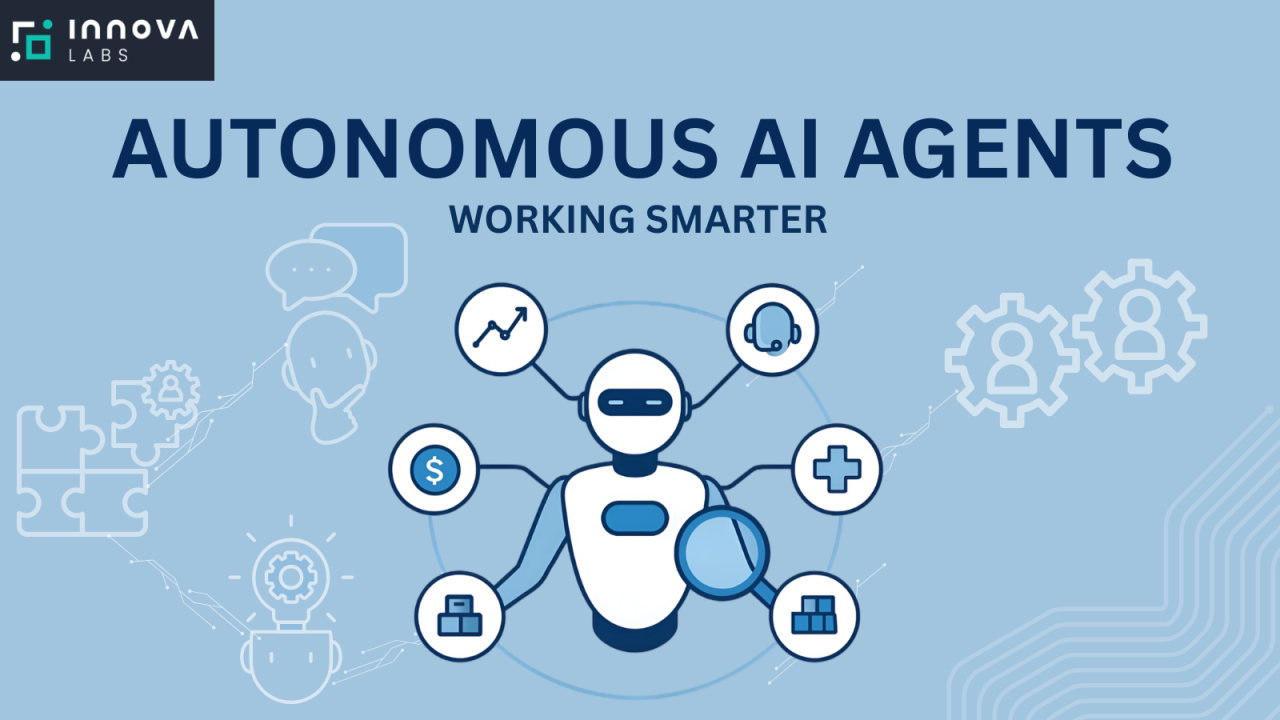
In early February 2026, OpenAI unveiled two major innovations that together mark a significant shift in how artificial intelligence assists humans and enterprises: GPT-5.3-Codex and Frontier. These releases signal a leap beyond traditional language models and coding assistants, toward agentic AI systems – AI that behaves like autonomous collaborators capable of executing complex tasks over extended timeframes.
In this article, we’ll break down what GPT-5.3-Codex and Frontier are, why they matter, how they work, key features, real-world use cases, implications for developers and businesses, safety considerations, and what this means for the future of work and AI.
1. Breaking the Mold — What Is GPT-5.3-Codex?
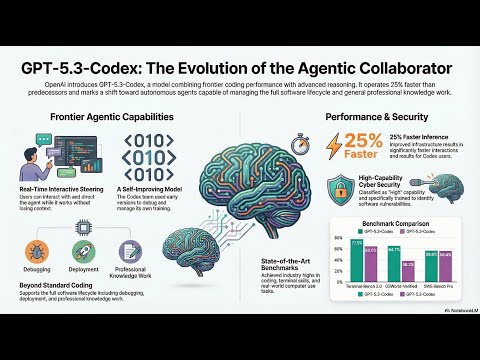
At its core, GPT-5.3-Codex is the newest major version of OpenAI’s agentic coding model, built to perform software development and professional tasks that go far beyond generating simple code snippets. Unlike earlier models that acted as smart assistants or code completion tools, GPT-5.3-Codex functions like a digital engineer that can autonomously design, build, debug, and deploy software — all within a full computing environment.
🚀 Unprecedented Capabilities
Here are the standout capabilities that set GPT-5.3-Codex apart:
-
Autonomous Task Execution: It can independently complete long-running workflows like building complex web apps and games from scratch.
-
Integrated Reasoning + Coding: Combines powerful general reasoning with professional coding, making it capable of understanding high-level instructions and implementing them in working systems.
-
Multi-Step Problem Solving: Handles research, tool use, debugging, testing, and deployment — often without human intervention.
-
Real-Time Interaction: Users can supervise and steer its execution interactively rather than just waiting for a final result.
-
Benchmark Performance: GPT-5.3-Codex sets new industry benchmarks on coding tasks (SWE-Bench Pro, Terminal-Bench), desktop productivity (OSWorld), and professional knowledge work (GDPval).
Perhaps the most striking part of GPT-5.3-Codex’s story is that it played an essential role in its own creation — assisting OpenAI engineers by debugging training runs, managing deployment, and analyzing internal diagnostics. This marks one of the first significant milestones where an AI system tangibly contributes to the development of its own successors.
2. Beyond Code — Why GPT-5.3-Codex Is More Than a Coding Tool
Traditional programming AIs could write or review code, but GPT-5.3-Codex operates at a higher level:
🧠 General Work Assistance
GPT-5.3-Codex isn’t limited to code — it can:
-
Draft slide decks or business documents
-
Analyze and visualize data
-
Create spreadsheets and formulas
-
Write project requirement documents
-
Manage version control and pull requests
-
Test, debug, and deploy entire applications
This marks a shift from coding assistants to digital coworkers that augment entire software lifecycles.
🛠 Agentic Workflows
GPT-5.3-Codex treats computing environments as toolsets — using CLIs, IDEs, web frameworks, and even operating systems to achieve goals. In practical terms, it means:
“Codex can operate your computer like a developer — using editors, CLI tools, and real software tools as part of its problem-solving process.”
This blurs the boundary between AI suggesting actions and AI executing them autonomously.
3. Introducing Frontier — The Enterprise Platform For AI Agents
While GPT-5.3-Codex represents the next step in intelligent models, Frontier is OpenAI’s platform for scaling autonomous AI agents within organizations. It’s designed to help businesses not just use an AI, but build systems of AI agents that collaborate, share knowledge, and operate together toward complex goals.
🧩 Core Principles of Frontier
Frontier is built around four pillars:
-
Shared Context: Agents on Frontier can understand a common workspace and learn from shared inputs or situations.
-
Onboarding with Feedback: Frontier supports workflows where agents receive guided feedback and improve performance over time.
-
Clear Permissions & Boundaries: It introduces governance, role definitions, and safeguards for enterprise deployment.
-
Scalable Agent Management: Teams can deploy, monitor, and orchestrate multiple agents across an organization — much like a software platform team manages microservices.
In essence, Frontier empowers organizations to build custom AI coworkers, tailored to specific business domains, compliant with security standards, and capable of operating within organizational policies.
4. Real-World Applications
Both GPT-5.3-Codex and Frontier unlock new value across industries. Here are practical applications already emerging:
💻 Software Engineering & Development
-
Full Lifecycle Automation: From requirements to deployment, GPT-5.3-Codex can manage entire projects, including testing, versioning, and iteration planning.
-
Legacy Refactoring: Large legacy codebases can be analyzed and refactored with minimal human oversight.
-
Cross-Platform Development: Codex builds web apps, games, and complex UIs autonomously over sustained periods.
🏢 Enterprise Workflows With Frontier
-
Business Process Agents: Frontier can coordinate agents for customer support, document processing, or financial analysis, all with shared context and compliance controls.
-
Team Augmentation: Instead of a single AI model per task, teams can compose systems of agents with interoperable skills.
🔐 Cybersecurity
Unlike previous models, GPT-5.3-Codex is trained explicitly as a High-Capability Cybersecurity Model under OpenAI’s safety framework. It can identify code vulnerabilities, study attack surfaces, and assist defensive research workflows.
5. How These Innovations Compare to Traditional AI Models
🤖 GPT-5.3-Codex vs Classic LLMs
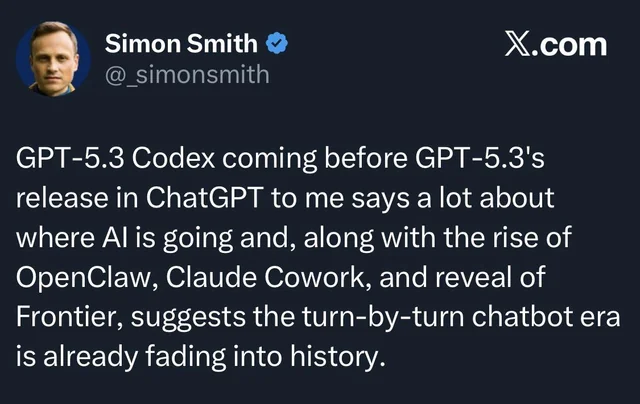
Traditional language models — such as GPT-3 or even pre-agent GPT-5 — were optimized for text summarization and conversational tasks. GPT-5.3-Codex, by contrast:
-
Executes tasks rather than suggesting actions
-
Manages stateful workflows across time
-
Interacts with tools and external environments
-
Combines coding and professional reasoning
🧠 Frontier vs App-Specific AI Tools
Most AI tools were siloed — trained for a single domain like translation, customer support, or code generation. Frontier introduces cross-agent collaboration with shared context and workspace continuity — closer to how human teams operate.
6. Benefits and Business Impact
💡 Productivity & Innovation
-
Developers can delegate entire feature development cycles to GPT-5.3-Codex, freeing human engineers for higher-level work.
-
Enterprises can scale AI across departments using Frontier, enabling digital transformation at scale.
💼 Operational Efficiency
-
Reduces time spent on repetitive tasks like debugging, refactoring, or documentation.
-
Automated multi-agent workflows in Frontier mean business processes are executed consistently and transparently.
7. Safety, Governance, and Ethical Considerations
Unsurprisingly, such powerful tools raise questions about safety and misuse:
🔒 Safety Frameworks
GPT-5.3-Codex was designated a High-Capability cybersecurity model, triggering enhanced safeguards. Some potentially risky requests may be automatically routed to less capable models unless cleared via trusted access approvals.
📊 Governance in Frontier
With enterprise deployments, Frontier includes permissions, role controls, and operational boundaries to prevent unauthorized actions by AI agents.
🧠 Alignment and Human Oversight
Even with autonomous agents, human oversight remains crucial. Users can interact with and steer GPT-5.3-Codex in real-time, ensuring alignment with business goals and ethical guidelines.
8. Limitations and Open Questions
Despite their power, these systems are not perfect:
-
Autonomous agents can still misinterpret deeply ambiguous tasks.
-
Over-automation without proper oversight may introduce unforeseen bugs or business risks.
-
Enterprise workflows depend on rigorous governance and auditability — areas still evolving.
9. The Future of AI Collaboration and Work
OpenAI’s work with GPT-5.3-Codex and Frontier is part of a broader shift in AI toward systems that do work, not just suggest outputs. It’s a world where:
-
AI agents fulfill roles traditionally done by junior engineers
-
Organizations orchestrate fleets of AI colleagues
-
Knowledge workers and AI systems co-design solutions
10. Summary — A New Frontier in AI
OpenAI’s GPT-5.3-Codex and Frontier together represent more than just incremental upgrades — they mark a fundamental evolution in how AI interacts with the world:
GPT-5.3-Codex: A next-generation, agentic AI model capable of autonomous computing tasks across software development, reasoning, and knowledge work.
Frontier: An enterprise AI agent platform that enables teams to build, deploy, and manage autonomous AI collaborators with shared context and governance.
Together, these technologies are driving the future of AI — where intelligent agents are not just tools, but partners in innovation, capable of contributing to work at scale.
For quick updates, follow our whatsapp –https://whatsapp.com/channel/0029VbAabEC11ulGy0ZwRi3j
https://bitsofall.com/nvidia-ai-vibetensor/
https://bitsofall.com/hackernoon-tech-media-platform/
Google AI Introduces PaperBanana: A Breakthrough in Intelligent Research Automation