SpaceX and xAI Merger: What It Means for Space, AI, and the Web
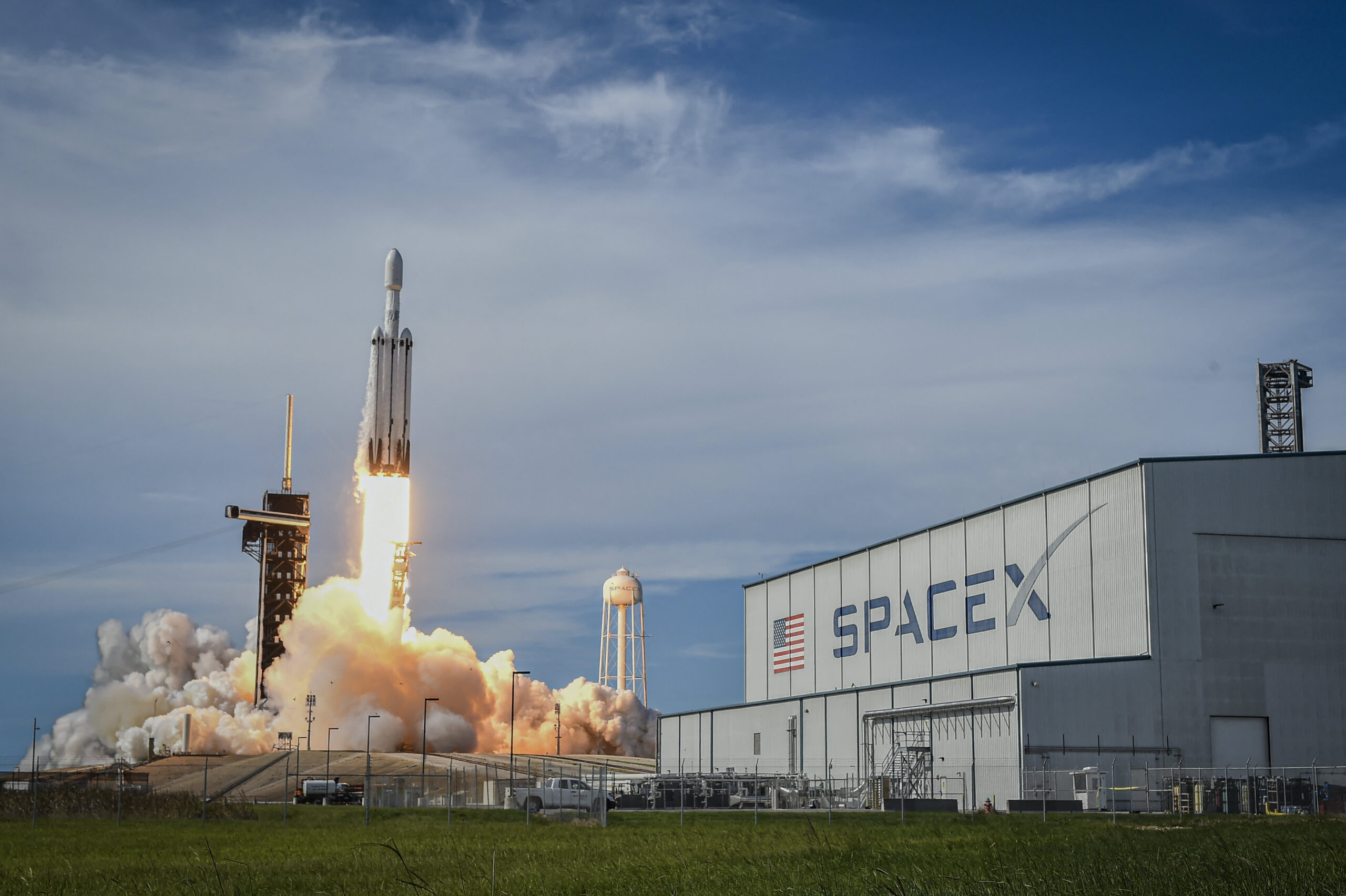
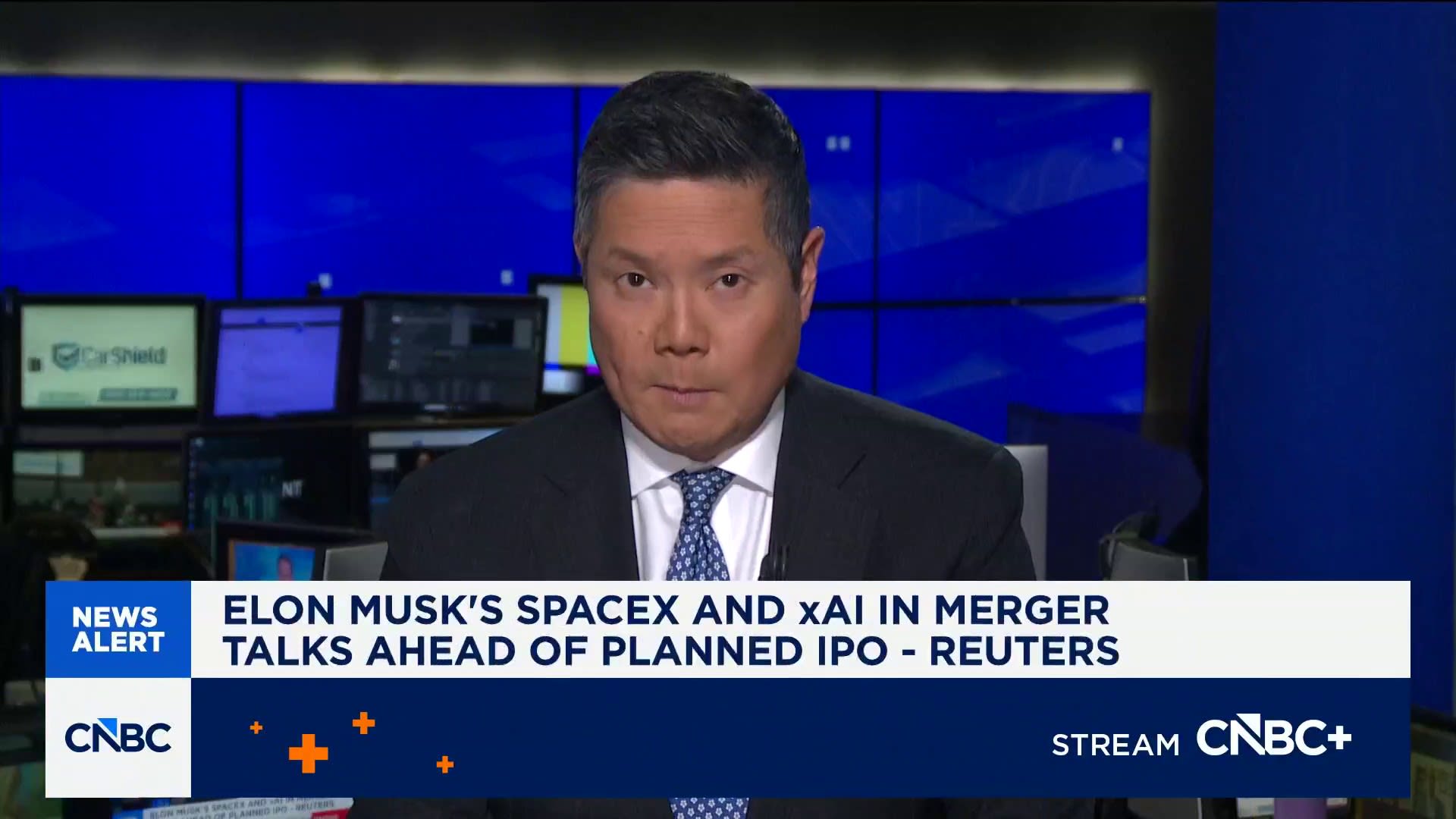
On February 2–3, 2026, Elon Musk’s space company SpaceX announced a definitive transaction bringing his artificial intelligence startup xAI into the SpaceX fold. The deal—reported widely as a combination valuing the merged entity at roughly $1.25 trillion—consolidates Musk’s rocket business, satellite internet network, large-language-and-chatbot capabilities, and social-media assets under one roof. This strategic integration is being presented as a way to combine physical infrastructure (rockets, satellites, launch capabilities) with advanced AI software and data flows to create a vertically integrated platform for next-generation services and, ultimately, a blockbuster IPO.
Below I unpack the transaction, what the headline numbers mean, the technical and business rationale, regulatory and competitive headwinds, likely near-term product and market impacts, and how creators, enterprises, and regulators should watch the next 6–18 months.
Quick facts (the load-bearing numbers)
-
Reported combined valuation: ≈ $1.25 trillion (SpaceX ≈ $1.0T; xAI ≈ $250B).
-
Deal mechanics (reported): an all-stock exchange where xAI shares will be converted into SpaceX stock at a specific ratio (reports cite an exchange ratio and an implied per-share price for the cash alternative).
-
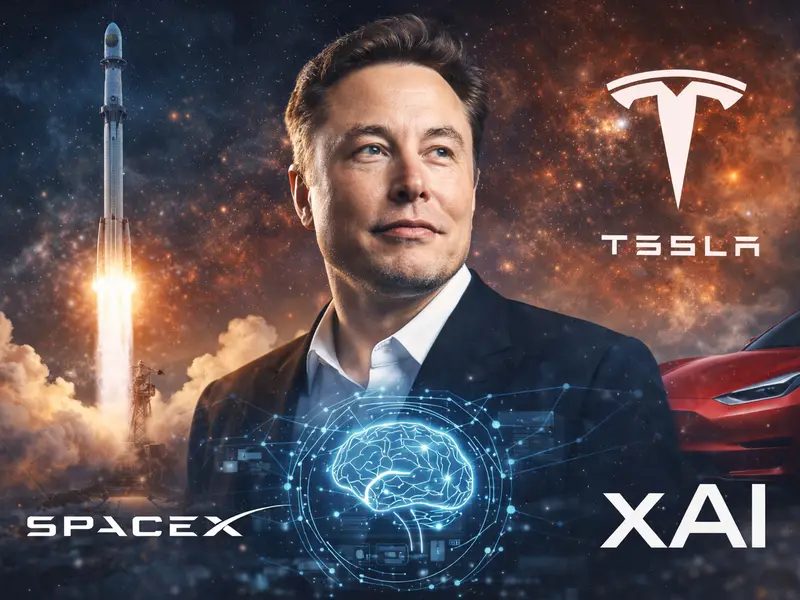
Strategic centerpiece: integrate xAI’s Grok chatbot, X (the social platform acquired earlier by Musk via xAI), Starlink satellite network, and SpaceX launch/space infrastructure to build “space-enabled AI” (including orbital data centers and solar-powered compute).
Why merge AI and rockets? The strategic logic
At first glance the idea sounds cinematic: use low-orbit satellites and soon-to-be-launchable orbital platforms to host, power, and deliver AI services at global scale. But the merger is rooted in three concrete strategic logics:
-
Vertical control of data + transport + compute. Owning satellites (Starlink), the launch vehicles that put hardware into orbit, and the AI stack that consumes and generates data gives an owner the ability to optimize latency, connectivity, and cost in ways cloud hyperscalers can’t easily replicate. That matters for applications where global coverage, low latency, or local sovereignty are important (maritime, defense, remote sensing, and connectivity in under-served regions).
-
Energy and cost arguments for orbital compute. Musk and proponents of space-based data centers argue that solar power in orbit can deliver cheaper, more reliable power for energy-hungry AI workloads vs. terrestrial grids that face land, water, and cooling constraints. Space-based compute remains ambitious and expensive today, but tighter integration between hardware, launch capacity, and AI software lowers some barriers to experimentation.
-
Product and network synergies (Grok + X + Starlink). xAI’s Grok chatbot and the social graphs from X provide huge volumes of conversational and user-generated signals that could enrich model training and content distribution. Embedded into Starlink’s global pipe, these services can be shipped as consumer or enterprise offerings—e.g., AI-driven communications, real-time translation, or edge AI for ships, planes, and remote infrastructure.
Financial and market implications
A $1.25 trillion combined valuation, if accurate, would place the combined private firm among the world’s largest companies—bigger than most public tech giants at IPO. The deal structure (reports indicate a share exchange and possible cash alternatives) suggests Musk is positioning the newly unified company for a near-term public listing, which would return liquidity to pre-IPO investors and create a listed entity that spans space infrastructure and AI services. Bloomberg and Reuters detail investor valuations and the exchange ratios being discussed.
For investors, the appeal is an asset that mixes a capital-intensive but cash-producing launch/satellite business with a high-growth, margin-challenged AI business—potentially smoothing revenue cyclicality and offering multiple monetization levers. For rivals (hyperscalers, cloud providers, and AI startups), the new entity becomes a vertically integrated competitor with unique assets that are difficult to replicate quickly: launch capacity plus global connectivity.
Technology roadmap and likely product bets
Based on public statements and reporting, here are the most plausible technical directions the merged company will pursue:
-
Orbital data centers / solar-powered AI racks. Use Starship launches to deploy modular compute farms into low Earth orbit (LEO) or higher orbits, powered by continuous solar arrays, to run training or inference workloads. The claim isn’t that full training workloads move to orbit immediately—rather, specific inference-heavy or specialized workloads (e.g., low-latency global inference, maritime services, or privacy-sensitive edge compute) will be early candidates.
-
AI + connectivity products. Bundled consumer and enterprise subscriptions that pair Starlink connectivity with Grok/Large-Language-Model (LLM) services for advanced search, real-time collaboration, or domain-specific agents (e.g., maritime nav assistant, field-repair augmented reality).
-
Data and model pipelines from X. Leveraging data from X (the social platform) to augment model training—though doing so will raise complex content moderation, privacy, and legal questions.
-
Defense and government services. Given SpaceX’s existing government contracts and the sensitivity of AI-enabled systems, expect ambitious offers for defense, intelligence, and national-scale infrastructure—areas that attract closer regulatory and export scrutiny.
Risks and regulatory headwinds
This is not a risk-free play. Several challenges deserve attention:
-
Competition law and regulatory scrutiny. A conglomerate that combines space infrastructure, internet access, and an influential social platform plus a major AI developer raises unique antitrust and national-security questions; regulators in the U.S., EU, UK, and elsewhere will scrutinize data concentration, vertical integration, and control over critical communications infrastructure.
-
Operational complexity and cultural fit. Integrating a fast-moving AI research shop and a hardware-heavy space company requires reconciling different development cadences, cost profiles, and cultures. Historically, such integrations—especially between capital-intensive engineering groups and fast-iterating ML teams—are hard and can distract leadership.
-
Content, safety, and misuse. Grok and other powerful conversational models have faced criticism over safety, hallucination, and harmful output. Tying those systems to a global communications and data network multiplies the risk profile and the potential for both real misuse and reputational harm.
-
Technological feasibility and cost. Orbiting compute at the scale needed to materially shift AI economics is unproven at commercial scale. Launch costs continue to drop, but deploying, cooling, maintaining, and communicating with orbital data centers remains a major engineering challenge.
What it means for competitors and partners
-
Cloud hyperscalers (AWS, Google Cloud, Microsoft Azure): They gain a new, unconventional competitor for global connectivity + compute bundles. Hyperscalers will lean into partnerships, IP protections, and unique data center advantages (land-based renewables, regional compliance) to defend their customers.
-
AI startups: Merging with SpaceX gives xAI greater runway and a unique infrastructure moat—but it also consolidates power that might make the market harder for smaller players competing for talent, compute, and distribution.
-
Governments and defense contractors: May see both opportunity and worry—opportunity in novel services; worry in concentration of critical infrastructure controlled by a private company with a single influential leader who also controls other major companies. Expect procurement, oversight, and export controls to become active issues.
How creators, developers, and enterprises should react
-
Watch integrations, not just the press release. The real value will show up in APIs, pricing, SLAs, and developer programs. If Starlink + Grok bundles appear with developer access or edge SDKs, that’s the moment to experiment.
-
Keep multi-cloud and multi-edge strategies. Until the economics and compliance points are proven, enterprises should avoid locking critical systems to a single provider that also controls physical connectivity.
-
Read the safety and data use policies carefully. If X data becomes a training source for productized models, contractual and privacy implications for user-generated content and enterprise data will follow.
A note on governance and transparency
Mergers of this scale raise governance questions: how will oversight be structured across previously separate boards and investor classes? How will dual-use technologies (space, satellite communications, and powerful AI) be audited for safety and misuse? Public companies, in particular, must disclose risk factors and governance structures—so an eventual IPO will bring a level of transparency that private firms don’t have to date. Expect investors, watchdogs, and policymakers to demand clearer risk mitigation plans, safety audits, and perhaps structural ring-fencing for especially sensitive activities.

Bottom line — why this matters
The SpaceX and xAI merger isn’t just another tech consolidation: it’s an experiment in fusing physical infrastructure (rockets, satellites, orbital platforms) with the intellectual infrastructure of generative AI, social graphs, and conversational agents. If technically and commercially successful, it could create new classes of services—global AI delivered with consistent low-latency, AI-powered connectivity bundles, and perhaps novel defense and enterprise offers. If it fails—on execution, regulatory pushback, or safety issues—the attempt will still reshape how companies think about combining compute, connectivity, and intelligence.
Either way, the deal sets a precedent for how organizations might think about end-to-end control of data flows and the platforms that transmit and process them. For policy makers and industry stakeholders, this combination will demand new frameworks that balance innovation with competition, privacy, and national security.
Further reading / reporting (selection of reputable coverage)
-
Reuters coverage of the deal and valuation details.
-
Bloomberg’s reporting on the combination and IPO context.
-
The Washington Post analysis of strategic aims and product bets.
-
TechCrunch on SpaceX’s stated plans for orbital data centers.
-
Financial Times on exchange ratio and investor implications.
For quick updates, follow our whatsapp –https://whatsapp.com/channel/0029VbAabEC11ulGy0ZwRi3j
https://bitsofall.com/nvidia-revolutionizes-climate-tech-with-earth-2/
https://bitsofall.com/microsoft-unveils-maia-200/
Biomimetic Models: How Nature Is Inspiring the Future of Technology and Intelligence