Apple Siri Overhaul — what’s changing, why it matters, and what to expect
For more than a decade Siri has been the face of Apple’s voice assistant — helpful for basic commands, often awkward for anything more ambitious. But in 2026 Apple is finally attempting a full reset. Recent reporting and company history show Apple is shifting Siri from a mostly command-driven helper into a conversational, generative-AI driven assistant that can handle open-ended chat, longer context, and multi-modal inputs. This piece explains what Apple is changing, why the company chose this path, what powers the new Siri, how privacy will factor in, and what it means for users and the broader AI race.
The headline: Siri becomes a chatbot (but with Apple’s spin)
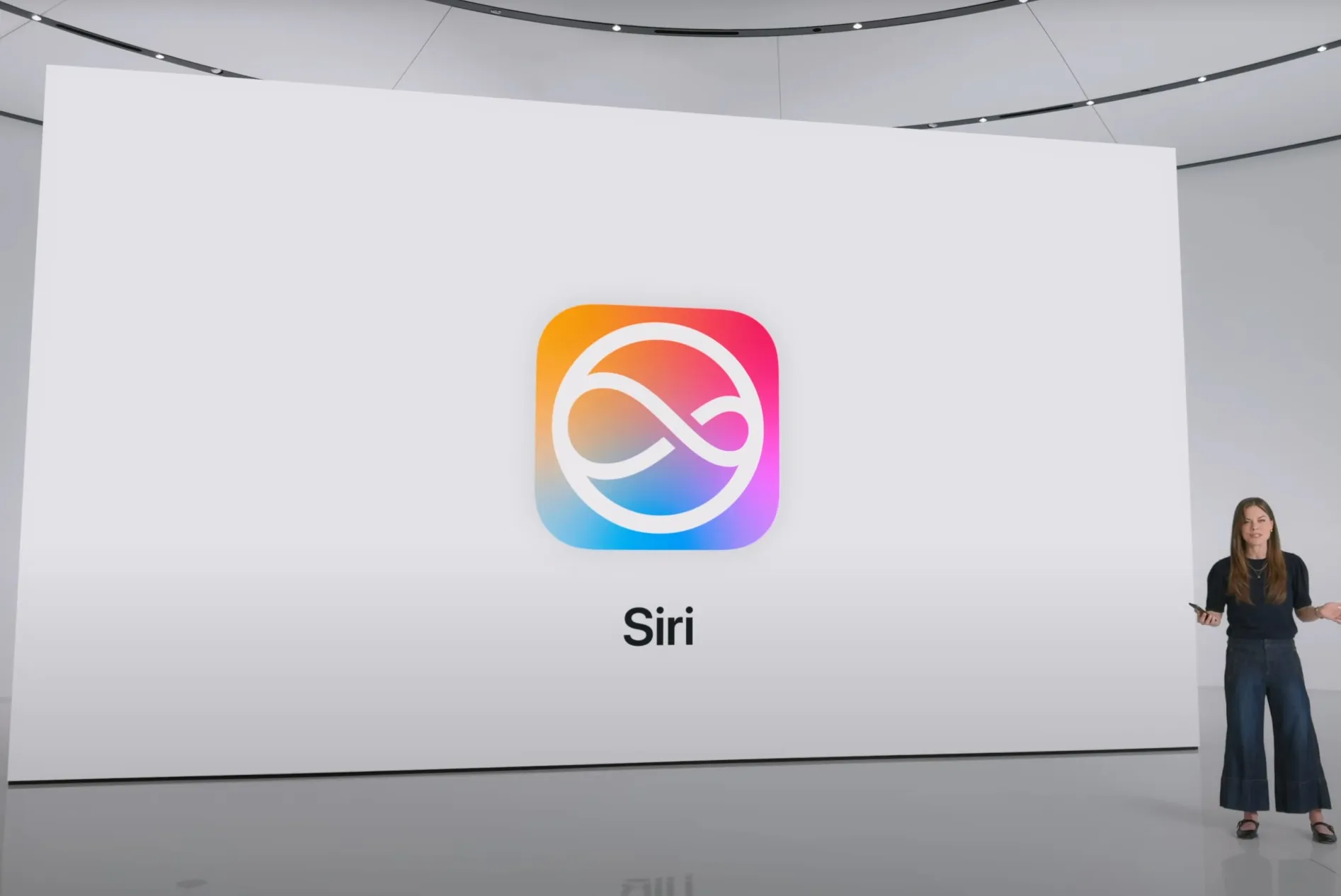
At the core of the overhaul is a single idea: turn Siri from a reactive command layer into a proactive conversational agent — something more like ChatGPT or Bard, but integrated deeply into iOS, iPadOS, and macOS. Multiple outlets report Apple is building a new, chatbot-style Siri (internally codenamed “Campos”) that supports both text and voice, keeps conversational context across interactions, and can perform complex tasks that blend knowledge, apps, and device state. The plan is to surface the chatbot across core OS touchpoints rather than bury it behind the old Siri UI.
That shift is not simply a UI tweak. It’s a change in capability: from single-turn command parsing (“Call Mom”) to multi-turn, context-aware assistance (“Plan a birthday dinner for Mom using our favorite Italian, check dates in my calendar, and draft an invite she’ll love”). Apple’s goal, according to reporting, is to make Siri genuinely useful for planning, summarization, and mixed app workflows while still honoring Apple’s long-stated privacy posture.
Why now? The pressure to catch up
Apple’s AI roadmap has always been cautious. In 2024 the company launched “Apple Intelligence” as a suite of features to bring generative capabilities to devices, but many high-profile features were delayed or scaled back as Apple rebalanced performance, privacy, and engineering priorities. Meanwhile, competitors shipped more capable conversational assistants and cloud-powered AI services — and public expectations for assistants rose fast. The result: Apple needs an attention-grabbing, sensible Siri upgrade to remain competitive.
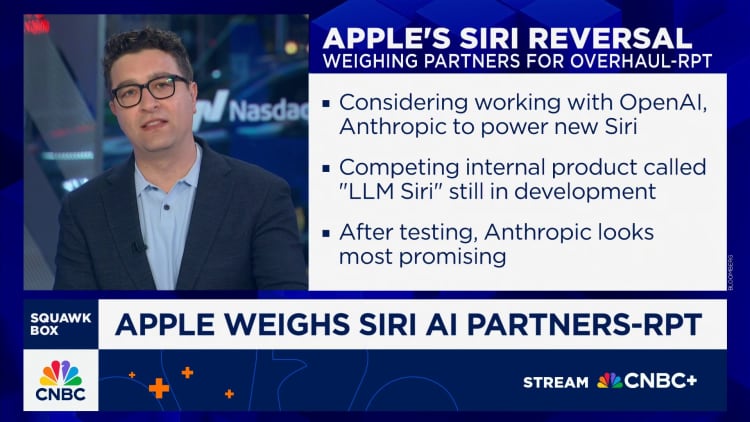
Business and technical pressures accelerated a pragmatic choice: partner where it makes sense. Recent reporting indicates Apple will use Google’s Gemini family of models as a foundation for the most advanced parts of the new Siri, combining those models with Apple’s on-device processing and private cloud compute to deliver performance while attempting to preserve user data protections. That partnership is a major strategic pivot and reflects how quickly large-scale model development has become a resource-intensive race where alliances matter.
What’s under the hood: a hybrid model architecture
Apple’s approach appears hybrid:
-
On-device intelligence for latency-sensitive tasks, immediate voice recognition, and private actions (e.g., reading or writing local messages, interacting with local apps). Apple has invested for years in on-device models and silicon optimizations to run efficient models locally.
-
Cloud-assisted foundation models (reportedly a customized Gemini variant) for heavy generative work: long-form synthesis, knowledge retrieval spanning the web, complex reasoning, and multimodal understanding. Using a cloud model lets Apple offer capabilities that are currently unrealistic on phones alone.
-
Orchestration layer that decides when to keep data local, when to invoke cloud models, and how to stitch together app state, calendar entries, emails, and on-device context into a coherent assistant response.
This hybrid design is an attempt to get the best of both worlds: the power of cloud LLMs and the responsiveness and privacy of on-device processing. How well Apple executes the orchestration and the privacy guarantees will determine whether the overhaul is merely flashy or genuinely useful.
User experience: what will feel different
Expect several visible changes in how people interact with Siri:
-
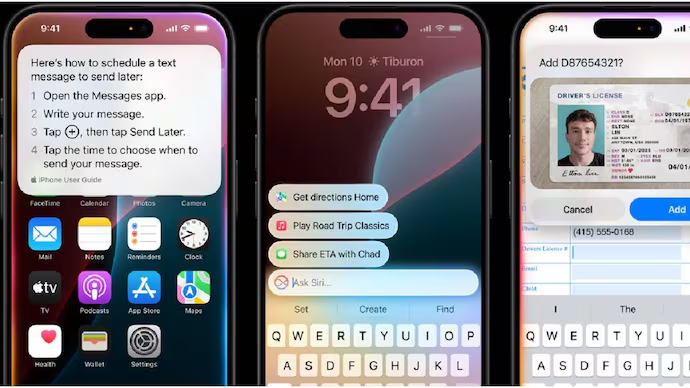
Two-way text and voice chat — You’ll be able to type to Siri anytime, switch midsession between typing and speaking, and get richer, multi-paragraph answers rather than one-line replies.
-
Longer context memory — Siri should remember the context of an ongoing conversation (within a session) and use device context (calendar, messages, photos) to produce personalized assistance when permitted.
-
Deeper app integrations — The assistant will act across apps: drafting emails, composing messages, creating calendar entries with context from recent chats, and automating multi-step flows. Apple’s on-screen awareness and Shortcuts capabilities will likely be extended to let Siri act with user consent.
-
More natural voice and multimodality — Improvements in speech synthesis and the ability to handle images (e.g., “What’s wrong with this plant?” with a photo) are on the roadmap as multimodal AI becomes standard.
The redesign also signals a UX philosophy shift: elevate Siri to a platform capability that surfaces wherever the user is in the OS, instead of confining it to a single invocation UI.
Privacy, safety, and the trust problem
Apple has long used privacy as a core differentiator. That raises two key questions for the overhaul:
-
How much data is sent to the cloud? Apple says it will rely on on-device processing for privacy-sensitive requests, and use a private cloud compute model for generative tasks. The challenge is transparency: users will want to easily know when their requests leave their device and what is stored or logged.
-
How are third-party models governed? Partnering with external providers (e.g., Google’s Gemini) adds another layer of governance. Apple must define contractual and technical guardrails to ensure data handling aligns with Apple’s privacy promises; otherwise, the move risks undermining trust. Early coverage suggests Apple will wrap third-party models inside its own infrastructure and apply additional privacy-preserving layers, but independent verification will be important.
Security, moderation, and hallucination mitigation are additional concerns. Apple has an opportunity to set a high bar — for example, by using selective retrieval from verified sources, clear provenance tagging, and UI affordances that explain when the assistant is guessing vs citing facts.
Competition: why other players care
The Siri overhaul is about more than user convenience — it’s a strategic play. Apple controls a massive install base (iPhone, iPad, Mac, HomePod), and a truly capable assistant could shift how people interact with digital services: search, shopping, productivity, and even ads. Competitors — Google, Microsoft, Amazon — have poured billions into LLMs and assistant experiences; Apple’s deep integration across hardware and software gives it a unique edge if it can marry power with privacy.
Apple’s decision to partner on models rather than build everything in-house suggests a pragmatic industry phase where specialization and alliances matter. It’s also a reminder that building a great assistant is not just a model problem: it’s UI, system integration, latency, cost, and trust all wrapped together.
Risks and possible failure modes
-
Privacy backlash: If users or regulators feel Apple’s cloud-assisted model compromises privacy, the reputational hit could be large.
-
Underwhelming integration: If the assistant can’t reliably act across apps or often hallucinates, users will revert to typed search and manual workflows. Early “tepid” reviews of past Apple AI launches show expectations are strict.
-
Operational complexity: Running a hybrid orchestration layer at scale is hard — from billing cloud costs to monitoring model drift and safety.
-
Fragmented rollout: Phased features (iOS 26.4 personalization vs a full chatbot in iOS 27) can create confusion if timelines slip. Reporting suggests Apple plans staged releases — an incremental personalization update followed by a full chatbot later in the year.
Timeline: what to expect and when
Based on current reporting and leaks:
-
iOS 26.4 (spring 2026): Personalization improvements and delayed Apple Intelligence features may arrive here — richer context, better on-device models, and selective new Siri capabilities. Beta testing is expected to precede the public release.
-
WWDC 2026 (June): Apple is likely to formally demo more ambitious chatbot features and explain the integration strategy for iOS 27, iPadOS 27, and macOS 27. Journalistic coverage points to a WWDC reveal and developer access ahead of public rollout.
-
Public launch (late 2026): The fully realized chatbot Siri is expected with the major OS refresh later in the year (typical Apple pattern: reveal at WWDC, ship in September). Timelines may shift — Apple has delayed similar features before — but 2026 is the target window many outlets now cite.
What this means for everyday users
If Apple delivers, you’ll gain an assistant that can:
-
Handle complex, multi-step requests across your apps (e.g., plan, schedule, and draft messages).
-
Maintain conversational context, meaning fewer repeated clarifications.
-
Switch seamlessly between text and voice, and possibly accept images and other inputs for multimodal help.
-
Offer improved device support: smarter tips, contextual help, and automated shortcuts that feel less like programming and more like natural conversation.
For developers, a more capable Siri means new opportunities (and risks) to expose app functionality to conversational flows. Apple will need to balance developer access with user consent and safety, likely expanding developer APIs for Intent handling and Shortcuts while tightening privacy defaults.
Bottom line
Apple’s Siri overhaul is one of the most consequential shifts for the company’s software strategy in years. It’s not simply adding a few features: it’s an architectural and philosophical change — reimagining Siri as a conversational, generative assistant that bridges on-device privacy with cloud scale. Success depends on execution: real multi-turn usefulness, transparent privacy guarantees, reliable app integrations, and sensible safety guardrails. If Apple pulls it off, Siri could stop being an afterthought and become a defining part of iPhone and Mac experiences; if it stumbles, the upgrade could look like another example of high expectations meeting real-world complexity.
Either way, the Siri story in 2026 is a clear sign that the consumer AI era has moved from research demos and chatbots into platform wars — and Apple is recalibrating to play that game on its terms.
For quick updates, follow our whatsapp –https://whatsapp.com/channel/0029VbAabEC11ulGy0ZwRi3j
https://bitsofall.com/salesforce-ai-fofpred-forecasting/
https://bitsofall.com/flashlabs-chroma-1-0-voice-ai/