AI Interview Series: How Artificial Intelligence Is Transforming Hiring, Skills, and the Future of Interviews
Introduction: The Interview Is No Longer Just Human
The traditional job interview—face-to-face conversations, printed resumes, and gut-feeling decisions—is undergoing a radical transformation. Artificial Intelligence (AI) is reshaping how companies screen candidates, conduct interviews, evaluate skills, and make hiring decisions. From automated resume parsing to AI-powered video interviews and skill simulations, we are entering an era where interviews are no longer purely human-driven.
This AI Interview Series explores how AI is redefining interviews across industries, what candidates and recruiters need to know, the ethical challenges involved, and what the future holds for hiring in an AI-first world.
1. What Is an AI Interview?
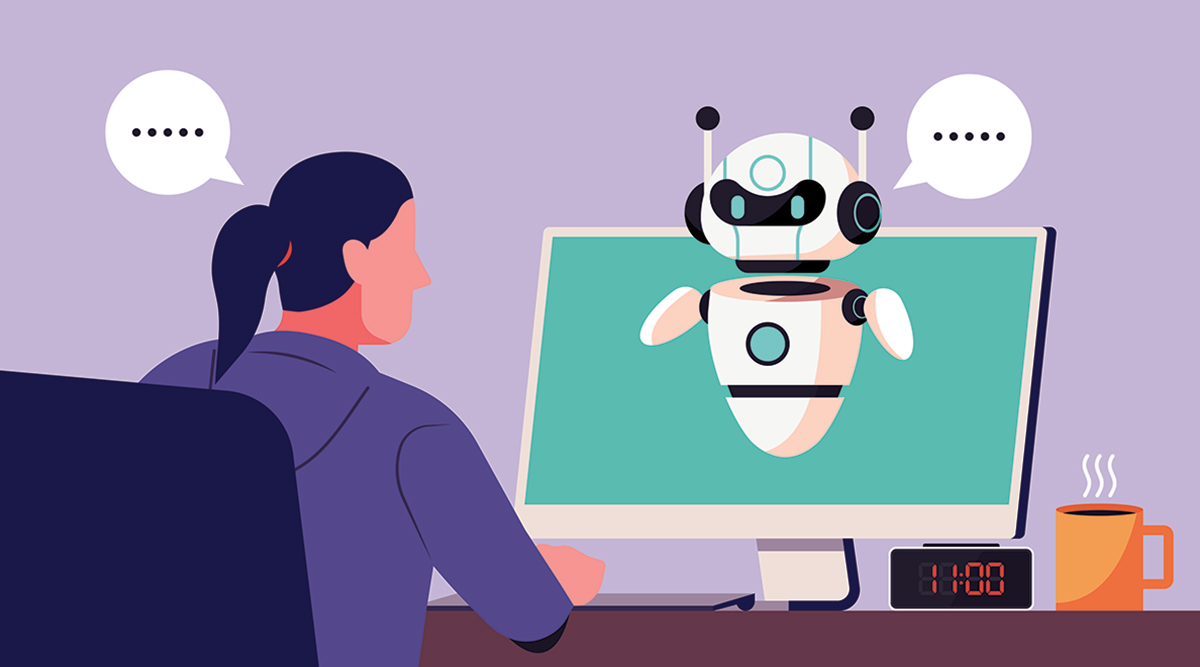
An AI interview refers to any hiring interaction where artificial intelligence plays a central role in screening, evaluating, or interacting with candidates. Unlike traditional interviews, AI interviews often involve:
-
Automated resume screening
-
Chatbot-based interview questions
-
One-way video interviews analyzed by algorithms
-
Skill assessments powered by machine learning
-
Predictive hiring analytics
These systems aim to make hiring faster, more scalable, and data-driven.
Types of AI Interviews
-
Chat-based AI interviews – Candidates respond to text or voice prompts
-
Video AI interviews – Facial cues, speech patterns, and language are analyzed
-
Skill simulation interviews – Candidates solve real-world tasks evaluated by AI
-
Hybrid interviews – AI screening followed by human decision-making
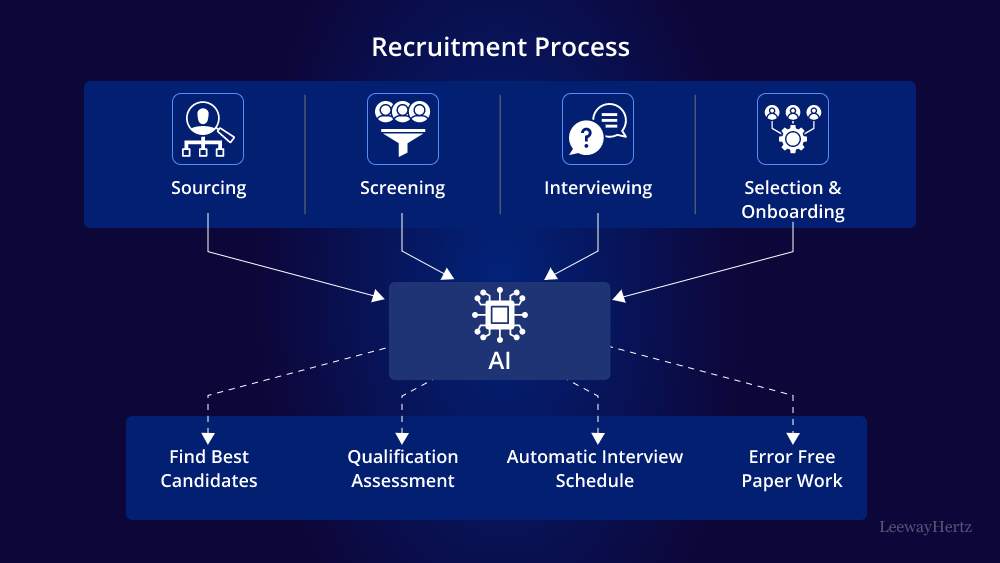
2. Why Companies Are Adopting AI Interviews
Organizations face intense pressure to hire faster while maintaining quality. AI interviews solve multiple hiring challenges simultaneously.
Key Drivers Behind AI Interviews
1. Speed and Scale
Large enterprises receive thousands of applications per role. AI can screen resumes and conduct first-round interviews within minutes, something humans simply cannot do.
2. Cost Reduction
Automated interviews reduce recruiter workload, agency costs, and time-to-hire.
3. Standardization
AI asks the same questions and applies consistent evaluation criteria, reducing interviewer bias and variability.
4. Data-Driven Decisions
Instead of relying solely on intuition, recruiters get quantifiable insights about candidate skills, communication, and job fit.
Major organizations like Google, Amazon, and Unilever have experimented with AI-driven hiring to improve efficiency and diversity.

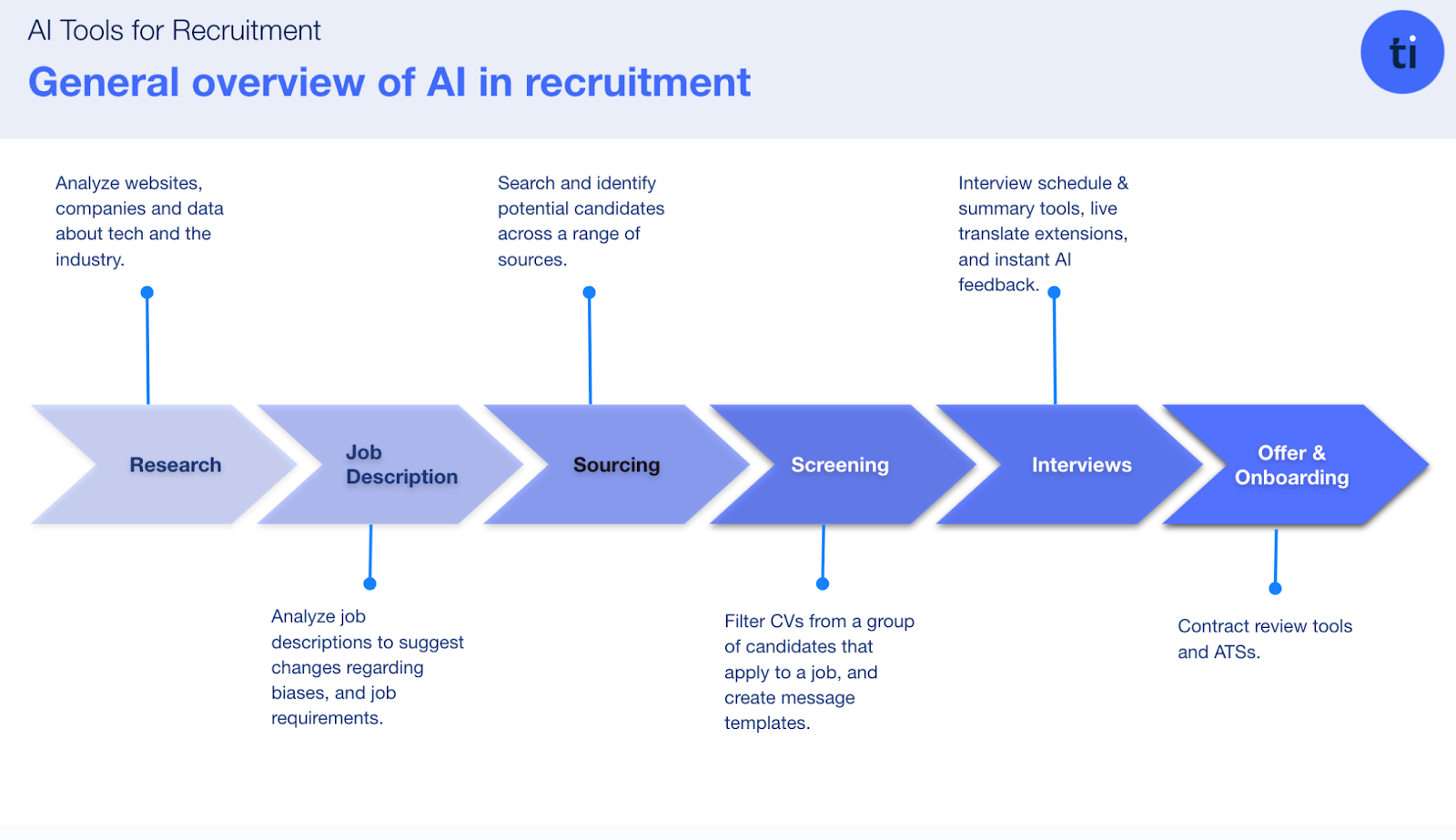
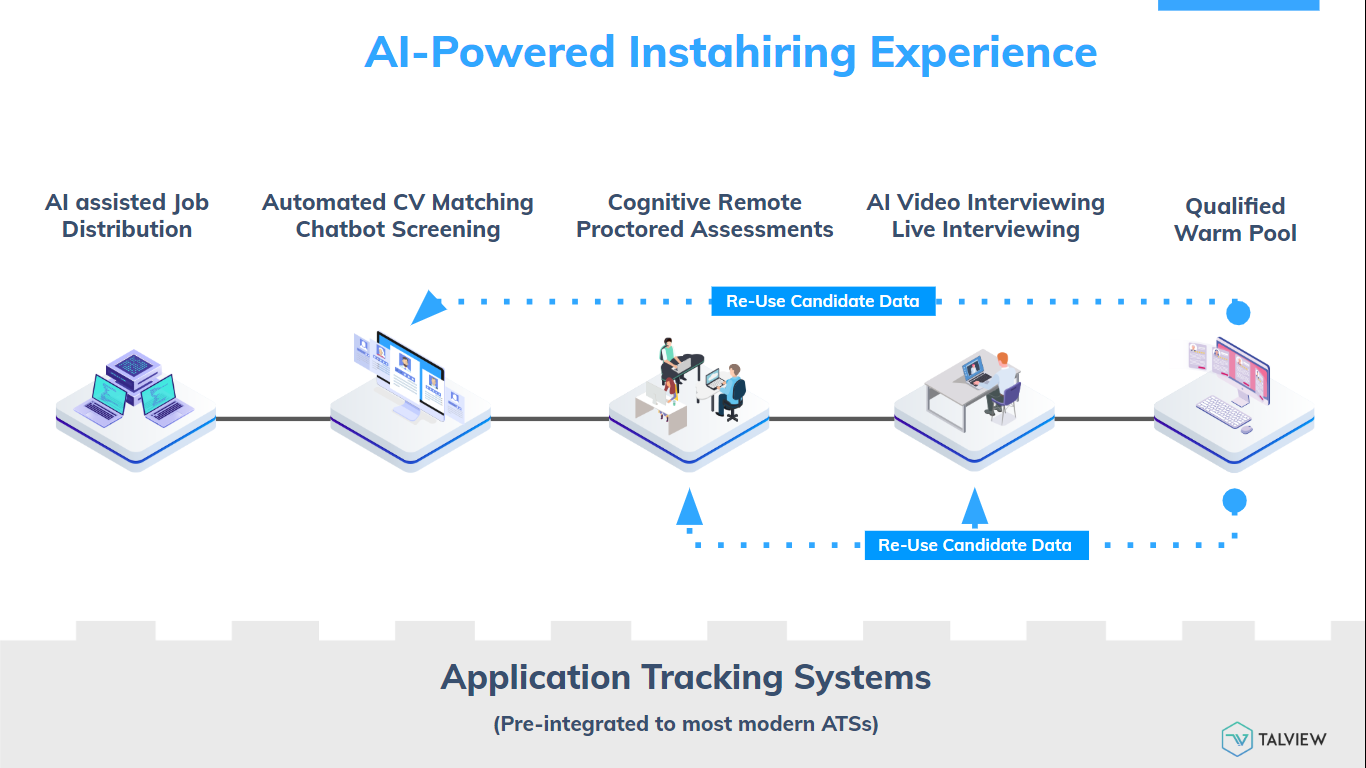
3. How AI Interviews Work: Behind the Scenes
Understanding the mechanics helps both candidates and recruiters demystify the process.
Step 1: Resume and Profile Screening
Natural Language Processing (NLP) models analyze resumes for:
-
Skills
-
Experience relevance
-
Education
-
Career progression
AI doesn’t just look for keywords; modern systems understand context and semantic meaning.
Step 2: Interview Interaction
Candidates interact with AI through:
-
Chatbots
-
Voice assistants
-
Recorded video responses
Questions are dynamically adjusted based on prior answers.
Step 3: AI Analysis
Machine learning models analyze:
-
Language clarity
-
Problem-solving approach
-
Behavioral indicators
-
Skill demonstration
Step 4: Scoring and Ranking
Candidates are ranked based on predefined success criteria aligned with job performance data.
4. AI Video Interviews: The Most Talked-About Format
AI-powered video interviews are both popular and controversial.
What AI Analyzes in Video Interviews
-
Speech patterns and tone
-
Vocabulary and coherence
-
Response structure
-
Time management
Important note: Reputable platforms claim they do not judge candidates on appearance but on communication and content quality.
Benefits
-
Candidates can interview anytime
-
No scheduling conflicts
-
Scalable across geographies
Concerns
-
Cultural differences in expression
-
Accessibility challenges
-
Algorithmic bias
This makes transparency and ethical design critical.
5. Candidate Experience: What Job Seekers Need to Know
For candidates, AI interviews feel very different from human conversations.
How to Prepare for an AI Interview
-
Be structured – Clear, concise answers work best
-
Focus on content – Explain your reasoning, not just conclusions
-
Practice with mock AI tools – Many platforms offer demos
-
Avoid overthinking gestures – Natural communication matters
-
Read job descriptions carefully – AI aligns responses to role requirements
Common Myths
-
❌ AI rejects candidates instantly
-
❌ You must “game” the algorithm
-
❌ AI interviews eliminate humans entirely
In reality, AI usually assists, not replaces, recruiters.
6. AI Interviews Across Different Roles
Technical Roles
AI evaluates:
-
Coding challenges
-
Logical reasoning
-
System design simulations
Used heavily in software, data science, and AI engineering roles.
Non-Technical Roles
AI focuses on:
-
Communication clarity
-
Scenario-based decision making
-
Customer interaction skills
Leadership and Management
Advanced platforms analyze:
-
Strategic thinking
-
Ethical reasoning
-
Conflict resolution
This shows that AI interviews are not limited to tech jobs.
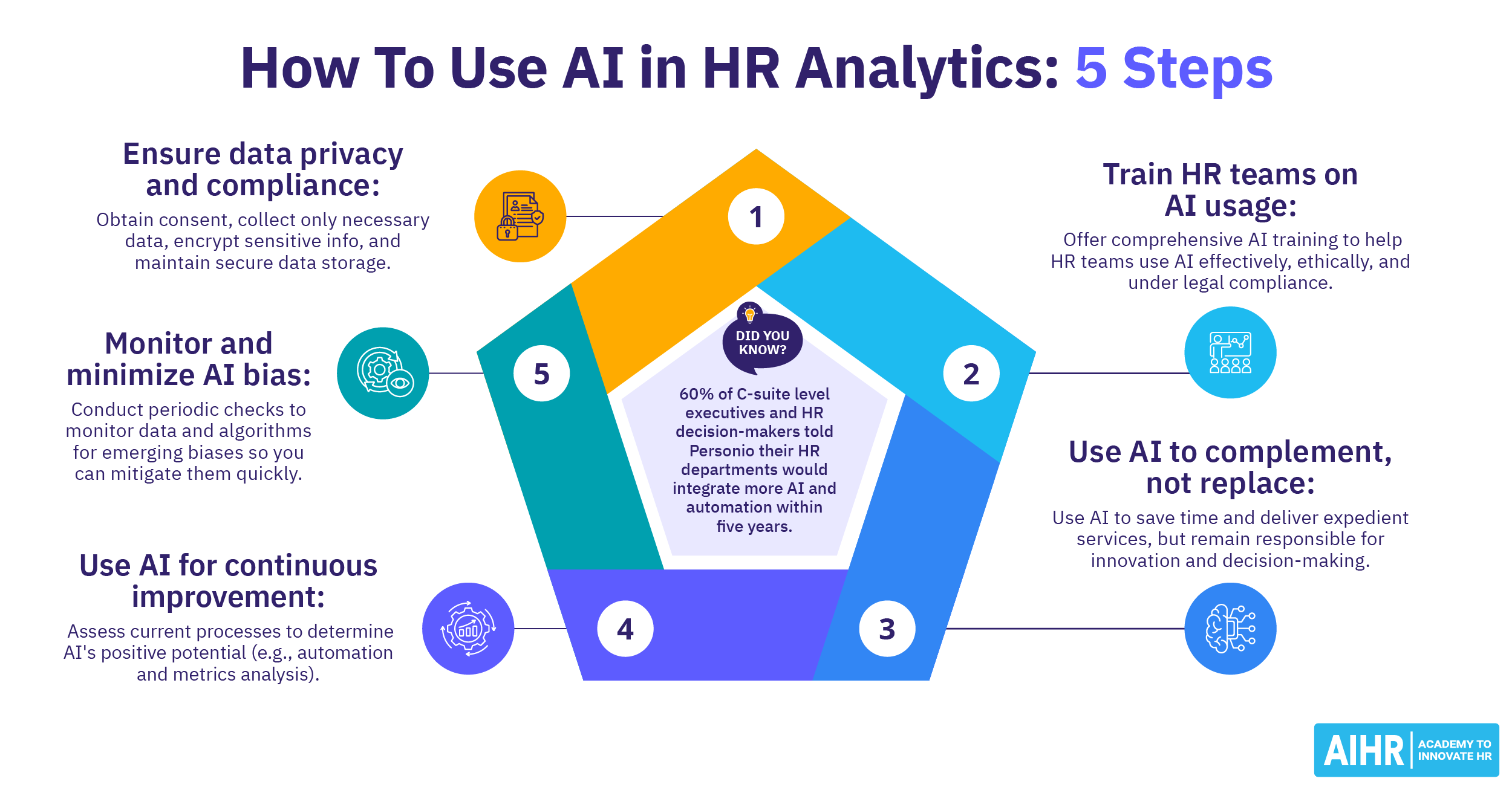
7. Ethics, Bias, and Transparency in AI Interviews
This is the most critical and debated aspect of AI interviewing.
Potential Risks
-
Bias embedded in training data
-
Lack of explainability in decisions
-
Over-reliance on automated scores
Ethical Best Practices
-
Regular bias audits
-
Diverse training datasets
-
Human oversight in final decisions
-
Clear candidate consent
Regulatory bodies worldwide are pushing for responsible AI hiring frameworks to ensure fairness.
8. AI Interview Tools and Platforms
Several platforms power today’s AI interview ecosystem:
-
AI chat interview systems
-
Video interview analytics tools
-
Skill assessment engines
-
Predictive hiring platforms
Many integrate with existing HR systems, making AI interviews part of a broader talent intelligence strategy rather than a standalone tool.
9. The Recruiter’s Perspective: Friend, Not Foe
Contrary to fears, AI interviews are not eliminating recruiters. Instead, they are changing their role.
How Recruiters Benefit
-
Less time on repetitive screening
-
More focus on relationship-building
-
Better quality shortlists
-
Improved hiring outcomes
Recruiters evolve into talent strategists, supported by AI insights.
10. AI Interviews vs Traditional Interviews
| Aspect | Traditional Interview | AI Interview |
|---|---|---|
| Speed | Slow | Fast |
| Scale | Limited | Massive |
| Consistency | Variable | Standardized |
| Bias | Human bias possible | Algorithmic bias possible |
| Personal Touch | High | Medium |
The future is not one versus the other—but a hybrid model.
11. The Future of AI Interviews
Emerging Trends
-
Conversational AI interviewers that feel human
-
Real-time skill simulations instead of Q&A
-
Continuous candidate profiles updated over time
-
Metaverse-based interviews with AI moderators
-
Explainable AI hiring decisions for compliance
AI interviews will shift from evaluation to capability discovery.
12. Will AI Replace Human Interviews Completely?
The short answer: No.
AI excels at:
-
Pattern recognition
-
Scale
-
Consistency
Humans excel at:
-
Empathy
-
Contextual judgment
-
Culture fit assessment
The most effective hiring models combine AI efficiency with human intuition.
Conclusion: The Interview Has Evolved
The AI Interview Series highlights a fundamental truth: interviews are no longer just conversations—they are data-driven interactions powered by intelligent systems. AI interviews bring speed, fairness, and scalability, but they also demand responsibility, transparency, and human oversight.
For candidates, adapting to AI interviews is now a career skill.
For companies, using AI ethically is a competitive advantage.
For the future of work, AI interviews are not a passing trend—they are a structural shift.
The interview hasn’t disappeared.
It has evolved.
For quick updates, follow our whatsapp –https://whatsapp.com/channel/0029VbAabEC11ulGy0ZwRi3j
https://bitsofall.com/disney-openai-sora-ai-video/
https://bitsofall.com/early-disease-diagnosis-app/
Tiny AI Models: How Small Is the New Big Thing in Artificial Intelligence?