Amazon’s $50 Billion Commitment to Build AI Infrastructure for the U.S. Government: What It Means, What’s Being Built, and Why It Matters
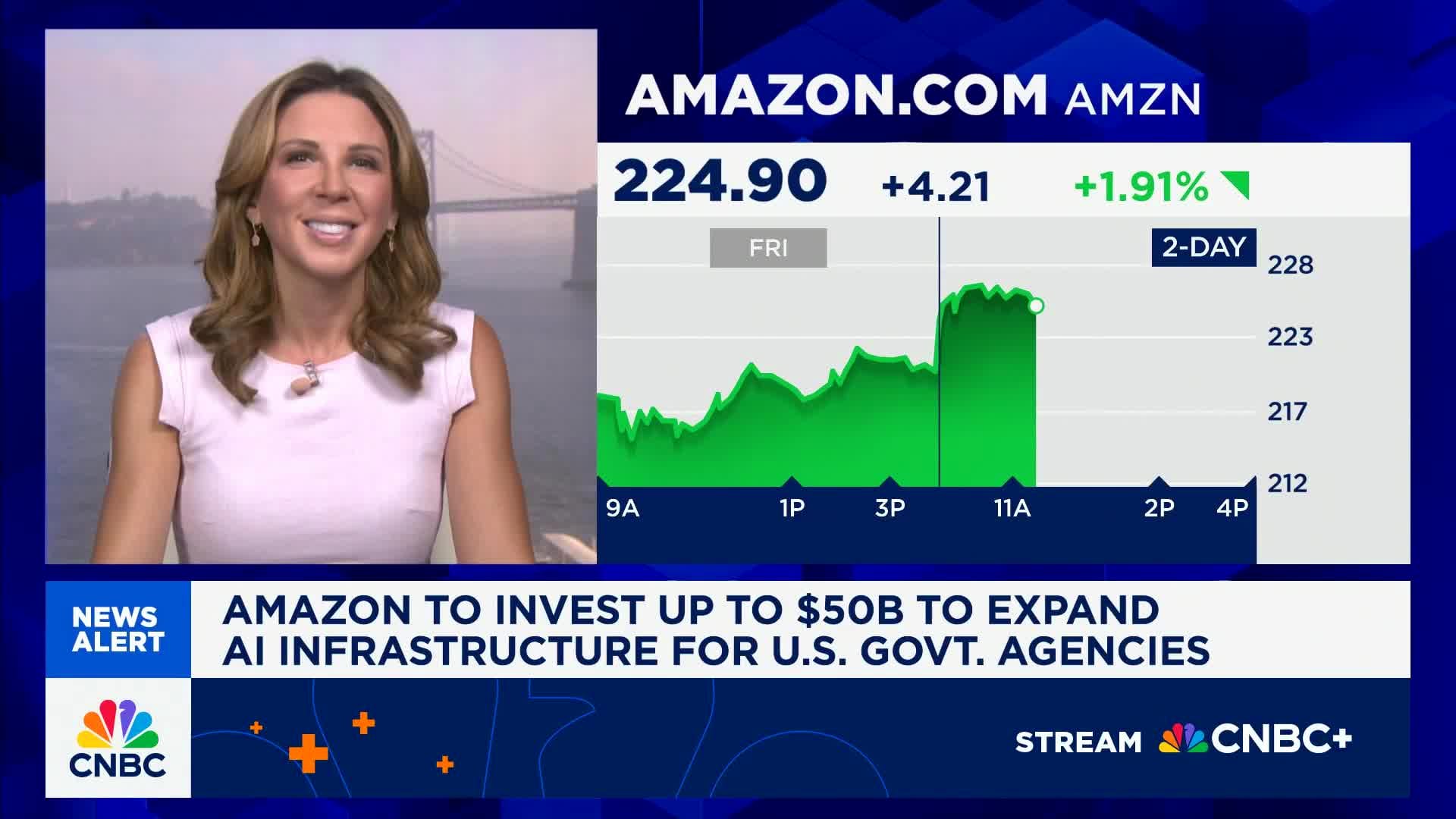
In late November 2025, Amazon announced a massive public-sector technology investment: up to $50 billion to expand AI and supercomputing infrastructure for U.S. government customers through Amazon Web Services (AWS). About Amazon+2Reuters+2
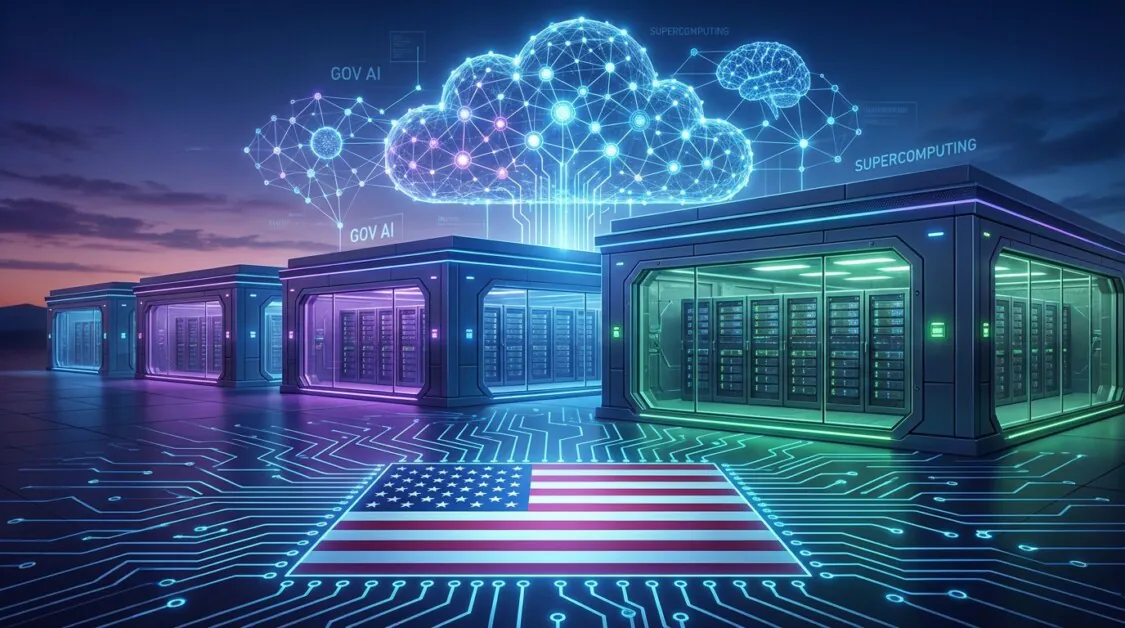
This isn’t a single “one-and-done” contract announcement. It’s a long-horizon infrastructure buildout—designed specifically for agencies operating in secure environments—aimed at scaling everything from traditional high-performance computing (HPC) to modern generative AI workloads (training, fine-tuning, retrieval, inference, and model operations). The investment is expected to break ground in 2026 and add nearly 1.3 gigawatts of additional AI and supercomputing capacity across AWS’s most security-sensitive government regions. About Amazon+2Reuters+2
So what exactly is Amazon building, who is it for, and why does it matter for the U.S. government’s AI roadmap? Let’s unpack it.
1) What Amazon Announced (and What’s Concrete So Far)
Amazon’s announcement is straightforward on the headline numbers:
-
Investment size: Up to $50 billion
-
Purpose: Expand AI + supercomputing capacity for U.S. government customers using AWS
-
Timeline: Projects expected to break ground in 2026
-
Scale: Add nearly 1.3 GW of capacity
-
Where it lands: Expansion across AWS GovCloud (US) plus secure classified regions commonly referred to as AWS Secret and AWS Top Secret About Amazon+2Reuters+2
AWS describes this as purpose-built infrastructure for federal missions—meaning the architecture, controls, and operating model are designed to support agencies handling regulated data, sensitive workloads, and classified information (depending on region). About Amazon+1
It’s also positioned as one of Amazon’s biggest public-sector infrastructure commitments, and it arrives at a moment when governments globally are trying to scale AI safely while competing for scarce compute, power, data center capacity, and specialized chips. Reuters+1
2) Why “Government AI Infrastructure” Is Different From Normal Cloud
In commercial cloud, scaling AI often means spinning up GPU clusters, integrating MLOps, and managing cost/performance tradeoffs. In government, you have the same technical problems—plus a heavier set of constraints:
Security domains and data classification
Many agencies can’t simply push mission data into general commercial environments. They require tightly controlled cloud regions built for compliance and, in some cases, classified processing. AWS explicitly highlighted expansion across secure government regions, including Secret and Top Secret environments. About Amazon+2Data Center Dynamics+2
Procurement realities
Even when budgets exist, government procurement cycles can slow adoption. This matters because AI capability is increasingly a “tempo” advantage—agencies want deployments in weeks, not years. AWS’s public-sector messaging emphasizes accelerating delivery of generative AI to operational scale. Amazon Web Services, Inc.
Reliability, continuity, and mission impact
Government systems aren’t just customer experiences. They can affect public safety, national security, benefits delivery, emergency response, and intelligence. That pushes infrastructure design toward resilience, continuity, and strict change-control.
Auditability and governance
AI in government needs stronger documentation, transparency, access controls, and oversight. Infrastructure must support secure logging, model governance, and controlled deployment pathways—not just raw compute.
When Amazon says “purpose-built,” it’s signaling that these constraints are first-class design requirements rather than add-ons.
3) The 1.3 Gigawatt Detail: Why It’s a Big Deal
The “nearly 1.3 gigawatts” figure is one of the most important technical details in the announcement, because it translates abstract dollars into physical capacity—power, cooling, density, and deployment scale. About Amazon+2Reuters+2
Modern AI infrastructure isn’t constrained only by chips. It is constrained by:
-
Power delivery (utility availability and substation capacity)
-
Cooling (especially for dense GPU racks)
-
Networking (latency, bandwidth, and east-west traffic inside clusters)
-
Physical space (data center buildout timelines)
-
Hardware supply chains (GPUs, interconnects, memory, storage)
A buildout measured in gigawatts is hyperscale by definition. It signals a long-term bet that government AI demand will be both sustained and mission-critical.
4) What Services and Tooling AWS Is Highlighting
Amazon’s government AI push isn’t just “here are more GPUs.” It’s also about expanding access to specific AWS AI services inside government-appropriate environments.
In coverage and AWS’s own descriptions, the common set of tools mentioned includes:
-
Amazon SageMaker for building, training, and managing ML workflows
-
Amazon Bedrock for working with foundation models and deploying generative AI apps
-
Hardware acceleration options, including AWS-designed chips such as Trainium, alongside high-end GPU infrastructure where appropriate Reuters+2Nextgov/FCW+2
The strategic idea is simple: government teams should be able to do the full AI lifecycle—data prep → training/fine-tuning → evaluation → deployment → monitoring—within secure, compliant environments, without “breaking glass” to move sensitive data into less controlled systems.
5) Who This Is For: Defense, Intelligence, and Civilian Agencies
AWS noted that its government regions support a large number of public-sector entities, and the overall thrust is to widen compute access across different sensitivity levels. Reuters+1
Practically, this kind of infrastructure expansion can impact:
National security and intelligence workflows
-
Large-scale analytics and pattern detection
-
Language processing and translation at scale
-
Image/video understanding for reconnaissance and monitoring
-
Cyber defense modeling and simulation
-
Faster experimentation with mission-specific generative AI tools
Defense engineering and R&D
AWS has also framed supercomputing capacity as relevant to engineering and discovery-style workloads (the same family of tasks that benefit from HPC + AI convergence). Amazon Web Services, Inc.
Civilian agencies
-
Benefits processing and fraud detection
-
Citizen-facing support and document automation (with strict controls)
-
Public health modeling and forecasting
-
Regulatory monitoring and case triage
The common thread: agencies want AI that is secure, scalable, and deployable under public-sector governance requirements.
6) Why Amazon Is Doing This Now: The Competitive Context
Cloud providers are in a high-stakes race to become the default AI platform for both enterprise and government. The government market is especially attractive because it tends to involve multi-year programs, large budgets, and mission lock-in (once critical systems are built and accredited on a platform, switching is difficult).
Reuters characterized the investment as one of the largest public-sector cloud infrastructure efforts and linked it to rising competition in AI cloud services. Reuters
This also fits the broader macro-trend: demand for AI infrastructure is exploding, and hyperscalers are racing to secure power, data center sites, and chip supply. In that context, earmarking a dedicated buildout for federal workloads is both a market move and a strategic positioning move.

7) What This Could Enable: Real Government AI Use Cases at Scale
A useful way to interpret the announcement is: what becomes easier when secure compute is no longer the bottleneck?
A) “From pilot to production” generative AI
Many agencies have experimented with chatbots, summarization, search, and document automation. The barrier is often production-scale infrastructure with governance. More secure capacity can shorten the path from demo to deployment. Amazon Web Services, Inc.
B) Mission-specific fine-tuning and customization
Foundation models are general. Agencies often need models adapted to:
-
Domain language (legal, medical, intelligence jargon)
-
Internal document structures
-
Agency policies and workflows
Dedicated capacity helps agencies fine-tune models in secure environments rather than relying only on generic public endpoints.
C) HPC + AI convergence
Government has long used HPC for simulation and research. The shift now is using AI to accelerate and augment those workflows—surrogate models, generative design, anomaly detection, and advanced optimization. AWS itself has been messaging this shift in its public-sector content. Amazon Web Services, Inc.
D) Cybersecurity and threat intelligence at higher tempo
Cyber defense benefits from high-volume log analysis, behavior modeling, and rapid triage—areas where AI can help, if deployed safely and monitored closely.
8) The Hard Parts: Risks and Challenges That Don’t Go Away
A $50B buildout doesn’t automatically mean government AI becomes “solved.” It magnifies both opportunity and risk.
Security and compliance complexity
Scaling into classified and sensitive environments raises the bar for:
-
Identity and access controls
-
Continuous monitoring
-
Supply-chain security
-
Data handling policies and auditing
Infrastructure can enable secure AI, but implementation details decide outcomes.
Model risk, bias, and accountability
Government AI must be explainable enough for oversight and robust enough to avoid systematic harm. Even with secure infrastructure, agencies must implement evaluation, red-teaming, and policy checks.
Energy, siting, and public scrutiny
Gigawatt-scale data center expansion intersects with energy grids, local communities, environmental impact, and cost accountability. These issues are often more politically visible in government contexts than in purely commercial expansion.
Vendor concentration
A massive infrastructure commitment can deepen reliance on a single provider. That can be good for standardization, but it raises strategic questions about resilience and competition in the long run.
9) What to Watch Next (Signals That Will Confirm the Real Impact)
If you’re tracking this announcement as a policymaker, technologist, or procurement leader, the most meaningful follow-on signals will be:
-
Specific site announcements and buildout milestones as 2026 approaches
-
New or expanded classified-region capabilities and accreditations
-
Agency flagship deployments that demonstrate real mission impact (not just pilots)
-
Pricing/contract vehicles that make it easier for agencies to consume the capacity
-
Governance frameworks and technical controls that keep deployments safe and auditable
Amazon and AWS have put a very large number on the table; execution will be judged by whether agencies can translate that infrastructure into secure, reliable outcomes.
Final Takeaway
Amazon’s up to $50 billion commitment is best understood as a bet on a near-future reality: the U.S. government will need AI compute at hyperscale inside secure, mission-ready cloud environments, not just in commercial settings. With nearly 1.3 GW of additional capacity planned across government-focused AWS regions and groundbreak expected in 2026, the company is signaling that government AI demand is no longer “experimental”—it’s becoming infrastructure-grade. Nextgov/FCW+3About Amazon+3Reuters+3
If this buildout delivers as promised, it could compress timelines for agency modernization, accelerate AI adoption in sensitive missions, and reshape how federal teams operationalize generative AI. At the same time, it raises familiar high-stakes questions around governance, accountability, energy, and vendor dependence—questions that only get louder as AI infrastructure scales.
For quick updates, follow our whatsapp –https://whatsapp.com/channel/0029VbAabEC11ulGy0ZwRi3j
https://bitsofall.com/gemini-3-flash-rapid-ai-apps/
https://bitsofall.com/next-generation-research/
Deepfake Detection: Technologies, Challenges, and the Future of Trust in the Digital Age
NVIDIA’s Nemotron 3 “Agentic” Model Series: What It Is and Why It Matters