Polaris School of Technology: A New-Age Pathway into AI-First Engineering
TL;DR (for skimmers)
Polaris School of Technology (often shortened to “Polaris” or “PST”) is a Bengaluru-based, industry-led engineering program focused on Computer Science with an emphasis on AI/ML. It partners with Medhavi Skills University (UGC-recognized) to deliver an integrated 4-year B.Tech aligned with India’s NEP 2020 vision. Admissions are via the Polaris Admission Test (PAT) and require 60%+ marks in 10th and 12th with PCM. The pitch: less theory-cramming, more projects, labs, and startup-style building; the promise: job-readiness in frontier tech. If that’s your vibe, read on. polariscampus.com+1Shiksha
Note: There’s also a similarly named Polaris Tech Charter School in South Carolina, USA—it’s a K-12 charter, not related to this Indian higher-ed program. Don’t confuse the two when researching. polaristech.org+1
What is Polaris School of Technology?
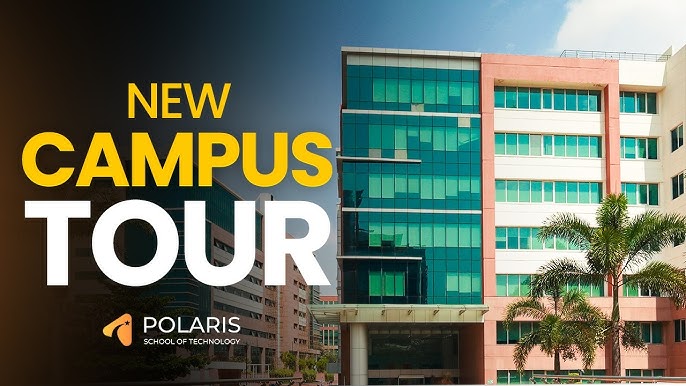
Polaris is positioned as a “new-age tech school” founded by Classplus co-founders Mukul Rustagi and Bhaswat Agarwal. The school’s official and social channels repeatedly frame it as an industry-run alternative to traditional engineering colleges—leaning into AI, ML, neural networks, and modern software stacks, with a builder’s culture at the core. The campus is in Bengaluru’s Electronic City, a location chosen to keep students close to India’s largest tech employers and startup network. YouTubepolariscampus.comShiksha
The Degree & University Tie-Up
PST’s flagship is a 4-year integrated B.Tech in CSE (AI & ML) delivered with Medhavi Skills University (MSU)—a UGC-recognized institution. This ensures the degree itself is within India’s regulated framework, while Polaris claims to supply an “industry academy” environment around it—projects, mentors, and a curriculum tuned to current demand. Shiksha
Admissions Snapshot
-
Eligibility: 60%+ in both 10th and 12th (recent batches), PCM mandatory.
-
Entrance: PAT (Polaris Admission Test)—sectional cut-offs typically apply.
-
Mode: Full-time, on-campus program.
These parameters align with their official admissions page and profiles on Indian college portals. polariscampus.comShiksha
Why does Polaris exist?
If you’ve spent time in India’s engineering ecosystem, you’ve heard the refrain: “graduates aren’t job-ready.” Employers say they train freshers from scratch; students say they’re drowning in theory without exposure to production-grade systems. PST’s stated mission is to close that gap by:
-
Compressing the distance from classroom to codebase (ship usable software, not just pass exams).
-
Aligning the syllabus with live industry needs (AI/ML pipelines, data engineering, MLOps, model evaluation, backend systems).
-
Surrounding learners with practitioners (guest lectures, mentors, project reviews). polariscampus.comShiksha
Whether a private school can pull this off at scale is the core question. But the “build-over-rote” thesis resonates with many aspiring developers who prefer GitHub commits to handwritten notes.
Curriculum Themes (as advertised)
While precise syllabi evolve, several recurring themes appear across PST’s materials and third-party overviews:
-
Computer Science Foundations: DSA, operating systems, networking, databases—kept tight but insisted on.
-
AI/ML Core: Supervised/unsupervised learning, neural networks, model evaluation, optimization.
-
Applied AI Tracks: Computer vision, NLP basics, transformers, prompt engineering, RAG systems, and LLM ops.
-
Software Engineering: Backend services, APIs, microservices patterns, CI/CD, containerization.
-
Data & Cloud: Data pipelines, warehousing, model deployment, monitoring, and observability.
-
Emerging Tech Electives: Blockchain/theory of distributed systems and other trend-aligned topics. polariscampus.comShiksha
Just as important, Polaris markets projects and products as the center of gravity—capstone builds, hackathons, and a startup-friendly culture. The marketing narrative suggests “demo day” energy over “end-semester vivas.” polariscampus.com
The Admissions Experience: PAT & Beyond
PAT (Polaris Admission Test) is their in-house entrance filter. Public info suggests:
-
A multi-section format testing math/logic and programming aptitude.
-
Sectional cut-offs rather than a simple aggregate gate.
-
Shortlisting followed by counseling and seat allotment.
Students applying should treat PAT like a hybrid of aptitude + intro CS logic. Expect high-school-level math (algebra, probability, combinatorics) and programming logic questions (pseudo-code, complexity intuition). Polaris requires PCM, so don’t expect to skip physics entirely. polariscampus.comShiksha
Pro tip: If you’ve built anything—no matter how small—show it. A GitHub with 3–4 tidy repos (clean READMEs, tests, and a working demo link) usually speaks louder than exam scores alone in a builder-centric environment.
Campus, Culture, and the “Builder” Identity
PST’s messaging leans hard into a startup studio vibe—shipping side-projects, sprint reviews, reels of students presenting, and a constant “learn by building” narrative. If you thrive on:
-
project-based learning,
-
peer code reviews,
-
hackathon-style weekends, and
-
regular demos,
you’ll likely feel at home. If you want a quieter, research-first four years with fewer deadlines and more theory, a traditional Tier-1 university’s CSE department might fit better. polariscampus.comYouTube
Industry Linkages & Mentorship
Polaris emphasizes industry mentorship—inviting guest lecturers and tech leaders. The value of these sessions depends on the consistency and depth of mentor engagement: Are mentors conducting mere talks, or are they reviewing architecture docs and PRs? Are they reachable during product sprints? That’s the difference between a good Instagram reel and real learning. PST’s channels and coverage highlight frequent engagements; if this is decisive for you, ask for a list of mentors, the cadence of sessions, and how mentorship is assessed. polariscampus.comShiksha
The Medhavi Skills University (MSU) Link—Why it matters
In India, degree recognition matters for:
-
government exams,
-
lateral higher education (e.g., M.Tech, MS abroad),
-
visa/immigration education checks,
-
and straightforward verification by employers.
PST’s tie-up with MSU (UGC-recognized) helps provide that formal backbone while retaining an “industry school” identity. For students eyeing global grad school, confirm how your transcripts/degree are issued (MSU is the degree-granting body) and whether the specialization is reflected on the parchment or transcripts. Shiksha
Placement Reality Check
Let’s be direct: no school can guarantee your dream job—you do. What a program can do is increase your odds through:
-
a curriculum that matches market demand,
-
real projects and internships,
-
a portfolio that recruiters must click.
PST’s promise is job-readiness in AI-first software roles. Independent chatter online includes both enthusiastic and critical takes. Some posts and videos praise the legitimacy of the degree and hands-on approach; others question value for money or express concerns about facilities and outcomes. As always, triangulate. Attend open houses, talk to current students across performance bands (not just ambassadors), and probe for hard data: internship rates, average packages by role, and portfolio quality, not just CTC banners. RedditYouTube+1
A better metric than CTC:
-
How many grads shipped production code before graduation?
-
How many got code merged in real open-source projects?
-
How many ran A/B tests on user traffic or deployed models with monitoring?
Those are the signals that predict survivability in modern engineering teams.
Who should choose Polaris?
Choose PST if you:
-
Love building—you’d rather prototype a computer vision app than only study its equations.
-
Enjoy pressure—sprints, standups, deadlines, demo days.
-
Want AI/ML and strong software engineering—because modern AI work is product engineering plus data/ML, not just Jupyter notebooks.
-
Value Bengaluru proximity—for internships, meetups, and networking.
Consider alternatives if you:
-
Want deep theoretical CS or research track (consider IITs/NITs/Tier-1 universities with strong labs).
-
Prefer a predictable, exam-centric rhythm.
-
Need the broad campus ecosphere (multiple departments, big sports scene, giant alumni bases).
What does a 4-Year Journey look like?
Here’s a sample north-star arc (not official, but aligned to PST’s advertised focus):
Year 1: Foundations & Fluency
-
Clean coding habits, DSA refreshers
-
Git/GitHub, Linux, Docker basics
-
Python + JavaScript fluency
-
Basic ML: data handling, scikit-learn, model metrics
-
2–3 deployable micro-projects (APIs, dashboards)
Year 2: Systems & ML Depth
-
Databases (SQL/NoSQL), transactions, indexes
-
OS internals lite, networking for developers
-
Model training pipelines, validation, error analysis
-
Intro to deep learning (PyTorch/TF), CV/NLP primers
-
Build a feature-complete app with authentication/payments/search
Year 3: Productization & MLOps
-
CI/CD, IaC, container orchestration
-
Data engineering (ETL/ELT), monitoring, logging
-
Model deployment, model registry, drift detection
-
A semester-long product with real users and telemetry
Year 4: Specialization & Scale
-
Choose a track (LLM apps, CV, data platforms)
-
Optimize for latency/cost, security posture
-
Capstone + external internship or startup sprint
-
Portfolio polish: case studies, write-ups, talks
If a program like PST lets you graduate with 6–10 public projects, 2 capstones, and at least one internship with production exposure, you’ll be competitive for SWE/ML roles—even in tighter markets.
Fees, ROI, and the Value Conversation
While exact fee figures fluctuate and should be confirmed with the admissions office, your ROI logic shouldn’t be “fees → CTC.” Instead, challenge any school (including PST) with evidence:
-
Placement transparency: Role titles, tech stacks, and responsibilities—not just top-line salary.
-
Portfolio density: How many well-documented, deployed, and maintained projects do final-year students have?
-
Mentor depth: Are mentors reviewing architecture and code, or mainly giving talks?
-
Internship pipelines: What percentage get meaningful internships by Year 3?
-
Alumni outcomes: Startups founded, open-source contributions, conference talks.
Independent sentiment is mixed, as it is for nearly every private tech school: some videos and posts are positive or sponsored, others critical. Your due diligence is non-negotiable. RedditYouTube
Comparing PST with Alternatives
-
Traditional Engineering Colleges (Tier-1):
-
Pros: research depth, broad campus life, brand equity, alumni network.
-
Cons: curricula can lag; hands-on product exposure varies widely.
-
-
Bootcamps / Finishing Schools:
-
Pros: short, intense, job-oriented; portfolio-heavy.
-
Cons: limited academic recognition; narrower fundamentals.
-
-
Self-Directed Path (Open-Source + Internships):
-
Pros: low cost, ultimate flexibility, real-world cred if you show up consistently.
-
Cons: requires discipline, network-building, and self-accountability.
-
PST’s niche is to sit between a classic B.Tech and a bootcamp—a recognized degree with an industry lab wrapper and a builder culture. If they execute, it’s compelling; if they drift into marketing-heavy, mentorship-light delivery, outcomes will mirror any average private college. Shiksha

Due Diligence Checklist (Use this before paying any fee)
-
Attend a campus day—sit in a live class, speak to students without staff present.
-
Ask for capstones—request 5–10 final-year projects with repos, demos, and write-ups.
-
Probe internships—how many, where, what did students actually build?
-
Meet faculty/mentors—check practitioner experience, not just titles.
-
Placement cell details—how do they find roles? internal referrals? hiring partners?
-
Alumni calls—insist on talking to 2–3 alumni in roles you want.
-
PAT prep clarity—get an official syllabus/blueprint and sample questions.
-
Degree specifics—confirm MSU as awarding body, transcript details, and how “AI & ML” appears.
-
Refund & withdrawal—read the fine print.
-
Total cost of ownership—tuition + hostel + device + internet + living.
These are program-agnostic guardrails, useful whether you pick PST or any other school.
Student Life & Bengaluru Advantage
Why Bengaluru matters:
-
Density of meetups & hackathons: from cloud-native to GenAI.
-
Startup osmosis: internships with small teams often mean bigger scope.
-
Alumni clustering: easier to break into networks when everyone’s within a few metro stops.
If you’re proactive—attending events, pushing PRs, speaking at meetups—the city compounds your growth.
Common Questions (Answered)
1) Is the degree legit?
The degree is through Medhavi Skills University (UGC-recognized), which covers the formal legitimacy. Always verify current status and how the degree is titled on transcripts. Shiksha
2) What exactly is PAT, and how hard is it?
It’s an aptitude/programming-logic filter with sectional cut-offs. Treat it like a JEE-lite meets coding-reasoning test. Get the latest blueprint from admissions. polariscampus.com
3) Can I get in without PCM?
No—PCM is listed as mandatory for eligibility. polariscampus.com
4) Will I do “real AI,” or just tutorials?
Your mileage varies by effort. PST’s value proposition is applied projects—ask for proof via previous cohorts’ repos and deployed apps. polariscampus.com
5) How does it compare to [popular bootcamps/finishing schools]?
PST offers a 4-year degree plus an industry-run environment; bootcamps are faster but don’t confer degrees. Choose based on your goals and risk tolerance. Shiksha
6) Is the online buzz trustworthy?
Assume mixed. You’ll find praise and skepticism. Separate sponsored content from organic student narratives, and talk to current learners. Reddit
A Sample “Success Playbook” for PST Students
If you do enroll, here’s a practical plan to maximize outcomes:
-
Ship monthly. One mini-project a month → 48 months = up to 24 shippable artifacts (accounting for bigger builds later).
-
Public by default. Push code to GitHub, write a devlog, record a 2-minute Loom demo.
-
Own an OSS niche. Pick one community (LangChain, OpenCV, FastAPI, PyTorch Lightning, etc.) and become a regular contributor.
-
Portfolio > CGPA (but don’t ignore CGPA). Keep grades respectable; let projects be the differentiator.
-
Intern early. By end of Year 2, aim for your first internship—even if it’s small or unpaid—where you can deploy and monitor something real.
-
Measure what matters. Track DAU, latency, inference cost, error rates, precision/recall—not just “it works on my machine.”
-
Present often. Meetups, campus demos, online talks. Teaching solidifies learning and builds your network.
-
Security & ethics. Bake in data privacy, evals for bias/harm, and secure coding practices. It’s not just about shipping; it’s about shipping responsibly.
Final Take: Is Polaris Worth It?
Yes—if the builder-school model matches how you learn.
PST offers a recognized B.Tech via MSU plus an environment that (by design) emphasizes hands-on AI/software engineering. If you’re proactive, you’ll extract strong value: a living portfolio, early internships, and real-world code confidence.
No—if you want a quieter, theory-heavy path or rely on the school to carry you.
Polaris is not a magic wand; it’s a platform. Your output will be proportional to your input.
Action items before deciding:
-
Visit the campus, sit in a class, and talk to non-ambassador students.
-
Ask for 10 capstone repos with live demos.
-
Verify the degree issuance details with MSU.
-
Get transparent internship/placement data beyond highlight reels. polariscampus.comShiksha
Sources & References (for your own due diligence)
-
Official site & admissions: overview of CSE (AI/ML) focus and eligibility (60% in 10th/12th; PCM mandatory), PAT entrance test. polariscampus.com+1
-
Third-party college profile: affiliation with Medhavi Skills University (UGC-recognized), integrated B.Tech (AI & ML), program highlights. Shiksha
-
Founders & positioning: PST’s YouTube/social branding as a “new-age tech school” built by Classplus founders; campus and culture glimpses. YouTube+1
-
Name confusion warning: Polaris Tech Charter School, Ridgeland, SC (K-12 charter, unrelated to PST). polaristech.org+1
-
Independent chatter (mixed): Reddit threads and YouTube reviews offering both critical and positive sentiment—use as perspective, not gospel. Reddit+1YouTube+1
https://bitsofall.com/gen-ai-makes-no-financial-difference-95-percent/
How AI servers are transforming Taiwan’s electronics manufacturing giants