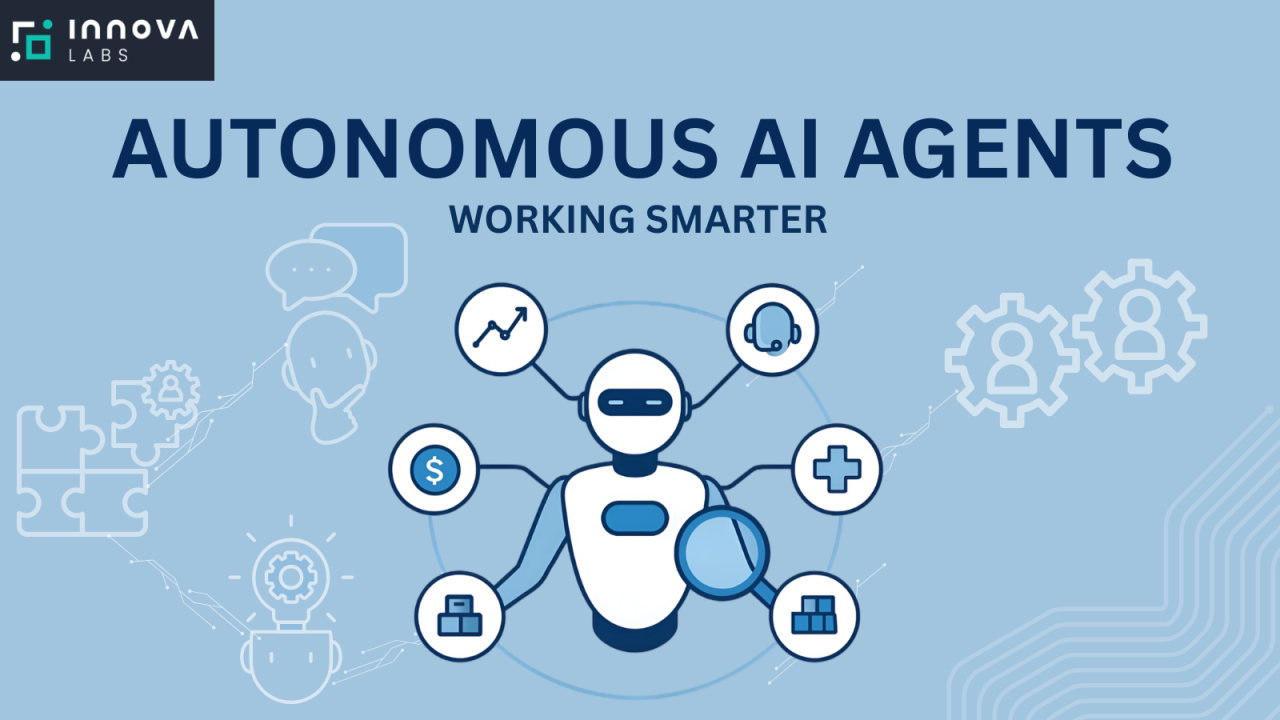
How AI Automates Repetitive Learning and Discovery Through Data
Introduction
In today’s data-driven world, artificial intelligence (AI) plays a pivotal role in transforming how businesses, researchers, and individuals approach learning and discovery. Instead of merely automating manual tasks, AI is revolutionizing how high-volume, repetitive operations are handled—reliably, tirelessly, and at scale. This shift is not just about replacing human effort, but enhancing it by offloading repetitive analysis to machines, allowing humans to focus on strategic thinking and innovation.
What Makes AI Different from Traditional Automation?
Traditional automation was rule-based—if X happens, do Y. It worked well for predictable, linear tasks. AI, however, learns from data. It goes beyond rules, discovering patterns, adapting to new inputs, and improving performance over time. Rather than replacing human intelligence, it augments it by:
-
Handling frequent, high-volume tasks without fatigue
-
Learning from vast datasets that would overwhelm humans
-
Delivering consistent, reliable outputs at lightning speed
Repetitive Learning: The AI Advantage
AI shines in scenarios where repetition is key. Think of activities like fraud detection, image recognition, sentiment analysis, or recommendation engines. These tasks require:
-
Pattern recognition
-
Fast computation
-
Real-time updates
AI performs these tasks better than humans not because it’s smarter, but because it doesn’t tire, lose focus, or get inconsistent. Once trained, it can run continuously—24/7—learning with every data point it processes.
Data-Driven Discovery: Finding Needles in Data Haystacks
Imagine trying to analyze millions of customer reviews to understand sentiment trends, or processing thousands of medical records to detect emerging symptoms. Humanly impossible. But for AI, this is where it thrives.
Using machine learning algorithms, neural networks, and natural language processing (NLP), AI can:
-
Extract meaningful patterns from noisy data
-
Discover hidden correlations
-
Uncover emerging trends that would otherwise go unnoticed
This ability to discover insights autonomously turns raw data into strategic advantage.
Real-Life Applications of AI-Driven Learning and Discovery
1. Healthcare
AI can analyze medical imaging, genetic data, and patient records to assist in diagnosis. It helps in early detection of diseases like cancer, sometimes even before symptoms appear.
2. Finance
AI algorithms process market data to identify fraud, predict trends, and automate investment strategies—all with minimal human oversight.
3. E-Commerce
Retailers use AI to track consumer behavior, recommend products, and optimize pricing—all based on vast amounts of real-time data.
4. Marketing and Advertising
AI tools monitor campaigns, segment audiences, and automate A/B testing, making decisions faster and more data-informed than manual methods.
Humans Are Still Essential
While AI handles repetitive and computationally heavy tasks, it doesn’t replace human intelligence. Humans are vital in:
-
Designing and training the AI system
-
Asking the right questions
-
Interpreting ambiguous results
-
Providing ethical oversight
AI does the “doing,” but humans provide the “direction.”

How AI Learns from Data: A Simple Breakdown
AI’s learning process typically involves:
-
Data Collection – Large amounts of labeled or unlabeled data
-
Training – Feeding data into models like decision trees, neural networks, or deep learning frameworks
-
Evaluation – Measuring performance against a known outcome
-
Tuning – Adjusting parameters and improving algorithms
-
Deployment – Applying the trained model in real-world applications
-
Continuous Learning – AI adapts and evolves as more data flows in
This feedback loop is what enables AI to get better over time, something traditional systems can’t do.
The Benefits of Automating Learning and Discovery
-
✅ Speed: AI completes in seconds what would take humans days
-
✅ Scalability: It works on massive datasets across industries
-
✅ Cost-Effective: Reduces the need for manual labor
-
✅ Consistency: No fatigue or distraction-induced errors
-
✅ Adaptability: Learns and evolves as new data appears
Challenges and Ethical Considerations
Despite its advantages, AI isn’t without limitations:
-
Bias in data can lead to flawed outcomes
-
Lack of transparency in decision-making (black-box models)
-
Over-reliance on machines can reduce human critical thinking
-
Data privacy concerns when dealing with sensitive information
That’s why AI governance and human oversight are non-negotiable parts of the AI journey.
The Technical Foundation Behind AI’s Repetitive Learning Capabilities
At the heart of AI’s ability to automate learning and discovery lies a suite of powerful technologies:
-
Machine Learning (ML): Algorithms trained on historical data to make predictions and decisions without being explicitly programmed.
-
Deep Learning: A subset of ML using artificial neural networks, mimicking the human brain’s structure to process unstructured data like images, text, and audio.
-
Natural Language Processing (NLP): Enables machines to understand, interpret, and respond to human language—making it ideal for chatbots, summarization, and sentiment analysis.
-
Computer Vision: Allows machines to “see” and interpret visual data—used in facial recognition, autonomous vehicles, and surveillance.
These technologies work in tandem, enabling systems to learn from structured and unstructured data, refine their outputs over time, and continuously discover new patterns.
Emerging Industries Adopting AI for Discovery and Automation
While sectors like finance, healthcare, and retail are already leveraging AI extensively, newer industries are rapidly adopting AI-based learning and discovery techniques:
1. Agriculture
AI drones and IoT sensors monitor crop health, soil quality, and weather patterns. AI processes this repetitive environmental data to recommend optimal harvesting times and detect plant diseases early.
2. LegalTech
AI tools analyze thousands of legal documents, cases, and statutes in seconds. What used to take legal researchers weeks can now be achieved in minutes, improving case strategy and reducing overhead.
3. Climate Science
AI models analyze satellite data, global temperature records, and oceanic patterns to predict climate change impact scenarios, helping policymakers act faster and smarter.
4. Manufacturing
Through predictive maintenance, AI learns patterns from sensor data and alerts operators before machines fail. This reduces downtime and maximizes efficiency.

How Businesses Can Implement AI for Automated Learning
To successfully leverage AI, organizations must move strategically. Here’s a roadmap:
-
Define the Problem Clearly
Start with a specific goal: “We want to reduce customer churn” or “We want to detect defects in our production line.” Clear objectives help choose the right models and data. -
Collect and Prepare Data
Clean, labeled, and relevant data is the backbone of effective AI. Invest in data hygiene and infrastructure. -
Choose the Right Tools
Whether it’s open-source frameworks like TensorFlow or managed AI services like AWS SageMaker, the right toolset makes a difference. -
Start Small and Scale
Begin with pilot projects. Validate results. Then expand across departments or workflows. -
Ensure Ethical Oversight
Set up governance policies for data privacy, algorithmic transparency, and human accountability.
The Future Outlook: Where Is AI-Driven Discovery Heading?
AI’s evolution isn’t slowing down. With advancements like self-supervised learning, federated learning, and transformer-based models (like GPT or BERT), AI is becoming more autonomous in its learning.
In the future:
-
AI will need less data to learn effectively
-
Models will be able to explain their decisions (Explainable AI)
-
AI systems will operate in real-time with adaptive learning
-
More industries will deploy multi-agent AI systems that collaborate like teams
Organizations that adopt AI not just as a tool but as a strategic capability will unlock exponential advantages.
Final Thoughts
AI isn’t just a buzzword—it’s a powerful enabler of transformation. By automating repetitive learning and accelerating discovery through data, AI changes the rules of productivity, analysis, and decision-making. However, success hinges on a careful balance: letting machines do what they’re best at (scale and speed) while keeping humans in the loop to ask the right questions, bring empathy, and steer the course ethically.
The age of intelligent automation is here. The question isn’t whether to adopt AI—but how fast can you adapt?
Conclusion
AI’s true power lies in its ability to automate repetitive learning and extract insights from massive datasets that would overwhelm human analysts. Rather than replacing people, AI complements human intelligence by handling high-volume, monotonous tasks with reliability and speed. When guided by thoughtful human questions and strong ethical frameworks, AI becomes an unparalleled tool for discovery and innovation.
FAQs
Q1: Does AI replace human jobs?
AI automates repetitive tasks but often creates new roles for humans in strategy, oversight, and ethical decision-making.
Q2: What industries benefit most from AI-based learning and discovery?
Healthcare, finance, retail, education, and logistics are among the top beneficiaries.
Q3: Can AI learn on its own?
Yes, through machine learning and deep learning, AI improves with exposure to new data, but it still needs human supervision and tuning.
Q4: Is AI always accurate?
Not always. AI’s accuracy depends on data quality, model design, and testing. Biased or poor data can lead to errors.
Google Search: Introducing AI Overviews and AI Mode for Smarter Results
How Google Revolutionized Machine Learning and Artificial Intelligence