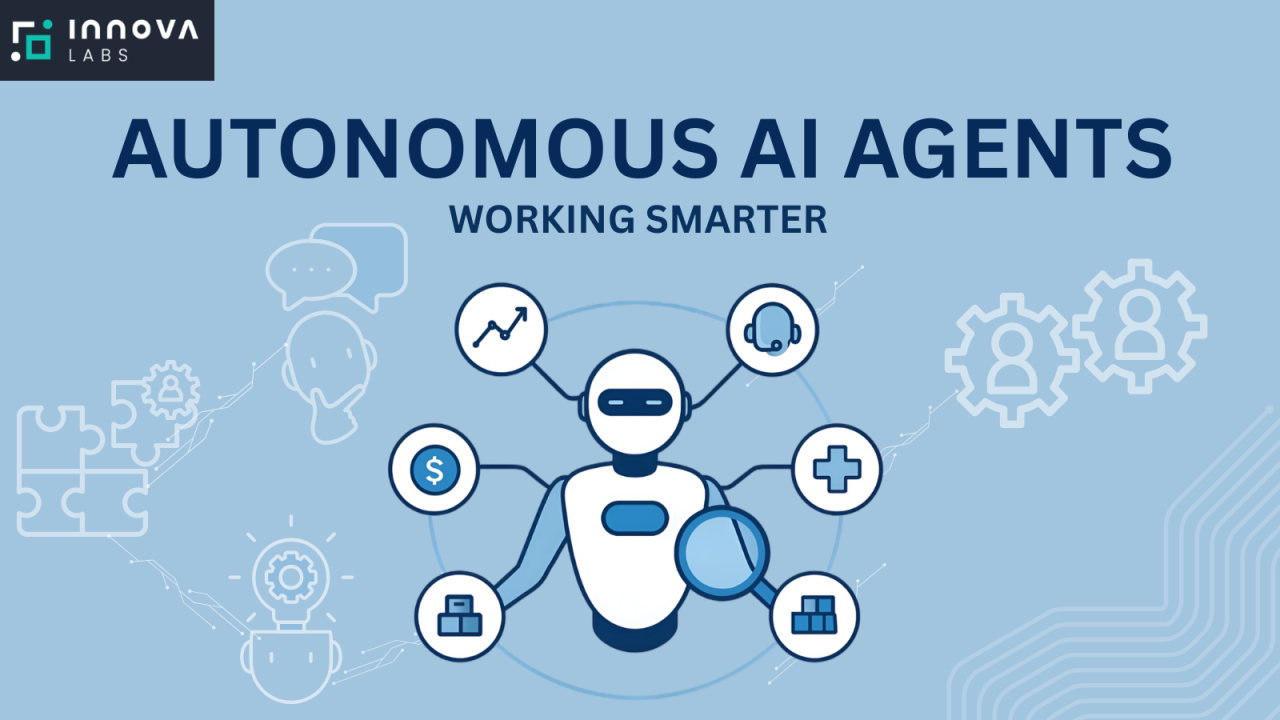
An Enterprise OS Powered by AI: How Agentic Orchestration Is Redefining Business Operations
Table of Contents
Introduction: Beyond Isolated AI Tools
Enterprise technology has entered the age of artificial intelligence, but most businesses are still missing the full picture. Deploying isolated AI models or automating one task at a time can only take organizations so far. What’s truly transformative is connecting the dots between data, automation, people, and AI agents—and managing everything cohesively.
That’s where the idea of a new kind of operating system for enterprises comes in. Not one that runs on servers or devices—but one that orchestrates enterprise processes, much like a traditional OS manages system-level tasks in computing. This is the Enterprise OS, and its core engine is agentic orchestration.
The Enterprise OS: What’s Been Missing
In conventional IT, the operating system doesn’t just run programs—it allocates resources, ensures system stability, and optimizes performance. Similarly, enterprises today lack the connective tissue that binds their AI, automations, and business processes into one intelligent, adaptive system.
What’s needed is an OS layer for the enterprise: something designed to track, manage, evaluate, and optimize business processes across departments, tools, and data silos. This OS should deliver real-time observability, intelligent routing, and automated exception handling—all within a secure, governed framework.
And that’s exactly what agentic orchestration brings to the table.
Agentic Orchestration: The Operating System of the Future
Agentic orchestration is more than workflow automation. It’s a new architecture that leverages autonomous AI agents to manage end-to-end processes intelligently. These agents are not hardcoded bots—they’re adaptive, decision-capable, and context-aware.
This orchestration layer acts as the brain of the enterprise, integrating:
-
Data pipelines
-
AI models (including LLMs)
-
Automation scripts
-
Human-in-the-loop systems
-
Legacy and modern apps
Think of it as the enterprise nervous system—always monitoring, adjusting, responding, and optimizing in real-time.
Why Just Layering AI Isn’t Enough
Simply applying AI on top of existing workflows results in incremental gains—usually between 3–5% in efficiency. While useful, that approach doesn’t deliver the transformative potential AI promises.
Why? Because existing workflows weren’t designed with AI in mind. They were built for humans, not machines. They contain gaps, redundancies, and manual handoffs that AI can’t fix without a full process rethink.
That’s why 70% of enterprise AI investments in 2025 are focused on process improvement—according to recent reports. The aim is not just to automate tasks, but to reimagine and orchestrate workflows with AI as a core operator.
Tactical Wins: AI That Fixes What’s Broken
At the tactical level, agentic orchestration directly addresses common enterprise inefficiencies:
-
Delayed handoffs
-
Routing errors
-
Duplicated efforts
-
Unnoticed exceptions
Take the insurance industry as an example. AI has long been used in claims processing for data ingestion and document analysis. But now, with agentic orchestration:
-
Claims can be processed end-to-end autonomously
-
AI agents can summarize documents, trigger tasks, escalate issues, and interact with APIs or RPA bots
-
Human involvement is required only for high-stakes exceptions
This translates to faster resolution times, better compliance, and massive cost reductions.
Strategic Advantage: Orchestrating for Scale and Agility
Beyond tactical efficiencies, the true power of agentic orchestration lies in how it supports strategic transformation:
-
AI agents become modular and reusable
-
Workflows become composable, adaptable to change
-
AI becomes system-agnostic, integrating across cloud, on-prem, legacy, and third-party platforms
This orchestration layer makes it possible to scale AI safely and efficiently, reducing duplication of models and infrastructure across departments. It’s not about centralization—it’s about distributed intelligence with a unified reference framework.
Built-in Governance and Intelligence
Trust and compliance are non-negotiable in enterprise environments. Agentic orchestration bakes in observability, audit trails, policy enforcement, and governance frameworks.
This ensures:
-
Real-time tracking of every AI decision
-
Transparent escalation paths when automation fails
-
Alignment with industry regulations (e.g., GDPR, HIPAA, SOC 2)
-
Confidence for C-suite and compliance teams
In a world where AI autonomy is growing, trustworthy orchestration is the safety net enterprises need.
From Process to Performance: The Real ROI of Agentic AI
At its core, agentic orchestration transforms how enterprises execute. It shifts the focus from tools to outcomes, enabling businesses to:
-
Respond faster to change
-
Reduce operational costs
-
Improve consistency and customer experience
-
Reallocate human talent to higher-value work
As enterprises move toward a lights-out operations model, where processes run autonomously with minimal human intervention, the Enterprise OS becomes the new battleground for differentiation.
UiPath Maestro™: A Glimpse into the Future of Orchestration
One of the emerging platforms leading this charge is UiPath Maestro™. Designed for agentic orchestration, it enables enterprises to:
-
Define complex workflows as reusable blueprints
-
Deploy and manage AI agents across departments
-
Trigger processes dynamically based on real-time data
-
Monitor system health and compliance with integrated observability tools
Platforms like Maestro mark a shift from automation as a tool to automation as infrastructure.
Conclusion: The New Differentiator
In 2025 and beyond, enterprise performance will be defined not by how many AI tools a company uses, but how well it orchestrates them.
The future belongs to enterprises that treat AI not as a feature, but as a core layer of their operating model. With agentic orchestration, AI evolves from a task-performer to a process manager—bringing intelligence, adaptability, and strategic value at every level.
The Enterprise OS is here. It’s invisible, intelligent, and orchestrates everything.
FAQs: Enterprise AI Orchestration
Q1. What is an enterprise OS?
An enterprise OS is a conceptual operating system that manages and orchestrates enterprise-wide processes, data, and AI tools—much like how a traditional OS manages applications on a computer.
Q2. What is agentic orchestration?
It refers to using AI agents to autonomously manage, adapt, and optimize end-to-end business processes, reducing human intervention and improving performance.
Q3. How does this differ from traditional automation?
Traditional automation is rule-based and static. Agentic orchestration introduces dynamic, intelligent agents that adapt to real-time context, exceptions, and process changes.
Q4. Can this integrate with legacy systems?
Yes. Agentic orchestration is designed for system-agnostic interoperability—integrating both legacy and modern platforms seamlessly.
Q5. Is this safe for compliance-heavy industries?
Absolutely. With built-in governance, observability, and auditability, agentic orchestration supports strict regulatory compliance.