AI in logistics
Introduction: The Brain Behind the Box
In the modern business environment, when a package with an order arrives on your home after just a day of putting a request or when home factory speeds up or slows production after receiving the delivery of a raw material, the artificial intelligence (AI) is already motionless in the background. With the ever-increasing complexity in the global trading system, there is an unprecedented demand of systems that are intelligent, efficient, and predictive in nature.
By 2025, the logistics and supply chains are actively experiencing transformation by AI, turning them into an independent, data-driven world, increasing the speed, reducing spending, and boosting resilience.
The succeeding discussion reviews what AI can do to promote this shift, the benefits that come along with this, the remaining barriers, and the future direction of the field.
1. The Role of AI in Modern Logistics and Supply Chain
In this context, AI can be explained to be the replication of human intelligence processes by machines, especially by the computer systems. This overarching principle has a couple of ways of being reflected in logistics. To start with, AI algorithms can consider and optimise decisions much more quickly than human planners in the process of routes planning and scheduling, and perhaps more accurately. Second, when it comes to putting the idea into practice, autonomous systems have the capability to scan the ground status and reschedule things in real time, remove a great deal of manual oversight and manipulation that planners did prior to the invention of autonomous systems. Last but not least, feedback loops that utilize shipments themselves as sources of data streams can be used to train integrated AI systems so they become more accurate when predicting aspects of performance such as the transit time.
-
Demand forecasting
-
Route optimization
-
Inventory management
-
Warehouse automation
-
Autonomous delivery systems
The strict review of modern databases, so-called big data, in the language of researchers, proves that artificial intelligence is an unavoidable requirement of predicting demand change and controlling work processes as well as optimizing the supply chain. All these capacities improve efficiency and reduce disruptions in supply-chains.

2. Where AI Is Making the Biggest Impact
📦 A. Demand Forecasting
A well-known example of using artificial intelligence in the modern practice is the exploitation of past data, market dynamics, social-media user opinion, and, even weather conditions to predict the demand of a given product with a significant level of accuracy.
Additional demonstration example: Amazon has used machine learning to identify and fight fake products.
🚛 B. Route Optimization
The experts of the transportation informatics discipline have proved that the artificial intelligence technologies could be used to question the highway traffic patterns, state of roads, fuel consumption, and weather variables in order to come up with the best cost-effective delivery route. These trajectories usually consider every operational factor such as length of the route to be covered, traffic congestion level, area coverage and temporal restrictions (e.g. delivery window). The generated maps are easy to interpret and they show the cost of routes, time, etc. per segment. Researchers have demonstrated that optimized routes provide the pack delivery companies with a significant cut in expenses of running operations as well as improving the levels of service delivery.
Consider UPS. The company excludes millions of miles annually through its proprietary AI platform ORION an achievement that the company says in Hutchinson words constitutes head room to cut more in the future. The technical approach is simple in principle: the optimisation engine of ORION deploys algorithms to the field, and studies real-time conditions of the routes. With resequencing of delivery and consideration of traffic pattern, neighbourhood demands and courier availability, the engine redesigns the routes and eliminates redundant mileage. What is outstanding though is the extent to which UPS has implemented this technology. Eighty one percent of the US ground fleet of UPS is already under the supervision of ORION, where the percentage continued to increase since 2015.
🏭 C. Warehouse Automation
Robots and AI perform the tasks of picking, sorting, packing and inventory management.
Amazon has automated more than 75 % of its warehouses using Kiva robots.
Without these robots, Amazon would need millions of man hour and billions of dollars to move each package and item around. Rather, the Kiva robots do that heavy-lifting and so goods are delivered much quicker and at a cheaper rate.
Amazon is not the only large corporation employing robots as there is a large number of them as well.
🧠 D. Predictive Maintenance
Consider the situation when your TV blows up, when your laptop overheats or when your car does not boot. That is not good news–and it costs money. It is a mess that can be prevented through AI (artificial intelligence).
When utilised in monitoring machines or vehicles, AI detects warning signs that indicate the trouble. It is that tipped-off information that will prevent having breakdowns in the first place. You can compare it to phoning a mechanic before the check-engine warning has started.
The rewards are massive: there are few break downs and much less downtime. No more revenue loss, or damage to productivity. It is also a win to the environment, as there is less pollution in-store since there will be less machine that will be left in landfills.
Think DHL is a magic? Possibly, yet rather a simple robotics. The company uses sensors that are powered by AI and scan the whole fleet to detect possible issues before they appear and schedule a service much earlier than it is necessary. That will anticipate issues and ensure service (and deliveries) are always on track.
📊 E. Supply Chain Visibility
In the current times, AI comes in super handy when tracking delivery worldwide. It provides a real-time update and even sends an alert whenever there is something that goes wrong, and this makes the entire shipping process more visible and facilitates shuttering of fraud.
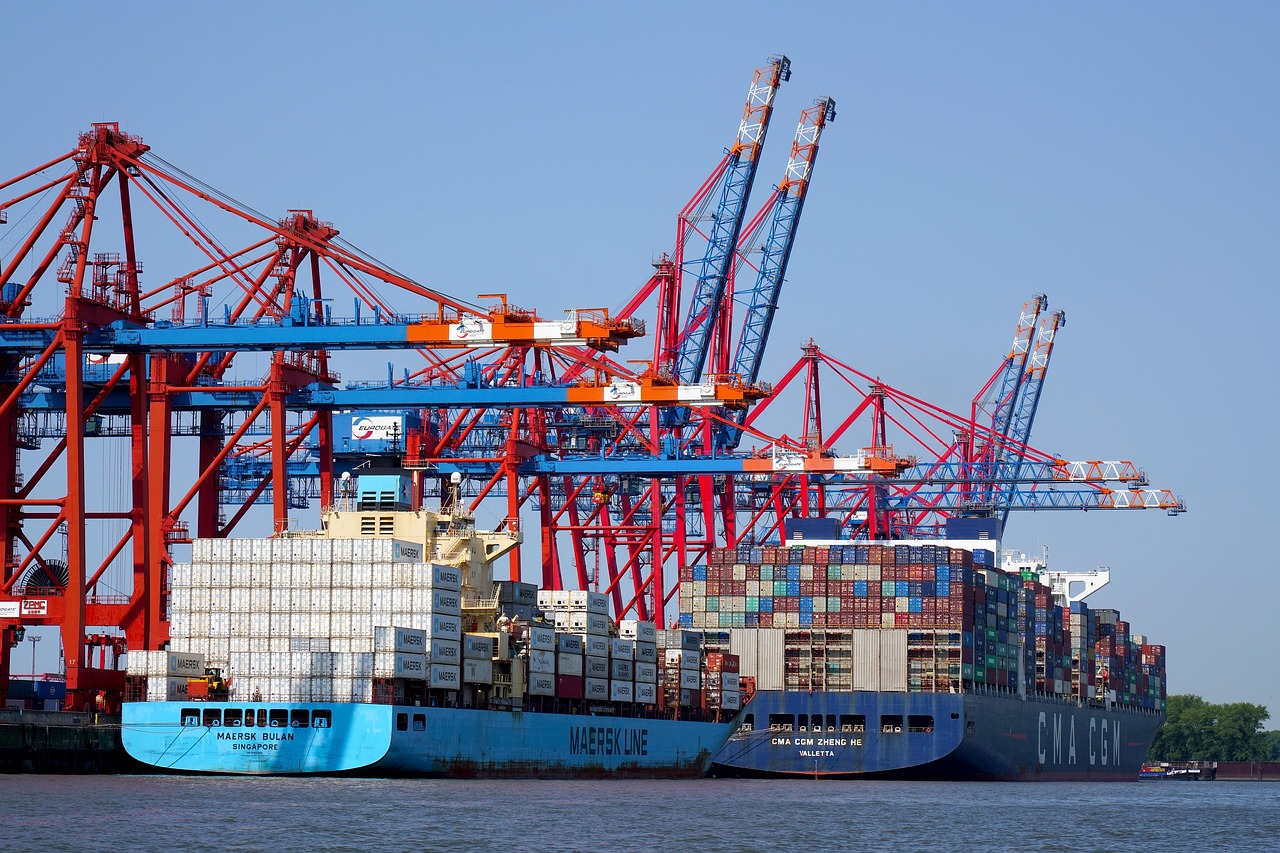
Case in point: Maersk merges AI and blockchain as a way of turning international delivery traceable.
3. How AI Enhances Key Supply Chain Functions
| Function | AI Impact |
|---|---|
| Inventory Management | Predicts stock levels, reduces overstocking |
| Transportation Management | Improves route planning, reduces fuel usage |
| Order Fulfillment | Automates order processing and packing |
| Risk Management | Identifies supply chain disruptions early |
| Procurement | AI bots negotiate contracts and find best suppliers |
4. Benefits of AI in Logistics and Supply Chain
✅ 1. Reduced Operational Costs
To put the issue into simple terms, the use of artificial intelligence, or AI, as it is popularly abbreviated, basically performs the task that the human manpower would normally undertake, thus streamlining the logistics of the supply chain and, thus, reducing the overall cost of operation.
It should be clear to us that the typical AI systems can handle large volumes of information, analyze elusive patterns, and make correct conclusions in a short time. When the capabilities are combined with manufacturing and distribution, then it is possible to have paradigmatic efforts at efficiency of the supply-chain.
In practice, AI allows one to carry out accurate demand prediction, superior inventory management, and efficient routing. All these have a combined effect of providing an effective management on the logistical processes of an organization and by extension, cut down on the expenses.
✅ 2. Improved Delivery Times
In the sphere of logistics, the rate of delivery, as well as the level of customer satisfaction are two long-standing key performance measures. The recent results have shown that improvement in the process of the routing and scheduling may also enable speedier delivery and interest increases at the same time. There is evidence that routing strategies, with the introduction of powerful data analysis, optimised algorithms, and complex map-based visualisation–define smarter ones–can bring practical improvements to a range of metrics. These are reduced journey times, improved fleet utilisation and improved on-time performance. To expand on the previous study that provided insight on routing and its role in affecting the productivity of operation, we demonstrate that efficiency of routing also acts as a mediator between functional operational effectiveness and a service-oriented orientation explicitly.
✅ 3. Better Inventory Control
Empirically, we find an increasing rate at which firms have developed the tendency to stock up unnecessary inventories in a bid to avoid risks. This kind of build-up however has the potential to cause a stockout crisis in light of demand. Such a model of the interrelation of under- and overstocking has always been a mystery of quantitative analysis.
That is, enter artificial intelligence: the advanced machine-learning algorithms allow companies to estimate the demand with precision never before achieved. This leads to a stratified system of inventory management a system where cost of holding of goods is reviewed periodically to ensure that there is an optimum allocation between the amount stocked and the amount that will be required.
Summing up, AI provides an effective solution to the twin nightmares of shortfalls and over-purchase, thus making organizations capable of optimal results along the inventory performance dimension.
✅ 4. Higher Accuracy
A clear convergence among scholars in the current body of knowledge, on artificial intelligence, appears in the idea that artificial intelligence will apply itself as an effective form of counteraction to human error in areas including forecasts of demand, order fill, and data entry. Such findings support an empirical-based pattern according to which AI-powered systems do better than their human equivalents in repeatable tasks that involve a predictable set of steps and a systematic set of rules. As a result, the scientific community has come to consider the question of possibly applying AI to substitute human labour to have been effectively answered; on the other hand, the question of how exactly the AI-human collaboration is the most beneficial way to go becomes the more relevant question.
✅ 5. Sustainable Operations
There is sure to be a resurgence of the old discussion between routing efficiency and fuel economy. To illustrate two mutually beneficial strategies, which can be used as the tools to simultaneously decrease the fuel consumption and carbon emission in this discussion, I refer to optimsizing the route planning strategy and predictive maintenance strategy. First of all route planning. It is not unknown that the principle of the shortest distance between two points is established but we also have to incorporate the elements of time in our calculation. It is not surprising, after all, given that the time it takes to cover travel across roads in different times is significantly and comparatively higher; even at that, travel times would vary in case traffic patterns are taken into account.
It follows that both space and time will have to be modeled; it is necessary to determine optimum pathways, which satisfy the two constraints of the length of a route and the time taken in the journey. The second pillar is predictive maintenance. The point in this is to foresee a breakdown occurrence and replace the parts way before it breaks down; the after-effect of this is obviously that the vehicle should remain stable in its operation state even during its intended serviceability. These strategies, together, portray a tantalising synergy: optimised routes reduce the number of kilometres, and the predictive maintenance prevents a lot of time spent on breakdowns and therefore the overall reduction of the consumption of fuel and the subsequent carbon emissions.
5. Real-World Use Cases in 2025
🚚 FedEx
Utilizes AI logistics planning and Automated sorting centers that sort more than half a million packages an hour.
🛍️ Flipkart (India)
As the number of AI-enabled applications has increased in recent years, researchers and other figures have started to question the consequences associated with the technology in terms of retail logistics. Specifically, the use of such systems to predict product demand on the level of discrete pin codes, would allow both the realization of micro-fulfillment, as well as, the shortened last-mile delivery. This scholarship builds on available research findings in spatial retail analytics and on current research in demand forecasting through deep learning and points to a synergistic relationship between pin-level demand forecasting and operations choices like on-site storage or inventory transfers.
🛠️ Siemens
We applied AI to develop an app to check the supply chain in the areas of weakness and monitor real-time performance of the suppliers.
To start with, we inputted the data of the company ERP system along with third-party boards. Next, we created a model that would highlight possible risk warning signs in advance, say, a late delivery or a price jump. As it is, after getting the model operational, we connected it into a dashboard that displays the latest position of every supplier and deploys warnings whenever something fishy appears.
The outcome is a user-friendly object which allows decision-makers to intercept supply-chain problems at an early stage before they explode and monitor every supplier with the minimum efforts.
🌐 Alibaba
Cainiao is an A.I based logistics company that operates smart dispatch systems and delivers packages within China within 24 hours.
The corporation works on a system of collaboration with local and regional couriers to deliver last-mile deliveries. These couriers tend to have small fleets of vehicles or tend to use bikes or scooters as their last delivery option.
Cainiao caters big scale separation in its centralized centers and transfers them to its diverse community of partners, who presently complete their deliveries.
6. AI-Powered Technologies in Logistics
-
Computer Vision:Computer Vision allows you to scan the products and ensure that those products are in the best conditions and also automates your quality checks.
-
NLP (Natural Language Processing): NLP allows the computer to decipher what the customers are saying and responds to them on your behalf, i.e. you do not have to type out the same response over and over again.
-
Robotic Process Automation (RPA): (RPA) work is a back office that does billing, compliance, and data entry.
-
Machine Learning: Machine Learning modifies algorithms, which means that prediction and optimization continually improveibility.
-
IoT + AI : IoT + AI combines sensor with AI which allows you to know where your shipment has reached right at this moment in real time.
7. AI in the Indian Logistics Ecosystem
The logistics in India is improving with the help of Digital India mission and National Logistics Policy (NLP). Supply chain problems are being managed through AI to bring about optimum efficiency.
This is where AI is coming in:
-
Railways and ports for predictive cargo movement
-
Highways for route optimization
-
Warehouse hubs with automated sorting and inventory bots
-
E-commerce for faster last-mile delivery in Tier 2/3 cities
This is where AI is coming in:
Forecasting. Software is now capable of predicting the inventory requirement, exposing the deficiencies of supply-chain and much more. This relieves staff of daily operations and allows them to devote attention to the more important tasks.
Automatic routing of vehicles. The systems plot optimum routes on a real-time basis, considering traffic flow, weather, among other things. This saves on time and also on fuel.
The autonomous warehousing system. Artificial intelligence monitors stores, changes the level of stocking and indicates the labor force. Under such smooth process, theuse of operations are smooth and minimal errors occur.
Ultimately, AI is helping Indian logistics industry to be more dynamic, precise, and economical.
Startups like Locus, Rivigo, and Delhivery are leading the AI logistics revolution in India.
8. Challenges in Implementing AI in Supply Chains
❌ 1. Data Silos
The absence of data exchange between departments and partners influences the work of AI.
❌ 2. High Implementation Costs
The small business can be challenged by investments in the AI tools and robotics.
❌ 3. Lack of Skilled Talent
Shortage of professionals that are aware of both AI and the dynamics of the supply chain are lacking.
❌ 4. Cybersecurity Risks
The AI systems that are linked to others are prone to data breach and cyberattacks.
❌ 5. Ethical & Job Concerns
Robotization can cause the loss of jobs in transportation and warehousing.
9. The Future of AI in Logistics and Supply Chain
🔮 Hyper-Automation
The systems will be installed in ports as well as delivery vans and the human input will be minimalized.
🌎 Sustainability-Driven AI
The AI-driven green logistics will assist the organizations in reducing emissions and maximizing the use of energy.
🤝 Human-AI Collaboration
Instead of replacing the human workers, AI will support them and make them smarter and more productive.
🔗 Blockchain + AI
Bringing together the transparency of block chains and the intelligence of AI will guarantee smart and secure end-to-end supply chains.
10. Final Thoughts: From Efficiency to Intelligence
By 2025, AI does not only make logistics better, but it reimagines it. For behemoth corporations down to small-time courier companies, AI could give everyone a more even playing field as it brings speed, accuracy and foresight into business practices.
To the business venturing in AI supply chain, the gain is not mere expedient delivery or saving money. It is all about structuring supply chain to be future-proof, robust and smart, ready to face any storm, whether it is a pandemic, natural disaster or a times of high demand.
🤖 Frequently Asked Questions (FAQs) on AI in Logistics and Supply Chain
❓ What is AI in logistics?
The application of artificial intelligence in logistics means using artificial intelligence technologies to help automate, optimize and enhance logistics procedures including delivery, transportation, route planning, and warehouse management. It can assist the logistics firms in making decisions in real-time situations and improves their operations.
Keyword phrase: Artificial intelligence in logistics
❓ How is AI used in the supply chain?
Demand forecasting, predictive maintenance, risk assessment, inventory optimization and supply chain visibility are all supplied chain side applications of AI. It reads huge volumes of information to give actionable insights so that the business organization would be able to respond to the changes in the market more efficiently.
Keyword: AI supply chain
❓ What are the benefits of using AI in logistics?
Key benefits of artificial intelligence in logistics include:
- Quicker delivery due to optimised routes
- Automation savings on costs
- Improved management of inventory
- Greater customer satisfaction.
- Immediate tracking of shipment Real-time
🔑 Focus keyword: Benefits of AI in logistics
❓ Can AI help with warehouse automation?
Yes. One of the biggest applications of AI in warehouses is the sorting, packing, and fulfillment of the inventory with the help of robots. Stock predictions and the most efficient storage patterns are also anticipated by machine learning algorithms.
🔑 Focus keyword: AI in warehouse automation
❓ Which companies are using AI in logistics in 2025?
Top companies using AI-powered logistics tools include:
- Amazon –logistics of warehouses and delivery drones
- DHL – Where predictive maintenance and route optimization are concerned
- Flipkart – in India to carry out demand forecast and last-mile delivery
- FedEx – smart sorting and intelligent dispatching
- Maersk – of AI and blockchain integration in the international shipping industry
🔑 Focus keyword: AI logistics 2025
❓ What is the future of AI in supply chain management?
Hyper-automation, real-time visibility, sustainability, and AI-human collaboration is the future of AI in supply chain. Due to AI, companies willmake supply chains greener, economic and agile.
🔑 Focus keyword: Future of AI in supply chain